



Container prices depend on whether you want to buy a box, rent storage space, or ship goods. For a useful 2026 budget, compare offers for the same size, condition, location, and delivery arrangements. Published purchase ranges and local rental examples provide a starting point; a written quote shows what your own project will cost.
A container price can mean very different things depending on what you actually need. You might be buying a used container for storage, renting one for a few months, or paying to move cargo overseas. Delivery, unloading, condition, and location can all change the final amount.
That is why container prices in 2026 are easier to compare once you separate buying, rental, and freight costs. This guide looks at the typical price ranges for each and the extra charges that can turn a cheap quote into a much bigger bill.
How Do Container Purchase, Rental, and Freight Costs Differ?
Container purchase, rental, and freight costs cover different needs. The right option comes down to how long you need the container and what you plan to do with it.
Buying a container involves a one-time purchase cost, making it suitable for long-term storage, workshops, or permanent projects. You'll also need to budget for delivery, unloading, and any modifications or repairs.
Renting a container is more practical for temporary storage, such as construction projects or seasonal inventory. Rental costs are usually charged monthly, with additional fees for delivery, pickup, and sometimes cleaning or damage.
Container freight costs cover the transportation of goods, typically using containers provided by the shipping line. Rates vary by route, container size, and shipping service, with port handling and inland delivery adding to the total expense.
For example, a business importing products from China would pay freight charges to transport its cargo, while a company needing on-site storage for several months might rent or purchase a container.
How Much Does It Cost to Buy a Container in 2026?
In 2026, a standard 20-foot shipping container typically costs $1,400–$3,200 for a used wind-and-watertight unit or $3,000–$5,500 for a one-trip container. Larger containers generally cost more, with prices also varying by condition and local availability.
The table below shows estimated purchase prices for common container sizes and conditions.
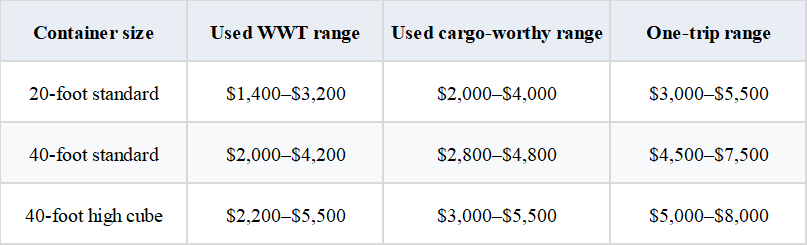
Source: Shipping Container Depot's 2026 Price Guide. USD per container. WWT = wind and watertight. These are supplier-reported price ranges.
Use these ranges as a starting point when comparing local suppliers. Request quotes for the same container size and condition, including delivery, unloading, and applicable taxes. For used containers, ask for recent photos and a condition report so you know what you're paying for.
How Much Does It Cost to Rent a Container?
Container rental prices vary by size, location, and rental duration. For example, Mobile Warehouse LLC, serving Wisconsin and Upper Michigan, lists 20-foot containers at $100 per month and 40-foot containers at $150 per month. Rates in other areas may differ.
The monthly rental fee is only part of the cost. Delivery, pickup, insurance, deposits, and minimum rental periods can affect your total budget. For example, renting a 40-foot container at $150 per month for six months costs $900. If delivery and collection add another $700, the total reaches $1,600 before taxes and other fees.
For longer projects, compare the total rental cost with purchasing a used container. Buying may offer better value for permanent storage, while renting gives you more flexibility for temporary needs. Check the rental terms for extensions and early returns, especially if your project schedule might change.
Which Factors Change the Price of a Container?
Once you know whether to buy or rent, the next step is choosing the right container. The factors below help explain why two offers for a similar-looking box can differ in price.
Size and Container Type
Standard 20-foot containers generally cost less than 40-foot and high-cube models, although local supply can affect pricing. Specialized units, including refrigerated and open-top containers, usually cost more. Check interior dimensions and door openings to ensure the container fits your cargo or storage requirements.
Age and Structural Condition
Newer one-trip containers typically cost more but have less wear. Used containers offer lower prices, although repairs can increase the overall expense. Inspect the roof, flooring, doors, seals, and signs of corrosion. For storage purposes, make sure the container is weather-resistant and the doors close securely.
Local Supply and Availability
Prices often vary between major ports and inland locations. Limited local stock can increase both the purchase price and delivery charges. Compare quotes that include transportation to your address, and ask about unloading fees and delivery availability before choosing a supplier.
Modifications and Special Features
Extra doors, insulation, ventilation, electrical wiring, and windows increase container costs. For example, converting a container into a workshop may require insulation, lighting, and improved airflow. Request an itemized quote covering materials, labor, and installation to understand the full modification cost.
Inspection, Certification, and Seller Terms
Container condition grades and inspection records can influence pricing. Cargo-worthy containers intended for international shipping may need appropriate inspection and valid certification, while storage units have different requirements. Check the condition report, warranty, payment terms, and delivery arrangements. Confirm how the seller handles damage discovered upon delivery, particularly when purchasing used containers remotely.
What Is the Total Cost to Get a Container to Your Site?
To turn a container quote into a site budget, work through the journey from depot to final placement. Check the following items with the supplier before paying.
· Quoted container price and applicable taxes. Confirm whether the offer is container-only or delivered, and which taxes apply. Match the invoice to the specification and seller entity.
· Delivery distance and transport charges. Provide the full address and discuss depot location, vehicle type, waiting time, and failed-delivery charges. Check whether return transport is required for a rental.
· Unloading and site access. Ask the supplier for its vehicle clearance and ground-bearing requirements. Supply photographs of gates, turns, overhead obstacles, and the placement area rather than estimating access from the box dimensions alone.
· Site preparation and required equipment. Confirm the base, leveling, drainage, and any crane or lifting service. Check local permission requirements for the proposed use with the relevant authority before committing to permanent works.
How Much Does It Cost to Ship Freight in a Container?
Container shipping costs vary by route, container size, and shipping date. For example, Drewry's November 5, 2026 assessment reported ocean freight rates of $7,539 for a 40-foot container from Shanghai to Los Angeles and $9,303 from Shanghai to New York. Rates on other routes can differ significantly.
The total shipping cost may also include origin and destination handling, inland trucking, customs clearance, and additional surcharges. Import duties and cargo insurance can add to the overall expense. Check which services are included when comparing freight rates.
You can explore ocean freight routes through JCtrans to compare shipping options between different ports. Once you have a preferred route, request a container shipping quote with your cargo type, weight, container size, origin, destination, and shipping date. Comparing itemized quotes helps you understand the full transportation cost and choose a suitable service.
Conclusion
Container costs vary considerably based on how you plan to use the equipment. Buying may offer better value for long-term storage, while renting provides flexibility for temporary projects. If you're shipping goods, ocean freight rates, port charges, and inland transportation all contribute to the total cost.
Use the 2026 price ranges as a starting point for budgeting, then compare quotes from suppliers or freight providers. Pay attention to the services included, container condition, and additional fees to choose an option that fits your needs and budget.
Frequently Asked Questions
Does a Container Purchase Price Include Ocean Freight?
Only if the seller explicitly includes that service in the offer. Buying a box and arranging a sea movement are separate transactions with different acceptance and documentation needs. Ask where the quoted price ends and whether any transport charge concerns local delivery of the empty unit or carriage overseas.
Is Renting Better Than Buying for Short-Term Storage?
It can be when the rental period is limited and removal is needed afterward. Compare rent, minimum duration, delivery, collection, insurance, and early-termination terms with the full purchase option. A short rental can still be expensive when transport dominates the budget, so use the actual local offers.
Why Do Container Prices Vary So Much by Location?
Local stock, condition, depot distance, and transport access affect what a supplier can deliver. A box near a suitable depot may cost less to place than similar equipment farther away. Compare the delivered specification at your address rather than assuming an online price from another region applies locally.

Last
What Does CFR Stand For? Cost and Freight Explained
CFR (Cost and Freight) is a shipping term that defines how transportation costs and risks are shared between buyers and sellers. T
Next
Largest Ports in the U.S.: Container Traffic, Tonnage and Shipping Choices
Los Angeles leads the 2025 container comparison, while Houston ranks first in the 2023 USACE cargo-tonnage series published in the