



Los Angeles leads the 2025 container comparison, while Houston ranks first in the 2023 USACE cargo-tonnage series published in the BTS 2026 report. The difference reflects the cargo each gateway handles. Understanding these measures helps shippers compare major US ports and assess which services, inland connections, and delivery costs suit their shipments.
Some U.S. ports handle far more cargo than others, and they often play very different roles in the shipping network. One may dominate container traffic, while another moves more cargo overall.
The largest ports in the U.S. are worth comparing not just by size, but by the kind of traffic they handle and the routes they support. For shippers, that can affect where goods enter the country and how easily they move on to the final destination.
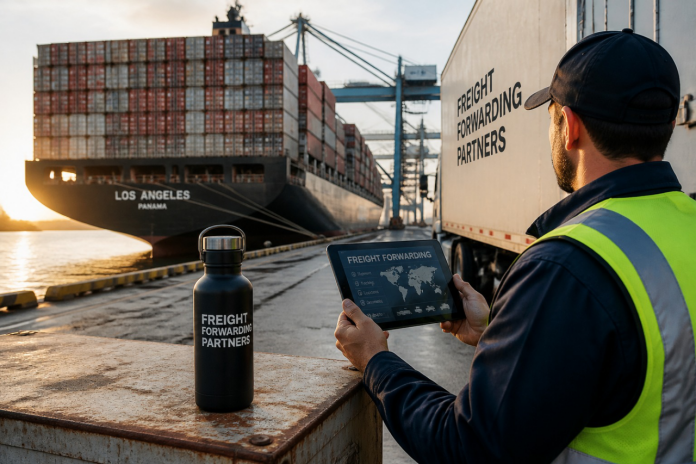
Which U.S. Port Is the Largest, and by Which Measure?
Los Angeles is the largest U.S. port by container traffic, while Houston leads by total cargo tonnage. Both rankings reflect the scale of port activity, but they measure different types of cargo movement.
Container Traffic Measured in TEUs
Container volume is measured in TEUs (twenty-foot equivalent units). A 20-foot container equals one TEU, while a 40-foot container counts as two. This allows ports to compare the number of shipping containers they handle.
The Port of Los Angeles handled approximately 10.2 million TEUs in 2025, making it the busiest container port in the United States. This figure includes both loaded and empty containers moving through the port.
Total Cargo Measured by Tonnage
Cargo tonnage measures the weight of goods passing through a port, including containerized freight, petroleum, chemicals, grain, and other bulk commodities. U.S. port statistics commonly use short tons, with one short ton equal to 2,000 pounds.
Houston leads U.S. ports by total cargo tonnage, largely because of its substantial petroleum, chemical, and bulk cargo operations. Its position highlights the importance of heavy industrial shipments alongside container trade.
Which U.S. Ports Handle the Most Container Traffic?
Los Angeles and Long Beach lead this comparison of 2025 container traffic, followed by New York and New Jersey. The table shows the annual totals, and the port profiles below explain where each gateway fits into US shipping.
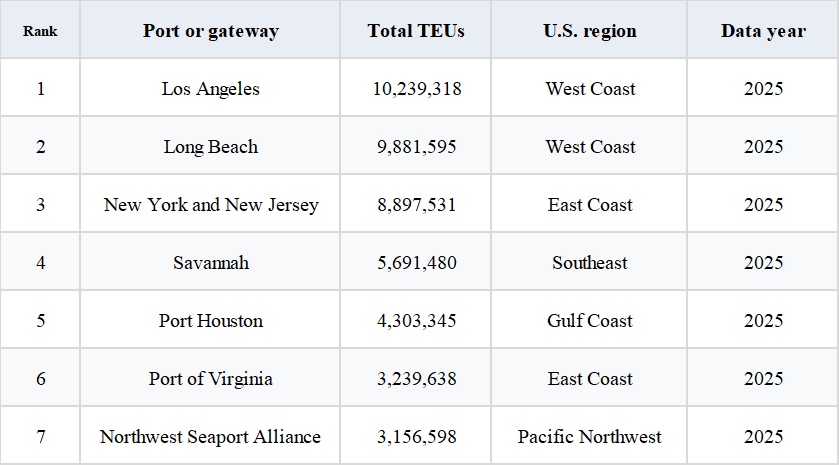
Sources: Los Angeles, Long Beach figures reported by Lloyd’s List, New York/New Jersey, Savannah and Virginia calendar-year table, Port Houston, and NWSA. Figures checked November 3, 2026; 2026 year-to-date results are excluded.
Port of Los Angeles
Los Angeles handles the highest container volume in this comparison and is a major gateway for Southern California and inland destinations. Its road and rail connections make the onward journey an important part of shipment planning. The chosen carrier service and terminal determine how collection and inland transport are arranged.
Port of Long Beach
Long Beach sits alongside Los Angeles in San Pedro Bay and serves many of the same inland markets. Together, the neighboring ports form a major container gateway, although each has its own authority and terminal arrangements. Bookings should identify the specific terminal and empty-container return location.
Port of New York and New Jersey
New York and New Jersey serves the Northeast and destinations connected through its inland network. The port spans facilities in both states, so the terminal location can affect trucking distance and delivery costs. It is a relevant gateway to compare when goods are destined for the Northeast.
Port of Savannah
Savannah is a major Southeast container gateway. Its location makes it relevant for businesses comparing ocean services and inland delivery options into that region. The final warehouse address and receiving requirements help determine how well the route fits a shipment.
Port Houston
Port Houston provides a Gulf Coast option for containerized cargo. For deliveries into the Gulf region, its location can affect the balance between the ocean journey and inland transport. Container services operate within a broader port complex that also handles substantial non-container cargo.
Port of Virginia
The Port of Virginia is an East Coast gateway involving multiple facilities and inland transport options. The discharge terminal and the available rail, truck, or other inland connection shape the route to the receiver. Comparing those arrangements helps businesses assess the full delivery journey.
Northwest Seaport Alliance
The Northwest Seaport Alliance brings together the marine cargo gateway operations of Seattle and Tacoma. Its 2025 total includes both international and domestic container traffic, representing a combined Pacific Northwest gateway. The alliance is therefore listed as one entry in the table.
Which U.S. Ports Rank Highest by Total Cargo Tonnage?
Houston ranks first in this cargo-tonnage comparison, followed by South Louisiana and Corpus Christi. Petroleum and other heavy bulk cargo contribute to the prominence of these Gulf Coast ports.
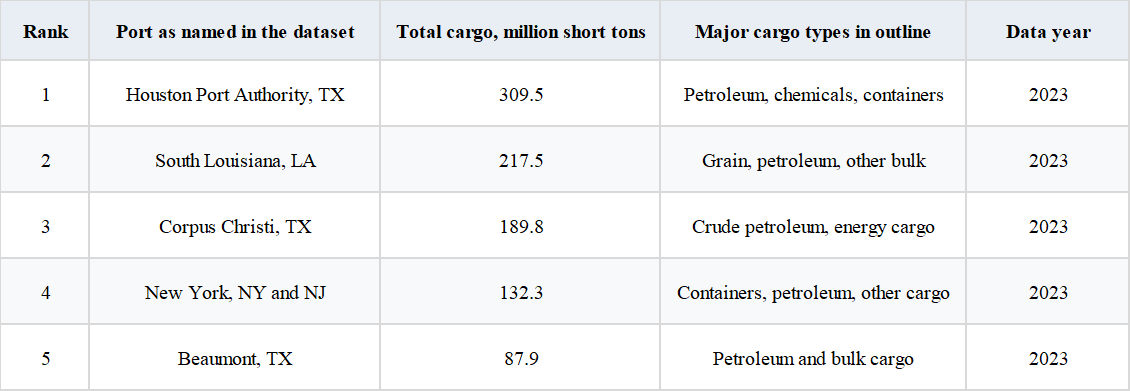
Sources: The table uses 2023 USACE figures reproduced in the BTS 2026 Annual Report, Table 5.Values are rounded and expressed in millions of US short tons; one million short tons equals two billion pounds.
How Should Shippers Choose Between Major U.S. Port Gateways?
The rankings show where large volumes of cargo move, but choosing a gateway also means considering the journey beyond the port. The factors below help connect a port’s services with your cargo, delivery deadline, and budget.
· Cargo type and available carrier services. A suitable gateway needs services and handling facilities for your goods. Standard containers, liquid bulk, and specialist cargo have different requirements, so compare routes offering the equipment and cargo acceptance you need.
· Inland connections and final destination. The distance and transport options between the terminal and your warehouse affect both delivery time and cost. You can find destination freight forwarding partners through JCtrans to help coordinate cargo release, collection, and the onward journey.
· Transit time and sailing frequency. Frequent departures can give you more scheduling options, while connecting services add another stage to the journey. You can check port-to-port vessel schedules through JCtrans to compare sailings, then confirm availability and timing with the carrier before booking.
· Terminal conditions and reliability. Cargo availability, release procedures, and collection appointments affect how smoothly goods leave the port. Review current terminal information and free-time allowances with your provider so trucking can be arranged around the expected release.
· Total port-to-destination cost. Ocean freight is one part of the bill. Handling, customs clearance services, inland transport, and possible storage or equipment charges also affect the total. Compare itemized quotes to the same delivery address to see which gateway offers better value.
Conclusion
The largest US ports serve different shipping needs. Los Angeles leads the container comparison, while Houston leads by cargo tonnage. The reporting period and port boundary help explain what each ranking shows.
For your shipment, compare available sailings, cargo handling, inland connections, and the full delivery cost. These details turn a list of major ports into a practical choice for getting goods to the receiver.
Frequently Asked Questions
Are Los Angeles and Long Beach the Same Port?
No. Los Angeles and Long Beach are neighboring ports in San Pedro Bay with separate authorities, terminals, and statistics. Some reports combine them into one gateway, so check how a ranking presents them. For shipment arrangements, the booking should identify the actual port, terminal, and cargo-release details.
What Is the Busiest Container Port in the U.S.?
Los Angeles leads the 2025 total-TEU comparison in this article, with about 10.24 million TEUs. That figure covers the full calendar year and includes loaded and empty containers. Rankings based on loaded containers alone or combined gateways use a different basis and can show a different order.
Does the Largest Port Offer the Fastest Delivery?
Port size alone does not determine delivery speed. Sailing schedules, connections, customs release, cargo availability, and inland transport all affect when goods reach the receiver. A smaller gateway with a suitable service and a shorter inland journey may offer a better delivery option for a particular shipment.
Is Port Size a Useful Measure of Cargo Throughput?
Port area shows physical size; TEUs and tonnage show cargo handled over time. Equipment, operating methods, and cargo mix affect how efficiently that space is used, so throughput and service performance need separate assessment.
Last
Container Prices in 2026: Buying Costs, Rental and Freight Rates
Container prices depend on whether you want to buy a box, rent storage space, or ship goods. For a useful 2026 budget, compare off
Next
What Does In Transit Mean for a Package?
In transit means a package is progressing through a carrier’s network toward delivery. It may be traveling between facilities or w