




Introduction: Geopolitical tensions in the Middle East have escalated sharply once again, bringing the brief improvement in shipping conditions following the June ceasefire to an end. Two large crude oil tankers were struck by missiles near the Strait of Hormuz, a critical artery for global energy transportation. Both vessels were damaged, with heavy crew casualties reported, while military exchanges and explosions have continued across the surrounding area.
International maritime organizations have urgently raised the regional shipping risk level, while international oil prices have risen sharply. Middle East routes are once again under severe pressure from delays, diversions, soaring insurance premiums and reduced vessel capacity. The situation is directly affecting cross-border supply chains for crude oil, energy products and chemicals. Freight forwarders, trading companies and energy businesses should urgently review and adjust their shipment risk management strategies.
I. Major Shipping Incident: Two VLCCs Attacked, Leaving 2 Dead and 14 Injured and Causing Severe Vessel Damage
According to Xinhua News Agency, China Central Television, international maritime publication Lloyd’s List and an Official Announcement from the UAE Ministry of Defence, two very large crude carriers (VLCCs) were struck by cruise missiles on July 14 while transiting through Omani territorial waters south of the Strait of Hormuz.
This was the most serious commercial vessel security incident in the Strait of Hormuz in terms of severity and impact since the Middle East ceasefire agreement took effect in June.
Both vessels were Liberia-flagged, and their details have been clearly identified:
Mombasa B: Owned and operated by South Korean company Sinokor;
Al Bahyah: Owned by Abu Dhabi National Oil Company (ADNOC) and operated as one of its principal crude oil carriers.
The official casualty figures were updated after the initial report. In its first Official Announcement on July 14, the UAE Ministry of Defence reported one death and eight injuries, including four crew members in critical condition.
The International Maritime Organization (IMO) and Xinhua News Agency later updated the figures, confirming a final total of two crew members killed and 14 injured.
The vessel-specific figures were as follows: two crew members were killed and three were injured aboard the Al Bahyah, while 11 crew members were injured aboard the Mombasa B.
This was one of the deadliest recent attacks on commercial vessels in the Strait of Hormuz. Two cruise missiles directly struck the vessels’ main structures, causing fires and extensive equipment damage aboard both VLCCs. The situation was brought under control after emergency response teams extinguished the fires and contained the maritime emergency. No large-scale marine oil spill was reported.
The UAE Ministry of Defence confirmed that the missiles came from the direction of Iran. It strongly condemned the attack as a violation of international law and a deliberate strike against civilian commercial vessels. The ministry also stated that it was fully prepared to respond militarily and reserved the right to retaliate.
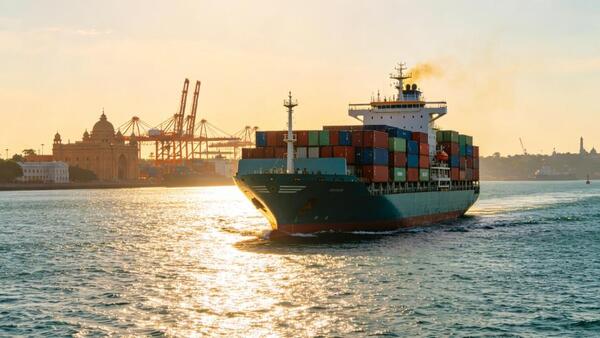
II. Escalating Conflict: Continued Fighting in the Strait and Repeated Explosions Near Ports
The attack on the two commercial vessels was not an isolated incident. It reflects the continued escalation of geopolitical confrontation in the Middle East. Military tensions across the Strait of Hormuz have intensified rapidly, and the regional maritime security environment has deteriorated significantly.
According to Xinhua News Agency, citing Iran’s Mehr News Agency, the government of Hormozgan Province confirmed that intense fighting had again broken out in the Strait of Hormuz in the early hours of July 15. Explosions were reported in Bandar Abbas, along Iran’s coastal areas and on several islands in the Persian Gulf, leaving the entire region under heightened military tension.
Earlier incidents also point to the worsening security situation. On the evening of July 13, four powerful explosions were reported in eastern Bandar Abbas, although the authorities did not disclose their cause at the time.
The series of clashes and attacks that followed indicates that the Strait of Hormuz has entered a high-risk operating environment marked by sustained military confrontation and unpredictable attacks on commercial vessels. The safety of vessel transits through the area can no longer be assured.
III. Shipping Operations Disrupted: Brief Recovery Ends as Transit Approvals Tighten
Following the implementation of the Middle East ceasefire in June, regional shipping conditions entered a brief period of recovery.
According to maritime data monitored by Lloyd’s List, several shipowners had gradually resumed transits through the Strait of Hormuz in recent weeks. Many vessels used a combination of the northern Iranian channel and the southern Omani channel. Traffic volumes through the strait steadily increased, and market confidence in Middle East routes began to recover.
The missile attacks have now brought that brief recovery to an end and placed Middle East shipping operations under renewed pressure.
Following the incident, Iranian authorities urgently suspended the approval of transit permits through the Strait of Hormuz, stating that the existing traffic control arrangements could no longer be implemented under the current military conditions.
A large number of vessels relying on local transit permits have consequently been forced to remain temporarily in the area or alter their routes. Existing shipment plans and sailing schedules have been disrupted.
The situation has been further affected by the latest US control measures. At 20:00 UTC on July 14, the United States Central Command formally implemented a maritime blockade targeting Iranian ports and coastal areas.
A previously discussed proposal to impose a 20% security service charge on cargo transiting the Strait of Hormuz was only a temporary proposal. It was quickly withdrawn by the US authorities and has been abandoned. It has no implementation plan, is not a policy currently in force and does not need to be included in cost projections.
Only the maritime blockade is currently in effect. The measure is expected to further increase the overall cost of Middle East shipping, reinforce the cautious approach taken by shipowners and cargo interests, and place additional pressure on the already fragile shipping system in the Strait of Hormuz.
IV. Sharp Market Reaction: Oil Prices Surge as Shipping Risks, Freight Rates and Insurance Premiums Rise
Geopolitical risks have rapidly spread to global energy and shipping markets, triggering an immediate chain reaction.
Following the escalation, market risk aversion rose sharply and international crude oil prices increased significantly. According to several commodity monitoring organizations and data tracked by Bloomberg, crude oil prices rose by more than 4% at one point, reaching a new short-term high as concerns over the global crude oil supply chain continued to grow.
At the same time, several leading international maritime security organizations urgently revised their risk assessments, raising the commercial shipping risk level for the Strait of Hormuz back to Critical, the highest risk category applied before the June ceasefire.
Based on assessments by maritime security organizations and current market developments, the effects of the escalation are concentrated in four main areas:
War risk insurance premiums have risen sharply, while additional costs on Middle East Gulf routes continue to increase;
1. Most shipowners have tightened their booking policies and are exercising greater caution when accepting cargoes for Middle East Gulf (MEG) routes, resulting in reduced vessel capacity;
2. International chartering companies are reassessing crude oil transportation plans, and many forward transportation orders have been temporarily suspended;
3. Vessel transit efficiency through the strait has fallen significantly, with waiting times and delays becoming increasingly common.
4. The risk of further regional spillover should not be overlooked.
Should the Houthis in the Red Sea coordinate with the current escalation and expand the scope of maritime attacks, high-risk shipping conditions could spread to the Red Sea, the Bab el-Mandeb Strait and the Gulf of Aden.
This would create two high-risk shipping corridors operating at the same time and place Middle East supply chains under extensive pressure.
V. Operational Alerts and Recommended Actions for Freight Forwarders: Supply Chain Risks Escalate Across the Board
One trend has become increasingly clear in the cross-border logistics industry in recent years: geopolitical risk has overtaken conventional freight rate fluctuations and changes in market supply and demand as a key factor affecting global supply chain stability.
The rapid deterioration of conditions in the Strait of Hormuz is another warning for freight forwarders, trading companies and energy businesses operating on Middle East routes to strengthen their risk controls.
From an operational perspective, continued tensions in the Middle East are likely to result directly in reduced shipping capacity, last-minute sailing cancellations, changes to port calls and widespread schedule delays. Standard transit-time expectations may no longer apply.
At the same time, war risk insurance premiums, maritime security surcharges and additional fuel costs caused by route diversions are all rising. The combined effect of these costs is pushing Middle East freight rates into a period of high volatility and elevated costs, directly affecting logistics budgets, purchasing plans and order delivery schedules.
Compared with short-term freight rate fluctuations, the loss of supply chain predictability is the main challenge currently facing businesses.
As a major global energy transportation artery, the Strait of Hormuz handles a significant volume of the world’s crude oil, chemical feedstocks and bulk commodities.
Should transit restrictions continue or vessels be forced to divert to alternative routes, businesses that rely heavily on imports from the Middle East may face delayed deliveries, inventory shortages, customer defaults and other operational risks.
Industry participants are advised to contact shipping lines immediately to confirm the latest transit policies and sailing schedule changes, prepare alternative routing plans in advance, and allow sufficient contingency time in their logistics arrangements to reduce exposure to sudden geopolitical risks.
VI. Industry Summary: Middle East Shipping Enters a Prolonged Period of High Uncertainty
At present, the Strait of Hormuz has not been formally closed in its entirety, and some vessels continue to transit the area with caution.
However, continued missile attacks, military exchanges at sea and tighter transit controls indicate that this critical energy corridor has returned to a highly sensitive, high-risk and highly volatile operating environment. The safety and stability of vessel transits can no longer be assured.
For the shipping industry, the impact of a single attack may be manageable in the short term. The more serious long-term risk lies in the normalization of geopolitical confrontation in the Middle East and the possibility that high-risk shipping conditions will continue for an extended period.
Should regional conflict continue to escalate, the effects will spread through energy trade, shipping markets and global supply chains, continuing to drive up cross-border logistics costs, reduce transportation efficiency and significantly affect the global import and export trade environment.
In the coming period, all cargoes involving Middle East routes should be handled under strict risk controls.
Businesses should closely monitor transit conditions in the Strait of Hormuz, sailing schedule changes and insurance premium movements, while preparing several alternative transportation plans in advance. These measures will help reduce supply chain uncertainty caused by geopolitical conflict and support the continuity of international trade operations.
Sources: Xinhua News Agency, China Central Television, Lloyd’s List, UAE Ministry of Defence, International Maritime Organization (IMO), and Iran’s Mehr News Agency
Disclaimer: All information and data contained in this article are based on publicly available authoritative sources. The content is provided for industry information purposes only and does not constitute commercial or logistics operational guidance.
Last
Maersk Temporarily Cancels AC1 West Coast South America Sailings: August Eastbound and Westbound Voyages Withdrawn Less Than One Month After Launch
Introduction: A sudden capacity adjustment has been announced on the West Coast South America trade. Maersk’s new AC1 Far East–Wes
Next
Hydrofluoric Acid Leak on MSC Vessel at the Port of Antwerp: Terminal Operations Suspended and European Shipping Delay Alert
Introduction: A major maritime incident has occurred at a key European container hub. On July 14, 2026, a serious dangerous goods

