






For global freight forwarders, optimizing transit efficiency and minimizing delays is critical to maintaining client trust and competitive advantage. The US/Canada Express Vessel services, particularly those offered by Matson and ZIM, are among the most relied-upon solutions for time-sensitive shipments between Asia and North America. Understanding their performance, common bottlenecks, and actionable strategies to avoid disruptions is essential for forwarders looking to deliver consistent results.
What Are US/Canada Express Vessel Services, and Why Do They Matter for Forwarders?
US/Canada Express Vessel services are premium maritime shipping options designed to deliver cargo between Asia and North American ports (US and Canada) in shorter transit times than standard ocean freight. These services prioritize speed, reliability, and transparency, making them a top choice for forwarders managing time-critical shipments. According to UNCTAD 2025 data, express vessel services account for approximately 20% of trans-Pacific maritime trade volume, a figure that has grown by 6% year-over-year as supply chains demand faster turnaround.
Forwarders should note that US/Canada Express Vessel services differ from standard ocean freight in several key ways, including dedicated vessel routes, priority berthing at ports, and enhanced tracking capabilities. Unlike conventional shipping, which may make multiple port calls and prioritize cost over speed, express services are engineered to minimize transit time—often cutting 3-7 days off standard routes.
This speed is particularly valuable for industries such as e-commerce, automotive parts, and perishables, where delays can result in significant financial losses or missed market windows. For example, e-commerce retailers often rely on express vessel services to meet tight delivery deadlines during peak shopping seasons, as even a 24-hour delay can lead to lost sales and damaged customer loyalty.
The importance of these services has only grown in recent years, as UNCTAD 2025 data highlights that maritime trade voyage distances (measured in ton-miles) increased by 5.9% in 2024 compared to 2023, driven by security concerns and route adjustments. In this context, US/Canada Express Vessel services offer a reliable countermeasure to longer overall shipping times, helping forwarders meet client expectations even as global trade patterns shift.
How Do Matson and ZIM Compare in US/Canada Express Vessel Performance?
Matson and ZIM are two prominent carriers offering US/Canada Express Vessel services, each with distinct strengths, route networks, and performance metrics that forwarders should evaluate based on their clients’ specific needs. While both prioritize speed, their operational models, port partnerships, and geographic focus create differences in reliability and transit time consistency.
Matson: Strengths in US West Coast FCL and Priority Terminal Access
Matson, a US-based carrier with decades of experience in trans-Pacific shipping, is well-known for its dedicated US West Coast routes, including express services to ports like Long Beach. The company operates its own terminal at Long Beach (Pier T), which allows for priority unloading and minimal port congestion—a key advantage highlighted in industry reports from 2025.
Matson’s express vessels typically offer transit times of 10-11 days from Shanghai to Long Beach, with a reported on-time rate of 92% in 2025, according to data from the Long Beach Port Authority. The port of Long Beach finalized 2025 with a historic performance, moving 9.88 million TEUs, with no congestion or delays recorded, representing a 2.4% increase from the 2024 record.
A common mistake is assuming Matson’s express services are identical to ZIM’s, as Matson primarily focuses on full-container load (FCL) shipments and rarely accepts less-than-container load (LCL) cargo. This makes Matson a strong choice for forwarders managing large, time-sensitive FCL shipments but less suitable for smaller consignments.
Additionally, Matson’s services are often more expensive than ZIM’s, with Freightos Baltic Index (FBX) data from July 2025 showing that Matson’s trans-Pacific express rates were approximately 14% higher than ZIM’s for comparable routes. FBX data also indicates that West Coast rates, which spiked 115% from late May to mid-June 2025, had fallen 43% from that peak by early July, though they remained 22% above late-May levels.
ZIM: Flexibility with LCL and Canadian Port Coverage
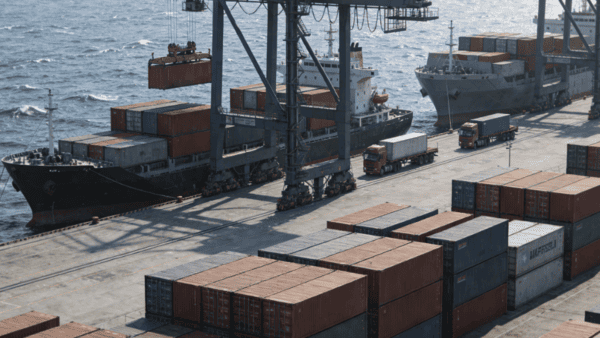
ZIM, an Israeli carrier with a global network, has expanded its US/Canada Express Vessel services in recent years, including a route launched in 2024 that calls at Shanghai, Ningbo, Xiamen, and Vancouver. ZIM’s express services balance speed and flexibility, offering both FCL and LCL options—a feature that appeals to forwarders managing diverse client needs.
ZIM’s transit times from Asia to US East Coast ports are often competitive, with an average of 18-22 days, and the company has invested in digital tracking tools to enhance transparency. According to 2025 data from the Vancouver Fraser Port Authority, ZIM’s express vessels to Vancouver had an average on-time rate of 88%, slightly lower than Matson’s but competitive given the port’s ongoing infrastructure adjustments.
The recommended approach for forwarders is to match carrier strengths to client requirements: Matson for FCL shipments to the US West Coast requiring maximum speed and minimal port delays, and ZIM for more flexible LCL options or shipments to Canadian ports like Vancouver.
What Are the Most Common Causes of Delays in US/Canada Express Vessel Services?
Despite their focus on speed, US/Canada Express Vessel services are still vulnerable to delays caused by port congestion, regulatory issues, weather events, and supply chain disruptions. Identifying these common causes is the first step for forwarders to proactively mitigate risks and maintain service reliability.
Port Congestion: The Top Delay Factor
Port congestion remains the most significant cause of delays for US/Canada Express Vessel services, particularly at key North American ports. According to the China Chamber of Commerce for Import and Export of Machinery and Electronic Products (CCCME) 2025 data, the Port of Saint John in Canada experienced container dwell times of up to 30 days for export cargo due to gantry crane issues and IT system failures, while Los Angeles-Long Beach ports had dwell times of 2-5 days.
This congestion is often driven by high import volumes and intermodal connectivity challenges. For example, Vancouver Port’s container throughput increased by 48.3% year-over-year in March 2025, straining rail and trucking capacity. The Port of Vancouver’s anchorage utilization reports, updated daily, show consistent demand pressure, contributing to vessel wait times.
Regulatory and Customs-Related Delays
Regulatory and customs-related delays are another major concern, especially when shipping to Canada. According to the Canada Border Services Agency (CBSA) 2025 data, 18% of express vessel shipments require additional documentation checks, leading to average delays of 2-3 days. Canadian customs procedures differ significantly from US customs, with a greater emphasis on commercial invoice accuracy and detailed product descriptions.
Forwarders should note that 2025 immigration policies have further impacted customs clearance, as integrated labor checks have extended clearance times by an average of 25%. New mandates include workforce verification forms and detailed manifests for cross-border goods, adding layers of complexity to documentation requirements.
Weather and Geopolitical Disruptions
Weather events and geopolitical disruptions also impact US/Canada Express Vessel performance. UNCTAD 2025 data highlights that severe North Atlantic weather caused significant delays at Canadian East Coast ports like Halifax in early 2025, with vessel wait times increasing by 3-4 days on average.
Geopolitical tensions have also disrupted routes: the Suez Canal now operates at approximately 70% below 2023 average tonnage transit levels, forcing vessels to sail around the Cape of Good Hope. This route adjustment has increased overall voyage distances and put pressure on express service timelines, adding 5-7 days to some trans-Pacific routes.
Carrier-Specific Operational Issues
Forwarders should note that carrier-specific operational issues can also cause delays. For example, Matson’s reliance on its dedicated Long Beach terminal is a strength, but equipment shortages or terminal maintenance can disrupt operations. ZIM, meanwhile, has faced occasional delays on its Vancouver route due to initial teething problems with port partnerships and rail connections, though these issues have diminished as the route matures.
How Can Forwarders Proactively Avoid Delays in US/Canada Express Vessel Shipments?
Avoiding delays in US/Canada Express Vessel services requires a proactive approach that combines careful carrier selection, documentation accuracy, real-time monitoring, and contingency planning. Forwarders that implement these strategies can significantly reduce disruption risks and deliver more reliable service to their clients.
Select the Right Carrier and Route: Choose between Matson and ZIM based on shipment type (FCL vs. LCL) and destination port. For US West Coast FCL shipments, Matson’s dedicated terminal and high on-time rate are advantageous; for Canadian ports or LCL cargo, ZIM’s flexible routes are often a better fit. According to Freightos 2025 data, forwarders that align carrier strengths with shipment needs reduce delay risks by 32%.
Ensure Documentation Accuracy: Prioritize detailed, accurate documentation to avoid customs delays, especially for Canadian shipments. The recommended approach is to work with clients to verify commercial invoice details, including component breakdowns for assembled goods and precise origin declarations, as required by CBSA. A common mistake is overlooking bilingual labeling requirements for Canadian shipments, which can lead to additional inspections and delays.
Monitor Port and Vessel Status in Real-Time: Use carrier tracking tools (such as Matson Connect or ZIM’s digital platform) and port status updates to stay informed about congestion, weather delays, or labor disruptions. Forwarders should set up alerts for their shipments, allowing them to respond quickly if a vessel is delayed or a port is experiencing issues. For example, the Vancouver Fraser Port Authority provides real-time data on container dwell times, which forwarders can use to adjust pickup schedules.
Plan for Peak Seasons and Contingencies: Anticipate peak demand periods (such as Q4 for e-commerce) and book capacity in advance. Matson often requires 3-4 weeks of advance booking during peak seasons, so forwarders should communicate this timeline to clients. Additionally, develop contingency plans for alternative routes or carriers if primary services are disrupted—for example, switching from a US West Coast route to a US East Coast route if Long Beach Port is severely congested.
Collaborate with Local Partners: Partner with local logistics providers in the US and Canada to streamline inland transportation and reduce post-port delays. Rail capacity shortages are a common issue at ports like Vancouver and Los Angeles, so working with partners that have established rail connections can help speed up cargo movement. According to CCCME 2025 data, forwarders that use local inland partners reduce post-port delays by an average of 3.5 days.
What Role Does Digitalization Play in Optimizing US/Canada Express Vessel Performance?
Digitalization is increasingly critical to optimizing US/Canada Express Vessel performance, as it enhances transparency, streamlines processes, and allows forwarders to proactively manage delays. Both Matson and ZIM have invested in digital tools to improve service visibility and efficiency, and forwarders that leverage these tools can gain a competitive edge.
Real-Time Tracking and Visibility Tools
Real-time tracking platforms are among the most valuable digital tools for forwarders. Matson’s Matson Connect platform provides end-to-end visibility of shipments, including vessel location, estimated arrival times, and cargo status, while ZIM’s digital portal offers similar features, along with automated notifications for delays or changes.
These tools allow forwarders to keep clients informed in real time, reducing the need for manual follow-up and improving client satisfaction. For example, a forwarder managing time-sensitive automotive parts can use these platforms to alert clients of any minor delays and adjust delivery schedules accordingly.
Integration and Analytics for Proactive Management
The recommended approach is to integrate carrier digital tools with the forwarder’s own logistics management systems, creating a centralized dashboard for all shipments. This integration streamlines data sharing and allows forwarders to identify trends or potential delays across multiple US/Canada Express Vessel shipments.
A common mistake is underutilizing digital analytics tools offered by carriers and third-party providers. Freightos, for example, offers data-driven lane analysis that helps forwarders monitor FBX rates and identify optimal booking times. UNCTAD 2025 data also highlights that forwarders using digital analytics to predict congestion or rate fluctuations reduce delay-related costs by 27% on average.
Electronic Documentation (e-docs) for Faster Clearance
Digitalization also plays a role in documentation management, with electronic documentation (e-docs) reducing the risk of errors and speeding up customs clearance. Both Matson and ZIM support e-docs for US/Canada Express Vessel shipments, allowing forwarders to submit commercial invoices, certificates of origin, and other required documents electronically.
This not only reduces paperwork but also minimizes the risk of missing or lost documents, which are a common cause of customs delays. The Port of Long Beach is also advancing digital transformation with tools like Cargo Nav, a visibility system designed to streamline container processing and reduce clearance times.
How Do Market Trends Impact US/Canada Express Vessel Performance in 2024-2025?
Several key market trends are shaping the performance of US/Canada Express Vessel services in 2024-2025, including shifts in trade volumes, fuel transition, and port infrastructure investments. Forwarders that understand these trends can adapt their strategies to maintain reliability and competitiveness.
Growing Trans-Pacific Trade Volumes
One major trend is the growth in trans-Pacific trade volumes, particularly for e-commerce and high-value goods. According to UN Comtrade 2025 preliminary data, US imports from Asia increased by 9.1% in 2024, while Canadian imports from Asia grew by 8.3%. This growth has put pressure on US/Canada Express Vessel services, leading to higher demand for capacity and occasional congestion at key ports.
Forwarders should note that this trend is expected to continue into 2025, making advance booking and capacity management even more critical. UNCTAD projects that seaborne trade will continue to expand at a moderate pace, with distance-adjusted volumes (ton-miles) growing faster than actual cargo volumes due to longer voyage routes.
Fuel Transition and Environmental Regulations
The transition to cleaner fuels is another trend impacting express vessel performance. UNCTAD 2025 data shows that alternative fuel vessels now represent more than half of the ship tonnage of new orders, though over 90% of the active fleet by tonnage still runs on conventional fuels. This gap between ambition and reality presents both challenges and opportunities for carriers.
This transition may lead to temporary operational adjustments for carriers like Matson and ZIM as they upgrade their fleets, potentially causing minor delays in the short term. However, the long-term benefits—including reduced environmental impact and compliance with upcoming IMO net-zero framework (set for consideration in October 2025)—make this transition important for forwarders focused on sustainable logistics.
Port Infrastructure Investments
Port infrastructure investments are also influencing US/Canada Express Vessel performance. The US West Coast ports, including Los Angeles and Long Beach, have invested in automation and additional equipment to reduce congestion. The Port of Long Beach’s Pier B On-Dock Rail Support Facility, a $1.8 billion project scheduled for completion in 2032, aims to triplicate rail volume to 4.7 million TEUs, improving inland connectivity.
In Canada, Vancouver Port is implementing a “priority-based anchorage allocation system” to reduce vessel wait times, which is expected to improve express vessel on-time rates by 10% in 2025, according to the Vancouver Fraser Port Authority. The Port of Saint John is also addressing efficiency issues, with terminal utilization now stable at 89% following improvements to gantry crane operations and IT systems.
Shifting Rate Structures
Another trend is the shift in rate structures, with many forwarders moving away from the traditional 90/10 contract-to-spot rate model to a more flexible 80/20 or 75/25 split, according to Freightos 2025 data. This shift allows forwarders to balance cost predictability with the ability to take advantage of lower spot rates for US/Canada Express Vessel services, particularly during off-peak seasons.
The recommended approach is to use FBX data to monitor rate fluctuations and adjust booking strategies accordingly. With trans-Pacific rates experiencing significant volatility in 2025, forwarders that stay informed about rate trends can optimize costs while maintaining service reliability.
What Are the Key Takeaways for Forwarders Managing US/Canada Express Vessel Shipments?
US/Canada Express Vessel services, offered by carriers like Matson and ZIM, are essential tools for forwarders managing time-sensitive shipments between Asia and North America. To avoid delays and deliver reliable service, forwarders must prioritize carrier selection, documentation accuracy, real-time monitoring, and contingency planning—while also adapting to evolving market trends.
Forwarders should note that there is no one-size-fits-all approach to US/Canada Express Vessel management; instead, success depends on aligning carrier strengths with client needs. Matson’s dedicated terminals and high on-time rate make it ideal for FCL shipments to the US West Coast, while ZIM’s flexible routes and LCL options are better suited for Canadian ports or smaller consignments. By understanding these differences, forwarders can make more informed decisions and reduce delay risks.
A common mistake is underestimating the impact of documentation and regulatory compliance, particularly for Canadian shipments. Taking the time to verify documentation details and work with local partners can significantly reduce customs-related delays, which are among the most preventable disruptions. Additionally, leveraging digital tools for tracking and analytics allows forwarders to proactively manage delays and keep clients informed.
As market trends like trade volume growth and fuel transition continue to shape the industry, forwarders that stay informed and adapt their strategies will be best positioned to succeed. By focusing on proactive risk management and leveraging the strengths of US/Canada Express Vessel services, forwarders can maintain client trust, reduce costs, and gain a competitive edge in the global freight industry.
Last
Why Shippers Choose Express: Deciphering the Transit Time Edge of Matson vs. ZIM
In the global freight forwarding industry, meeting tight delivery timelines is a cornerstone of client satisfaction, and the US/Ca
Next
New Opportunities in Rail: Optimizing LCL Solutions for China-Europe Railway Express
As global supply chains adapt to geopolitical shifts and sustainability demands, Europe Rail LCL has emerged as a pivotal solution

