






As global supply chains adapt to geopolitical shifts and sustainability demands, Europe Rail LCL has emerged as a pivotal solution for forwarders managing small to medium-sized cargo between China and Europe. This article explores how to optimize these solutions to capitalize on emerging opportunities in the China-Europe Railway Express (CERE) network.
What Is Europe Rail LCL and Why Is It Gaining Traction for China-Europe Trade?
Europe Rail LCL refers to less than container load services tailored for the China-Europe Railway Express, enabling forwarders to consolidate small cargo consignments into full containers for cost-effective, reliable rail transportation. It bridges the gap between full container load (FCL) and air freight, balancing cost efficiency and transit speed to meet diverse cargo requirements. According to China State Railway Group 2025 data, CERE now connects 232 European cities, making LCL a viable option for fragmented cargo shipments.
Driving Factor 1: Sustained China-EU Trade Dynamics
The rising popularity of Europe Rail LCL is primarily driven by sustained trade volumes between China and the EU. According to European Commission 2025 statistics, EU trade with China reached over 700 billion US dollars in the first 10 months of 2025, accounting for 14.5% of the EU’s total trade volume and driving 0.8 percentage points of the EU’s trade growth. Meanwhile, China Customs data shows that China’s imports and exports with the EU reached 5.93 trillion yuan in 2025, an increase of 6%, accounting for 13% of China’s total import and export value.
This steady trade flow generates substantial small-lot cargo that FCL cannot efficiently accommodate, as many small and medium-sized enterprises (SMEs) lack sufficient goods to fill a full container. Europe Rail LCL addresses this pain point by allowing forwarders to aggregate small consignments, enabling SMEs to access the CERE network without the need for full container quantities.
Driving Factor 2: Maritime Transport Disruptions
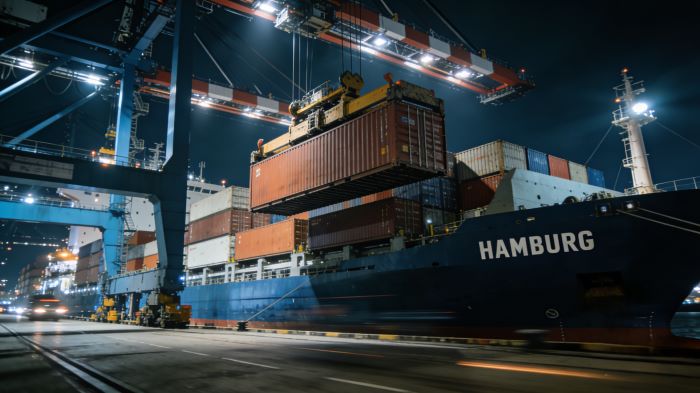
Maritime transport challenges have further enhanced the appeal of Europe Rail LCL. UNCTAD’s 2025 Review of Maritime Transport notes that Suez Canal transits declined significantly due to Red Sea geopolitical tensions, prompting shipping companies to reroute around the Cape of Good Hope, which increased freight costs and transit times. In response, the Suez Canal Authority announced plans to offer 12% to 15% toll discounts in May 2025 to restore traffic volume, but the impact on freight stability remains uncertain.
For instance, Drewry’s 2025 data shows that the average FAK (Freight All Kinds) rate for 40ft containers on the Shanghai-Rotterdam route was around 2,400 US dollars in late February 2025, with the lowest quotes at 2,100 US dollars. While this is lower than the 2024 peak, maritime freight rates remain volatile due to rerouting costs and capacity fluctuations. In contrast, Europe Rail LCL offers more stable pricing and transit times.
Driving Factor 3: Demand for Flexible, Sustainable Logistics
Forwarders should note that Europe Rail LCL is not a one-size-fits-all solution, but it aligns with the growing demand for flexible, sustainable logistics. Unlike air freight, which is cost-prohibitive for many SMEs, and FCL, which requires large cargo volumes, LCL enables forwarders to serve SMEs that constitute a significant portion of China-Europe trade.
Additionally, according to the 2025 China-Europe Freight Train Development Report, CERE’s average carbon emissions are one-fifteenth that of air transport and one-seventh that of road transport. This environmental advantage makes Europe Rail LCL an attractive option for clients prioritizing carbon neutrality and sustainable supply chain practices.
What Are the Key Challenges Forwarders Face with Europe Rail LCL?
Despite its benefits, Europe Rail LCL presents unique challenges for forwarders, including cargo consolidation inefficiencies, cross-border regulatory hurdles, and inconsistent last-mile delivery. These issues often stem from fragmented supply chain coordination and a lack of standardized processes across the CERE network.
Challenge 1: Cargo Consolidation Complexity
A common mistake is underestimating the complexity of cargo consolidation for Europe Rail LCL. Unlike maritime LCL, rail LCL requires precise timing to align with CERE’s fixed schedules, as missed cutoffs can delay shipments by days or even weeks. For example, the Xi’an-Duisburg CERE service operates seven times a week (four outbound, three inbound) after the 2025 rail schedule adjustment, leaving minimal room for error in consolidation.
Challenge 2: Cross-Border Regulatory Compliance
Cross-border regulatory compliance is another major challenge. Forwarders must navigate varying customs procedures, documentation requirements, and rail gauge differences between China and European countries. As noted by China State Railway Group, CERE crosses multiple rail gauges, requiring container transloading at border stations—a process that can cause delays if not properly coordinated.
Additionally, China Railway Group’s 2023 regulation mandates that all cargo entering warehouses must have prominent product labels matching customs declarations, adding another layer of compliance for forwarders managing international LCL shipments. This regulation aims to enhance cargo traceability and customs efficiency, but it requires close coordination between forwarders and clients.
Challenge 3: Inconsistent Last-Mile Delivery
Inconsistent last-mile delivery is also a pain point. While CERE efficiently transports containers to major European hubs like Duisburg and Warsaw, distributing LCL cargo from these hubs to final destinations often relies on third-party carriers, leading to variable service quality. This inconsistency can erode client trust, as SMEs often lack the resources to track multi-stage shipments independently.
How Can Forwarders Optimize Europe Rail LCL Consolidation Processes?
Optimizing consolidation is critical for maximizing the efficiency and cost-effectiveness of Europe Rail LCL. By streamlining cargo collection, sorting, and loading, forwarders can reduce delays, lower costs, and improve client satisfaction.
Implement a centralized consolidation system: Adopt digital platforms to track cargo from multiple clients in real time, allowing for better coordination of collection times and volumes. This system should integrate with CERE’s 95306 freight service platform to align with train schedules and reduce missed cutoffs.
Classify cargo by compatibility and destination: Group cargo by factors like weight, fragility, and final destination to minimize damage and streamline unloading at European hubs. For example, consolidate cargo bound for the Netherlands (a major EU importer of Chinese goods) in separate containers to reduce transshipment time.
Establish strategic warehouse partnerships: Partner with warehouses near major CERE departure points (e.g., Xi’an, Chongqing, Yiwu) to reduce inland transport time for cargo. These warehouses should offer pre-customs inspection services to speed up the clearance process, as seen in the Luzhou LCL consolidation model, which reduced transit time by 5 days and cut transshipment costs by $400 per container.
Set clear consolidation deadlines: Communicate strict cutoffs to clients based on CERE schedules, accounting for inland transport and customs clearance time. The recommended approach is to set cutoffs 48–72 hours before train departure to ensure all cargo is consolidated and inspected on time.
Forwarders should note that effective consolidation requires collaboration across the supply chain. Working closely with clients to predict cargo volumes, and with CERE operators to understand schedule changes, can significantly reduce consolidation inefficiencies. For example, the Luzhou LCL consolidation model, which connects cargo bound for multiple Central Asian and European stations, required close coordination with railway authorities and clients to resolve operational bottlenecks, resulting in 3,535 tons of cargo shipped across four trains by 2025.
How to Navigate Cross-Border Compliance for Europe Rail LCL?
Compliance with cross-border regulations is non-negotiable for Europe Rail LCL success, as violations can lead to delays, fines, or cargo seizures. Forwarders must stay updated on customs procedures, documentation requirements, and international rail standards.
Standardize documentation processes: Use consistent, accurate documentation (e.g., commercial invoices, packing lists, customs declarations) that meets the requirements of both Chinese and European customs. Ensure all documents include detailed cargo descriptions, as vague descriptions are a common cause of customs delays.
Leverage pre-customs clearance services: Utilize CERE’s integrated customs platform to submit documentation in advance, allowing for pre-approval and faster clearance at border stations. China’s nationwide integrated customs policy has improved information sharing, reducing clearance time for compliant shipments.
Stay informed on regulatory changes: Subscribe to updates from Chinese and European customs authorities, as well as CERE operators, to adapt to new regulations. For example, China Railway Group’s 2023 label requirement for warehouse-bound cargo requires forwarders to work with clients to ensure proper labeling, avoiding delays.
Partner with local customs brokers: Collaborate with brokers in key European countries to navigate regional customs nuances. Local brokers have expertise in country-specific requirements, reducing the risk of non-compliance and delays.
A common mistake is assuming that documentation requirements are uniform across all European countries. For example, Germany (a major EU exporter to China) has stricter labeling requirements for electronic goods than Poland, so forwarders must tailor documentation to each destination. The recommended approach is to create a compliance checklist for each major European market, ensuring all requirements are met before shipment.
How to Enhance Last-Mile Delivery for Europe Rail LCL?
Last-mile delivery is a critical component of Europe Rail LCL, as it directly impacts client satisfaction. Forwarders must ensure seamless connection between CERE hubs and final destinations to avoid delays and damage.
Establish partnerships with European logistics providers: Collaborate with reputable carriers in major European hubs to offer door-to-door LCL services. These partners should have experience handling small-lot cargo and access to regional distribution networks, covering cities beyond major hubs.
Integrate real-time tracking systems: Use digital tracking tools that provide end-to-end visibility, from CERE departure to last-mile delivery. CERE’s Beidou positioning system allows for real-time cargo tracking, which forwarders can share with clients to improve transparency.
Optimize packaging for last-mile handling: Advise clients on appropriate packaging to withstand multiple transfers during last-mile delivery. Fragile cargo should be packed with shock-absorbent materials, and packages should be clearly labeled with destination information to avoid misdelivery.
Offer flexible delivery options: Provide clients with choices such as scheduled delivery, express delivery, or self-pickup at European hubs. This flexibility caters to diverse client needs, from SMEs requiring fast delivery to large enterprises prioritizing cost savings.
Forwarders should note that last-mile delivery optimization requires ongoing evaluation. Regularly assess the performance of European partners, track delivery times, and gather client feedback to identify areas for improvement. For example, if clients report delays in Germany, forwarders may need to adjust their partner network or consolidate more cargo bound for Germany to improve efficiency.
What Role Does Technology Play in Optimizing Europe Rail LCL?
Technology is a key enabler of Europe Rail LCL optimization, helping forwarders streamline processes, improve visibility, and reduce errors. From digital consolidation tools to AI-powered forecasting, technology addresses many of the challenges associated with LCL rail transport.
Digital Platforms for Consolidation and Coordination
Digital platforms have transformed cargo consolidation by allowing forwarders to track cargo in real time, automate documentation, and coordinate with clients and carriers. For example, CERE’s online portal provides access to train schedules, cargo tracking, and customs documentation, reducing manual processes and human error. Forwarders using these platforms often report a 20–30% reduction in consolidation time, as noted by industry surveys of leading freight forwarding companies.
AI and Data Analytics for Forecasting and Capacity Management
AI and data analytics are also becoming increasingly important for Europe Rail LCL. These tools can forecast cargo volumes, allowing forwarders to optimize consolidation and secure CERE space in advance. For example, analytics can identify peak shipping periods (e.g., before major European holidays) and help forwarders adjust their consolidation strategies to avoid capacity shortages.
The recommended approach is to invest in AI tools that integrate with CERE’s data to provide accurate volume forecasts. This proactive approach helps forwarders avoid last-minute capacity crunches and ensure timely shipment of client cargo.
Key Considerations for Technology Implementation
A common mistake is implementing technology without proper training. Forwarders must ensure their teams are proficient in using digital tools to maximize their benefits. Additionally, integrating technology across all supply chain partners—including clients, warehouses, and carriers—is essential for seamless operations.
For example, if a client’s inventory system is integrated with a forwarder’s consolidation platform, both parties can track cargo in real time, reducing communication gaps and minimizing the risk of delays.
What Are the Emerging Trends Shaping Europe Rail LCL’s Future?
Several emerging trends are set to reshape Europe Rail LCL, offering new opportunities for forwarders that adapt proactively. These trends include the expansion of CERE’s network, growing demand for sustainable logistics, and the rise of integrated multimodal solutions.
Trend 1: CERE Network Expansion
The expansion of CERE’s network is a key trend, with new routes and increased frequency creating more opportunities for Europe Rail LCL. According to China State Railway Group 2025 data, as of October 2025, CERE has operated a total of 118,600 trips, transporting 11.7 million TEUs, with its logistics service network covering most of Asia and Europe.
New routes connecting cities like Guangzhou and Wuhan to European hubs are expanding the reach of LCL services, allowing forwarders to serve more clients across China and Europe. Additionally, CERE’s average speed has improved, with 1,600 kilometers per day in China and 1,000–1,300 kilometers per day in overseas sections, reducing overall transit times.
Trend 2: Growing Demand for Sustainable Logistics
Sustainability is another driving trend, as more clients prioritize low-carbon logistics. Europe Rail LCL’s lower carbon footprint compared to air and road transport makes it an attractive option for businesses aiming to reduce their environmental impact. According to the 2025 China-Europe Freight Train Development Report, CERE’s transportation cost is about one-fifth of air transport, while its transit time is roughly one-fourth of sea transport, offering a balance of efficiency and sustainability.
Forwarders can capitalize on this trend by promoting the sustainability benefits of LCL rail transport and offering carbon-neutral options, such as offsetting emissions through verified environmental projects.
Trend 3: Rise of Integrated Multimodal Solutions
Integrated multimodal solutions are also gaining traction, combining Europe Rail LCL with other transport modes (e.g., road, sea) to create end-to-end supply chain solutions. For example, forwarders can use LCL rail to transport cargo from China to European hubs, then use road transport for last-mile delivery, or combine rail with short-sea shipping to reach coastal European cities.
This integration improves flexibility and allows forwarders to offer tailored solutions for diverse client needs. Forwarders should note that these trends require a proactive approach—investing in sustainable practices, expanding network partnerships, and adopting digital tools will be essential for staying competitive in the evolving Europe Rail LCL market.
How to Measure the Success of Europe Rail LCL Optimization?
Measuring the success of Europe Rail LCL optimization is crucial for forwarders to identify what works, address gaps, and demonstrate value to clients. Key metrics focus on efficiency, cost, and client satisfaction.
Transit time accuracy: Track the percentage of LCL shipments that arrive on time, comparing actual transit times to estimated times. A high on-time rate (e.g., 90% or higher) indicates effective consolidation and compliance processes.
Cost per unit: Calculate the cost per kilogram or cubic meter for LCL shipments, monitoring changes after implementing optimization strategies. Reduced cost per unit indicates improved consolidation efficiency and better use of CERE capacity.
Client satisfaction: Gather feedback from clients on factors like transit time, visibility, and communication. High client satisfaction scores (e.g., 4.5/5 or higher) indicate that optimization efforts are meeting client needs.
Customs clearance time: Measure the average time taken for LCL shipments to clear customs at border stations. Reduced clearance time indicates effective documentation and compliance processes.
The recommended approach is to review these metrics monthly, identifying trends and adjusting strategies as needed. For example, if transit time accuracy drops, forwarders should investigate whether consolidation deadlines are being met or if there are delays in customs clearance. Regularly sharing these metrics with clients can also build trust and demonstrate the value of optimized Europe Rail LCL solutions.
As global supply chains continue to evolve, Europe Rail LCL will remain a vital solution for forwarders managing small-lot cargo between China and Europe. By addressing consolidation inefficiencies, navigating cross-border compliance, enhancing last-mile delivery, leveraging technology, and adapting to emerging trends, forwarders can optimize their LCL solutions and capitalize on the growing opportunities in the CERE network. With the right strategies and a focus on client needs, Europe Rail LCL can become a competitive advantage, helping forwarders stand out in a crowded market and build long-term client relationships.
Last
Avoiding Delays: A Deep Dive into US & Canada Express Vessel Performance (Matson/ZIM)
For global freight forwarders, optimizing transit efficiency and minimizing delays is critical to maintaining client trust and com
Next
New Corridors to SE Asia: Analyzing the Advantages of Cross-border Direct Trucking
As global trade between China and Southeast Asia (SE Asia) continues to flourish, forwarders are seeking more efficient land trans

