



Optimizing China to Middle East cost relies on rational comparison between low-tariff slow container services and premium expedited ocean lanes, as the two service modes deliver differentiated cost structures, transit schedules and operational risks for cross-border export shipments. Chinese manufacturing exports targeting Middle Eastern consumer, industrial and construction sectors continue to expand, making flexible lane selection a critical part of modern logistics pricing and client service planning. Most global freight forwarders manage diversified cargo portfolios with varying delivery urgency and profit margins, so balanced lane allocation supports steady operational performance and client retention.
What are slow container strings and premium expedited lanes for China-Middle East trade?
Slow container strings and premium expedited lanes are two mainstream container service categories with distinct pricing and transit parameters for China-Middle East ocean freight corridors. The two service models differ in routing design, port call frequency, carrier scheduling priority and overall landed cost composition for export consignments.
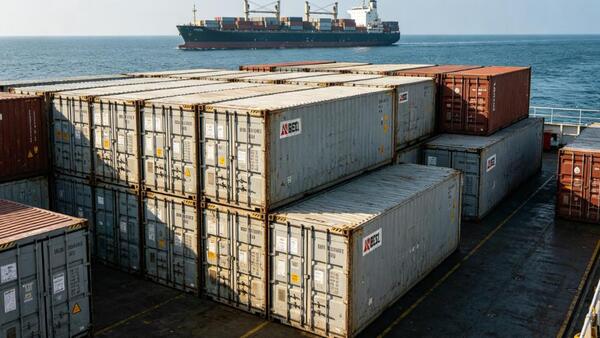
Core features of low-tariff slow container strings
Low-tariff slow container strings usually adopt multi-port transshipment routes via Southeast Asian hub ports including Singapore and Colombo, featuring extended voyage cycles and reduced base ocean freight rates. According to verified Drewry 2025 container route analytics data, transshipment slow lane services record 10% to 25% lower spot rates than direct expedited lanes, suitable for non-time-sensitive bulk cargo shipments. The average transit duration from major Chinese coastal ports to Dubai and Jeddah ranges from 25 to 30 days, with flexible scheduling that carries moderate stability risks.
Core features of premium expedited shipping lanes
Premium expedited lanes prioritize direct or minimal-transshipment voyages with fewer intermediate port calls and stable capacity reservation arrangements. These scheduled liner services maintain fixed weekly departures, with average transit times of 18 to 22 days for key Middle Eastern destination terminals. Although base freight rates sit at higher levels, such lanes help reduce demurrage fees, detention charges and long-term inventory holding expenditures for fast-turnaround export commodities.
Forwarders should note that the nominal rate gap between slow and expedited lanes cannot represent total logistics expenditure, as latent auxiliary costs often offset partial freight savings generated by low-tariff slow container services.
How does lane selection reshape comprehensive export logistics expenditures?
Different shipping lane options adjust total logistics costs by influencing three key expenditure dimensions: direct ocean freight fees, indirect operational overheads and inventory capital occupancy costs for Chinese exporting enterprises. Each shipment achieves a unique comprehensive cost profile based on selected service tiers.
A common mistake is that many freight forwarders assess shipping solutions merely through base rate comparison while neglecting derivative logistics expenses caused by transit time discrepancies. Rate-only evaluation methods may lead to elevated comprehensive operational costs for long-term client shipment partnerships.
Direct ocean freight differentials: Low-tariff slow container strings maintain steady pricing advantages across peak and off-peak shipping cycles. Per Freightos Baltic Index (FBX) 2026 route monitoring data, FCL rates for slow China-Middle East lanes stay 12% to 22% lower than expedited lane rates under identical container specifications.
Inventory capital occupancy expenses: Extended transit cycles of slow lanes prolong cargo dwell time at sea, increasing capital occupancy pressure for export businesses. Consumer goods and electronic components with short sales cycles face reduced market turnover efficiency and compressed profit margins due to delayed cargo arrival.
Delay-triggered emergency logistics fees: Multi-transshipment slow routes carry higher exposure to schedule deviations, terminal congestion and port waiting delays. Unplanned schedule disruptions often result in additional warehousing costs, destination trucking adjustments and expedited delivery charges.
Contract penalty and repeat order risks: Time-dependent batch shipments may incur contractual compensation fees or reduced repeat order volumes due to prolonged transit periods. Such implicit economic losses can offset most freight savings from low-cost slow shipping arrangements.
Which shipment scenarios match low-tariff slow container strings?
Low-tariff slow container strings deliver reliable cost performance for specific China-Middle East export cargo with low time sensitivity and regular shipment frequencies. Targeted scenario matching assists forwarders in controlling unnecessary logistics spending for enterprise clients.
Mass-produced low-margin bulk commodities: Construction materials, daily hardware accessories and packaging supplies feature stable market demand and flexible delivery timelines. Such cargo adapts well to slow transshipment services, leveraging low base rates to regulate overall logistics budgets.
Routine warehouse inventory replenishment cargo: Scheduled stock replenishment for Middle Eastern offline retail warehouses does not require rapid transit. Forwarders can arrange slow lane shipments in advance to lock in favorable freight rates and stabilize client long-term procurement budgets.
Off-season non-urgent batch consignments: During off-peak export cycles with mild market demand fluctuations, slow shipping strings provide stable cost-saving channels without disrupting clients’ regional distribution schedules.

Which shipment scenarios require premium expedited lane adoption?
Premium expedited lane services create tangible comprehensive value for high-value, time-sensitive and seasonally urgent China-Middle East export cargo. The incremental freight premiums are offset by mitigated operational risks and improved market response efficiency.
High-value electronic and mechanical equipment: Precision electronic devices, smart consumer products and mechanical spare parts carry high unit cargo value and require agile inventory turnover. Expedited lanes shorten transit cycles, lower capital occupancy pressure and reduce market depreciation risks for high-value goods.
Seasonal commodities for regional festivals: Middle Eastern cultural festivals drive concentrated consumer purchasing demand in specific periods. According to ITC Trade Map 2025 seasonal trade statistics, surging festival-related export volumes require faster transit solutions to support in-time shelf placement and sales circulation.
Urgent supplementary order shipments: Stock replenishment consignments for out-of-stock inventory and order remediation cargo demand fast port-to-port transit, which helps reduce order shortage losses and sustain stable overseas business partnerships.
What practical strategies help forwarders balance cost and service quality?
Structured lane matching tactics enable forwarders to balance freight cost control and consistent service quality for China-Middle East export logistics businesses. Differentiated scheduling methods mitigate the inherent limitations of single-mode shipping arrangements and optimize comprehensive logistics benefits.
The recommended approach is to build a tiered shipment scheduling framework based on cargo value, delivery urgency and client profit attributes, instead of applying unified slow or expedited lane arrangements for all consignments.
Grade shipments by delivery urgency: Tag client consignments with standardized urgency classification labels. Allocate expedited lane resources for high-urgency cargo and adopt low-tariff slow lanes for conventional stable shipments to realize refined cost control.
Implement hybrid lane scheduling for mixed orders: For large-scale mixed orders containing both urgent and standard cargo types, forwarders can split consignments for segmented transportation. This method balances delivery timeliness and overall freight cost optimization for consolidated batch orders.
Secure flexible lane adjustment clauses: Maintain long-term framework cooperation with mainstream liner carriers to obtain adjustable lane switching entitlements. Such arrangements support temporary service upgrades for emergent cargo without generating excessive incremental costs.
Adopt total landed cost as evaluation criteria: Develop unified quotation models that integrate base freight, capital occupancy cost, potential risk loss and auxiliary service fees. Evaluate shipping solutions through comprehensive landed cost rather than standalone base rate figures.
How do seasonal market shifts affect lane cost gaps?
Periodic shipping market fluctuations adjust the cost performance disparity between slow container strings and expedited lanes on China-Middle East routes. Forwarders need dynamic scheduling adjustments to adapt to changing market cycles.
Cost performance changes in peak shipping seasons
Annual peak shipping cycles from Q3 to Q4 bring tightened overall lane capacity and widened expedited lane premium ranges. According to UNCTAD 2026 maritime industry analysis, expedited lane rate premiums during peak seasons expand by 5% to 10% compared with regular off-season levels. Moderately increasing slow lane shipment ratios in such periods helps enterprises control excessive freight premium expenditures.
Cost performance changes in off-peak shipping seasons
Off-season market conditions feature sufficient carrier capacity and narrowed rate differentials between slow and expedited lanes. The incremental cost of upgrading to expedited services decreases notably, making premium lanes a viable option for most conventional export shipments in low-demand cycles.
Conclusion
Rational comparison and flexible deployment of low-tariff slow container strings and premium expedited lanes constitute vital methods to optimize China to Middle East cost for diversified export commodities. The two shipping service modes deliver differentiated strengths and applicable scenarios in freight pricing, transit efficiency and operational risk management. Global freight forwarders can improve comprehensive client service capabilities and operational profitability via tiered scheduling, hybrid lane collocation and seasonal dynamic adjustment strategies, supporting steady cost optimization for China-Middle East cross-border export logistics services.
Last
Evaluating standard transit time trends for moving heavy machinery from china industrial ports to africa via sea freight
China to Africa Sea Freight constitutes a vital maritime logistics channel for cross-border heavy machinery trade, supporting ongo
Next
Comparing land bridge intermodal times with short sea feeder options for cross border freight leaving vietnam via trucking hubs
Cross Border Vietnam Trucking acts as a core intermodal solution for regional freight forwarding operations, supporting flexible h