




Professional global freight forwarders choose shipping route lanes that minimize multi port transshipment risks for fragile industrial cargo to preserve cargo integrity and stabilize cross-border industrial supply chains. Fragile industrial commodities including precision machinery, optoelectronic components, and laboratory instruments are highly vulnerable to mechanical shock, vibration, and improper stowage during container transshipment operations.
According to UNCTAD 2025 maritime industry analysis, repetitive container handling and multi-hub transshipment constitute the primary cause of cargo damage in containerized industrial shipments. The ongoing Red Sea shipping disruptions and widespread lane rerouting since late 2024 have further increased transshipment frequency and operational uncertainty across major trade corridors.
Unlike mainstream general container cargo, fragile industrial goods feature low tolerance for external extrusion, temperature variation, and prolonged container confinement. Each additional transshipment node introduces new human and mechanical intervention, raising the likelihood of cosmetic damage, structural deformation, or functional malfunction. For industrial shippers, such cargo incidents often lead to production downtime and measurable financial losses.
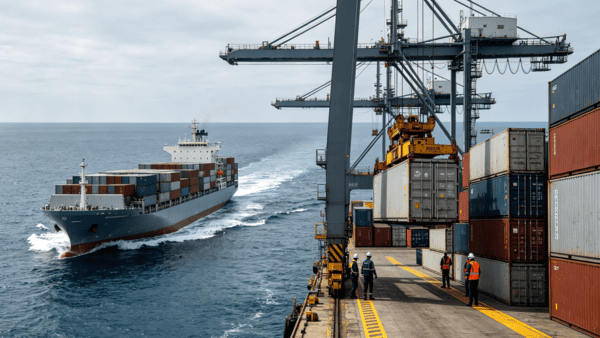
What core transshipment hazards affect fragile industrial cargo in multi-lane shipping?
Multi-port transshipment hazards refer to cumulative logistic risks generated by repeated container loading, discharge, stowage adjustment, and vessel reconnection across intermediate hub terminals. These risks pose far greater threats to high-precision industrial goods than conventional commercial cargo.
How does repetitive mechanical handling compromise cargo integrity?
A common mistake is prioritizing transit cost and schedule while overlooking cumulative micro-damage caused by continuous terminal handling operations. Many forwarding teams only track visible major damage and ignore invisible structural fatigue accumulated during multiple transshipment cycles.
Precision industrial equipment contains delicate internal circuits, calibrated components, and fragile external structures that cannot sustain persistent vibration from gantry cranes, yard trucks, and container reach stackers. According to Drewry 2024 global container cargo damage reports, container shipments with two or more transshipment cycles record significantly higher damage incidence compared with direct port-to-port cargo movements.
Most damage cases for industrial fragile cargo are non-obvious upon port discharge. Minor component misalignment and structural stress often trigger equipment failure after client installation, resulting in after-sales disputes and compensation claims for forwarding service providers.
What operational uncertainties arise from multi-port vessel connections?
Multi-port relay shipping involves multiple carriers, independent terminal operators, and cross-regional logistics teams, leading to segmented responsibility division and inconsistent operational standards. Such fragmented workflows easily induce container misconnection, mis-stowage, and delayed cutoff arrangements.
According to UNCTAD 2025 port operational monitoring data, global container vessel schedule disruption rates increased notably in 2024 due to large-scale Cape of Good Hope rerouting and regional port congestion. Unplanned container dwell time at intermediate hubs exposes fragile industrial cargo to humidity fluctuation, dust contamination, and unstable stacking pressure.
For just-in-time industrial procurement shipments, prolonged transshipment delays disrupt factory production planning and reduce the reliability of cross-border manufacturing supply chains.
Why do traditional route selection frameworks fail fragile industrial cargo logistics?
Conventional shipping route selection frameworks focus primarily on transit duration and spot freight rate balance without establishing targeted risk evaluation mechanisms for high-value fragile industrial cargo. Such generalized evaluation logic cannot meet the stringent safety standards of precision manufacturing logistics.
Oversight of transshipment frequency metrics: Traditional route screening mechanisms prioritize total transit time and overall freight expenditure while ignoring intermediate transshipment quantities. Many cost-effective multi-stop lanes contain multiple hub transfers, forming high-risk operational chains for fragile cargo consignments.
Reliance on generalized terminal performance data: Basic route evaluation adopts average port efficiency indicators without distinguishing specialized handling capabilities for precision cargo. Most public container hubs lack dedicated shockproof storage zones and low-speed operational protocols for industrial fragile goods.
Absence of dynamic disruption risk mapping: Legacy routing strategies apply static historical data and fail to integrate real-time lane disruption, congestion, and geopolitical risk updates. The 2024–2025 Red Sea crisis has created frequent temporary transshipment adjustments that traditional models cannot anticipate.
Forwarders should note that universal routing standards applicable to general merchandise cannot cover the safety requirements of fragile industrial cargo. Risk-customized route optimization serves as a necessary upgrade for high-value industrial logistics service systems.
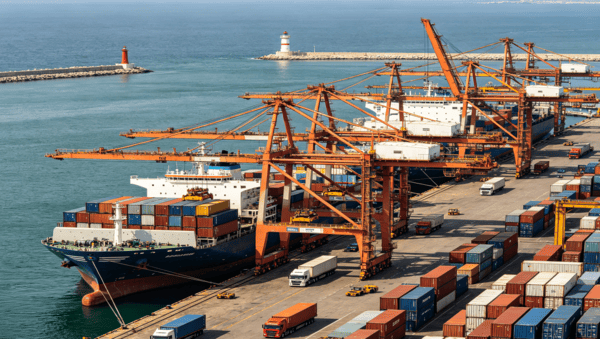
What quantitative indicators assess transshipment risk levels of shipping lanes?
Scientific transshipment risk assessment relies on multi-dimensional quantifiable indicators to verify the operational safety of alternative shipping lanes for fragile industrial cargo. These indicators cover route structure, terminal capability, schedule stability, and historical risk records.
Cumulative transshipment node count: This fundamental metric calculates the total number of intermediate container transfer points throughout the entire shipping leg. Fewer transfer nodes reduce manual and mechanical handling exposure, lowering cumulative damage probability for precision cargo.
Specialized terminal handling credentials: Qualified hubs for fragile industrial cargo require certified precision cargo handling protocols, temperature-controlled warehousing, and low-vibration loading equipment. Terminals with standardized industrial cargo workflows effectively mitigate operational risks.
Vessel slot connection reliability: This indicator reflects the statistical on-time connection rate between feeder vessels and mother vessels on designated trade lanes. Stable slot allocation and fixed connection windows avoid unplanned container dwell and repeated re-stowage.
Historical lane cargo damage ratio: Publicly available 2024–2025 Drewry shipping risk datasets record cargo damage frequencies across mainstream container lanes. Forwarders can reference these verified statistics to eliminate high-risk routing options.
The recommended approach is to establish a weighted risk scoring model based on the above indicators. Forwarders can set differentiated weight coefficients for industrial fragile cargo and filter out lanes with excessive risk exposure during route planning.
How to optimize lane selection to mitigate multi-port transshipment risks?
Targeted route optimization tactics help forwarders evade high-risk transshipment links and formulate tailored logistics solutions for fragile industrial cargo. This systematic method balances operational safety, transit efficiency, and cost controllability.
Adopt direct or single-transfer routing solutions: Prioritize port-to-port direct lanes or routes with only one standardized transshipment hub. Minimizing transfer frequency fundamentally reduces container handling intervention and suppresses cumulative mechanical damage.
Select professionally certified intermediate hubs: Choose transshipment terminals with mature fragile cargo handling experience and complete cargo insurance mechanisms. Professional terminal teams implement shockproof stowage and low-speed operational procedures for high-value industrial shipments.
Avoid seasonally congested and volatile hubs: Exclude terminals with chronic congestion, frequent schedule amendments, and unstable berthing efficiency. According to UNCTAD 2025 port performance analysis, regional hub congestion intensifies in peak shipping seasons, raising temporary transshipment uncertainty significantly.
Align voyage schedules with cargo environmental tolerance: Choose routes with fixed short-cycle voyages and stable carrier schedules. Reducing container sealed transportation time lowers the risks of moisture erosion, metal corrosion, and component deformation for precision industrial goods.
What auxiliary operational measures enhance cargo transportation safety?
Route optimization alone cannot fully eliminate accidental operational risks in complex maritime environments. Comprehensive risk control requires coordinated support from standardized ground operations and cargo protection measures.
Forwarders should note that low-risk route matching must be integrated with customized shockproof packaging, real-time cargo tracking, and all-risk marine insurance coverage. Integrated risk control workflows effectively reduce cargo loss rates in multi-port transshipment scenarios.
What common risk control errors affect fragile cargo routing outcomes?
Improper operational habits and generalized decision-making often lead to hidden hazards in fragile industrial cargo shipping. Avoiding typical industry mistakes helps forwarders improve the stability and professionalism of high-value logistics services.
Decoupling route selection from cargo attributes: A common mistake is applying unified cost-oriented routing strategies to all industrial shipments. Different fragile goods have distinct structural tolerance thresholds, which require differentiated route risk matching instead of uniform solutions.
Ignoring seasonal and meteorological risk fluctuations: Many forwarders rely on static historical lane data without adjusting for seasonal typhoons, monsoons, and peak-season congestion. Variable weather and port conditions increase transshipment instability in specific months.
Passively accepting carrier-assigned routes: Blindly adopting default carrier transshipment schemes without independent risk assessment exposes cargo to unnecessary hazards. Carriers prioritize capacity utilization and operational flexibility rather than fragile cargo safety standards.
Skipping phased transshipment condition inspections: Failing to conduct container condition checks after each transfer node allows minor damage to accumulate. Progressive structural damage eventually causes total cargo failure at destination terminals.
What long-term operational values do low-risk routing strategies deliver?
Stable low-transshipment route planning enables forwarders to reduce cargo damage compensation costs and strengthen service competitiveness in the industrial logistics segment. High-value fragile cargo transportation has become a stable profit segment within global freight forwarding businesses in 2024–2025.
According to UNCTAD 2025 global trade monitoring data, containerized industrial equipment trade maintains steady growth despite overall maritime trade slowdown. Industrial shippers increasingly prioritize cargo safety and supply chain stability over pure freight cost advantages when selecting logistics partners.
Low cargo damage rates help forwarders reduce after-sales dispute costs and build reliable market reputations. Safety-oriented customized routing services form differentiated competitive advantages in the homogenized global forwarding industry.
In summary, professional forwarders can systematically choose shipping route lanes that minimize multi port transshipment risks for fragile industrial cargo through quantitative risk assessment, standardized lane screening, and full-process operational optimization. This data-driven routing mechanism safeguards fragile industrial cargo integrity, reduces operational risks, and supports sustainable development of cross-border industrial supply chains.
Last
Operational loading tips that help freight forwarders avoid rolled cargo during peak export seasons
Freight forwarders frequently confront cargo shifting and translational displacement risks during high-volume export cycles, and s
Next
How to build strong relations with vessel operators and avoid rolled cargo on tightly allocated lanes
Forwarders depend on stable carrier partnerships and secured slot resources amid tight-capacity market conditions, and proactive t

