




Freight forwarders frequently confront cargo shifting and translational displacement risks during high-volume export cycles, and standardized container stowage procedures are critical to avoid rolled cargo and mitigate financial and operational losses in cross-border containerized shipping.
What exactly is rolled cargo in container shipping?
Rolled cargo denotes containerized freight that undergoes continuous sliding, tipping, or rotational movement inside sealed containers due to inadequate stowage, insufficient dunnage, or unsecured cargo arrangements during maritime transit. This operational hazard spikes notably during peak shipping seasons with condensed vessel schedules and accelerated terminal loading workflows.
Why does rolled cargo occur more frequently during peak export seasons?
Peak export cycles introduce intensified terminal throughput pressure, compressed vessel turnaround windows, and streamlined stowage protocols, collectively elevating the likelihood of cargo displacement and rolling in intercontinental container transportation.
How shipping lane disruptions worsen cargo stability risks
According to UNCTAD 2024 Maritime Transport Review, key global maritime chokepoints including the Suez Canal and Panama Canal faced persistent operational disruptions throughout 2024 due to geopolitical tensions and hydrological constraints. These disruptions force container carriers to implement frequent route diversions and speed adjustments, generating intensified hull oscillations, vertical vibrations, and lateral tilting during open-sea voyages. Such unstable navigational conditions significantly heighten the probability of internal cargo movement within sealed containers.
How rushed terminal operations cause stowage irregularities
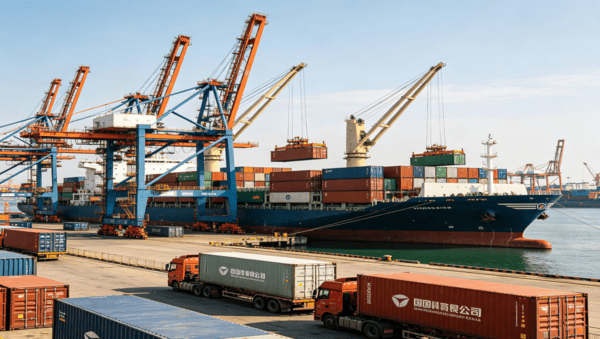
During peak export windows, container terminals operate at maximum designed throughput capacity to accommodate surging global trade volumes. Terminal stevedores and loading crews handle drastically increased cargo throughput within limited turnaround time, which inevitably truncates routine pre-loading inspections and standard stowage validation processes. Rushed operational environments often result in non-standard cargo placement and incomplete securing treatments.
A common mistake is that many forwarding and stowage teams prioritize container stuffing speed over stowage standardization during peak seasons, overlooking subtle irregularities in cargo alignment and dunnage placement. These minor on-site oversights remain unnoticeable at the time of loading but gradually trigger sustained cargo rolling under prolonged maritime vibration and hydrodynamic wave impact. Peak-season consolidated shipments also consist of heterogeneous cargo mixes with varying dimensions, tare weights, and packaging rigidity, creating uneven load distribution and further destabilizing container stowage integrity.
How do peak season shipping pressures amplify rolled cargo risks?
Peak-season logistics characteristics including expedited stowage workflows, frequent carrier schedule rescheduling, and ultra-high container turnover rates accumulate multi-layered risks that facilitate cargo rolling in international containerized logistics networks.
Concentrated export volumes reduce operational precision
According to WTO 2024 Global Trade Outlook and Statistics, global merchandise trade value reached a record $33 trillion in 2024, with pronounced shipment concentration occurring in the third and fourth quarters as manufacturers and consumer goods exporters rush to meet holiday and fiscal-year delivery deadlines. This seasonal shipment surge pushes major hub terminals to full operational saturation, leaving frontline loading personnel with minimal time for detailed cargo securing verification and stowage stability checks.
Extended diversion voyages escalate cargo movement exposure
Forwarders should note that adaptive route diversion has become a persistent industry norm during recent peak shipping seasons. Per UNCTAD 2024 maritime logistics tracking data, major container carriers expanded Cape of Good Hope diversion voyages by 89% to bypass Red Sea and Suez Canal operational disruptions. These extended routing schemes increase single-voyage transit durations by an average of 7–10 days on Asia-Europe trade lanes. Extended maritime exposure means containerized cargo endures prolonged cyclic vibration and hull swaying, turning minor stowage imperfections into tangible rolled cargo damage and permanent freight displacement.
What pre-loading preparation steps prevent rolled cargo effectively?
Structured pre-loading preparation standardizes cargo categorization, packaging condition validation, and container fitness inspection, establishing a solid foundational stowage environment to avoid rolled cargo throughout subsequent stuffing and maritime transit.
Classify cargo by deadweight and dimensional specifications: Categorize all outbound shipments by gross deadweight, cubic measurement, and packaging rigidity prior to container stuffing. High-density heavy cargo with rigid outer packaging must be segregated from low-density flexible freight to prevent inertial pushing and frictional displacement during vessel movement, which is one of the commonly adopted approaches for stable container stowage.
Validate outer packaging structural integrity: Conduct comprehensive visual and tactile inspections of all cargo packaging to identify structural cracks, panel deformation, loose strapping, or corrugated board damage. Compromised packaging fails to withstand transit friction and mechanical impact, directly inducing cargo dislocation and rolling. Forwarders must enforce packaging reinforcement or hold problematic shipments before peak-season loading.
Inspect container internal structural conditions: Perform full internal checks on container flooring, side panels, corner castings, and end walls for protruding defects, residual debris, or condensed moisture. Uneven flooring distributes cargo load asymmetrically and triggers tilting under vibration, while residual debris creates unstable support points that initiate incremental cargo shifting and rolling.
Assemble specialized securing and dunnage materials in advance: Pre-configure anti-slip rubber mats, high-tensile polyester lashing straps, solid wooden dunnage, inflatable void fill airbags, and rigid corner protectors matching specific cargo characteristics. Inadequate auxiliary material provision forces simplified securing workflows, serving as a primary controllable trigger of rolled cargo in time-constrained peak-season operations.
What core loading techniques reduce cargo rolling during stuffing?
Standardized container stuffing methodologies optimize in-container load balance and volumetric utilization, eliminating loose stowage gaps that serve as the root cause of rolled cargo during ocean transit.
Implement bottom-heavy tiered stowage protocols: Position high-weight, large-volume cargo at the container bottom and arrange lightweight commodities on upper tiers. Maintain zero redundant horizontal gaps between adjacent cargo units to restrict lateral sliding and rotational rolling. The recommended approach is to control tier gap ratios below 3% to sustain integral stowage stability.
Adopt axis-symmetrical load distribution layouts: Distribute heavy cargo units evenly across the container’s longitudinal central axis to avoid unilateral load concentration. Asymmetrical weight distribution induces persistent container hull tilting during sailing, significantly amplifying lateral cargo rolling risks in turbulent sea conditions.
Fill void spaces with graded buffer dunnage: Deploy custom-cut wooden dunnage, pressurized inflatable airbags, or shock-absorbing foam fillers to fully eliminate residual voids between cargo batches and container structural walls. Complete void neutralization removes the physical space required for cargo translational displacement and rotational rolling under vessel agitation.
Comply with rated load limits and tier height regulations: Strictly adhere to container gross weight ratings and industry-standard stowage height thresholds. Excessive vertical stacking compresses lower-tier packaging and causes structural collapse, while overloading distorts the container’s center of gravity and exacerbates transit instability and cargo movement.
What post-loading securing measures reinforce cargo stability?
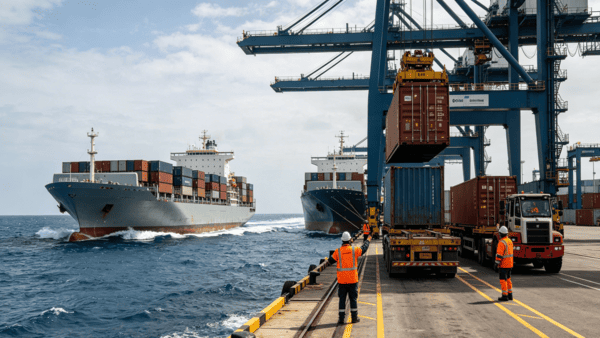
Scientific post-stuffing securing systems solidify integral cargo structures, counteract external maritime dynamic forces, and suppress rolled cargo occurrences across the entire end-to-end shipping lifecycle.
Install anti-slip flooring substrates for bottom-tier cargo: Lay commercial-grade thick anti-slip rubber matting across the entire container floor area prior to cargo placement. This treatment enhances static friction coefficients between cargo bases and container flooring, effectively restraining lateral sliding of bottom-tier freight, the primary source of large-scale rolled cargo incidents.
Apply multi-point tensile lashing for integral stowage fixation: Fasten consolidated cargo stacks to container corner castings using high-tensile polyester strapping or galvanized steel lashing belts. Symmetrical multi-point lashing restricts both longitudinal and lateral cargo displacement during vessel acceleration, deceleration, and rotational swaying.
Execute independent fixation for discrete loose cargo units: Secure scattered small-batch freight individually with segmented binding straps or woven cargo netting. A common mistake is prioritizing integral stack fixation while neglecting discrete loose units, which frequently roll freely and collide with bulk cargo to cause secondary freight damage.
Conduct systematic stability verification before container sealing: Perform manual stability testing via controlled pushing and shaking of each cargo tier to validate integral rigidity. Inspect all securing components for tension retention and structural integrity, and re-tighten or replace degraded fittings prior to door closure and container sealing.
How can forwarders optimize team management for peak season loading?
Unified standardized operational management harmonizes stowage and securing protocols across loading teams, minimizing human error-induced stowage defects that trigger rolled cargo during high-pressure peak export cycles.
Why standardized training reduces stowage errors
Forwarders should note that non-standard manual operations account for the majority of preventable rolled cargo incidents in peak shipping periods. Intense terminal workload surges require the deployment of temporary loading personnel, who often lack systematic professional stowage training and standardized operational awareness. Insufficient technical proficiency leads to irregular cargo tiering, incomplete void filling, and inadequate securing, forming latent risks for in-transit cargo rolling.
What operational supervision mechanisms improve stowage quality
The recommended approach is to deliver targeted pre-shift technical training for all loading crew members during peak seasons, covering cargo grading criteria, tiered stowage specifications, and standardized usage of dunnage and securing hardware. Forwarders should also assign dedicated quality supervisors to oversee full on-site stuffing procedures, conduct real-time operational audits, and rectify non-standard stowage behaviors immediately.
Additionally, forwarders can develop standardized peak-season stowage checklists covering container pre-inspection, cargo layout validation, void filling completion, and securing tension verification. Full checklist implementation eliminates inspection omissions and ensures every container’s stowage configuration meets industry stability benchmarks.
What are the economic losses of ignoring rolled cargo prevention?
Rolled cargo incidents trigger cascading incremental logistics expenditures and client contractual disputes, generating quantifiable financial losses and long-term reputational damage for international freight forwarding enterprises.
Direct financial costs from rolled cargo damage
Per 2025 global container cargo damage analytics from international marine insurance institutions, in-transit cargo displacement and rolling damage contribute to approximately 36% of all peak-season containerized freight damage claims. Once rolled cargo occurs, forwarders are liable for cargo restoration fees, stowage rework charges, terminal handling re-fees, and vessel demurrage and detention costs. Severe cargo damage also results in delayed consignment delivery, triggering contractual compensation penalties and additional administrative dispute costs.
Indirect operational and reputational losses
A common mistake is that small and medium-sized forwarding teams disregard standardized securing procedures to accelerate loading throughput during peak seasons, viewing preventive measures as inefficient auxiliary work. Short-term speed gains consistently result in substantially higher post-incident remediation costs, which far exceed the labor and time investment of compliant stowage operations. Repeated cargo damage incidents erode client trust in forwarding service reliability, weakening corporate competitiveness in the global freight service market.
Conclusion: Build standardized workflows to avoid rolled cargo in peak exports
Peak export season challenges, including compressed operational timeframes, unprecedented cargo throughput volumes, and volatile maritime navigational conditions, continuously test the operational standardization capabilities of global freight forwarders. To avoid rolled cargo reliably, forwarding firms must implement full-cycle standardized management covering pre-loading preparation, in-process stowage optimization, post-loading securing reinforcement, and standardized team supervision.
By executing scientific cargo grading and tiered stowage, compliant securing operations, and rigorous pre-sealing quality audits, forwarders can eliminate cargo displacement risks stemming from irregular manual operations and peak-season operational chaos. Aligned with UNCTAD 2024 verified maritime environment characteristics and seasonal shipping operational rules, systematic stowage optimization sustains stable cargo safety and service quality throughout high-volume export cycles, fully helping freight forwarders avoid rolled cargo and deliver low-risk, high-efficiency global container shipping solutions.
Last
Forwarders guide to measuring carrier shipping schedule reliability when planning time sensitive retail shipments
Precise assessment of carrier shipping schedule reliability empowers freight forwarders to mitigate foreseeable transit disruption
Next
How to choose shipping route lanes that minimize multi port transshipment risks for fragile industrial cargo
Professional global freight forwarders choose shipping route lanes that minimize multi port transshipment risks for fragile indust

