



Global forwarders choose transshipment port hubs with optimal container crane productivity levels to streamline container transit workflows, mitigate vessel turnaround delays, and sustain stable end-to-end supply chain efficiency in cross-border container shipping. Within the sophisticated international logistics ecosystem, transshipment terminal performance directly governs cargo delivery punctuality, operational overheads, and client retention rates, rendering quay crane productivity a core quantitative benchmark for hub selection. Amid fluctuating global trade volumes and frequent liner route restructuring, forwarders must adopt data-driven screening criteria to mitigate supply chain disruptions stemming from substandard terminal handling efficiency.
What role does container crane productivity play in transshipment port selection?
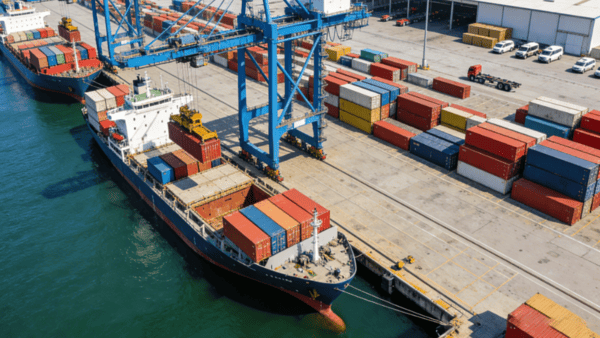
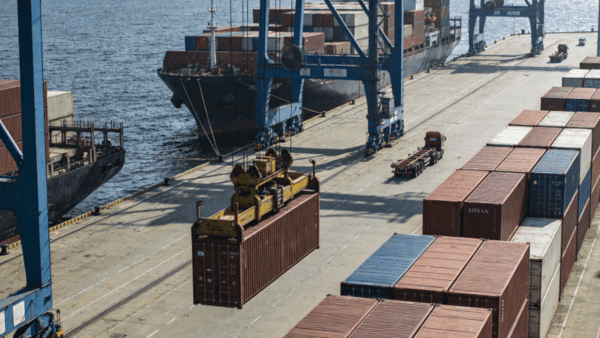
Container crane productivity refers to the average container handling volume per operational hour of shore-based quay cranes at container terminals, serving as a fundamental metric for evaluating terminal transshipment capacity and operational maturity. This indicator fundamentally governs vessel turnaround intervals, container yard throughput efficiency, and the overall cargo processing capability of transshipment hubs.
How crane productivity differentiates tiered transshipment terminals
For international freight forwarders, transshipment ports function as pivotal interconnecting nodes for regional and intercontinental liner networks. Crane handling efficiency acts as a key differentiator between mature high-tier hubs and conventional secondary terminals. Terminals with consistent quay crane productivity can effectively reduce vessel berth waiting time, shorten container dwell time at ports, and lower the incidence of transshipment-related cargo delays. In contrast, terminals with unstable or low crane throughput often suffer from berth congestion, container backlogs, and extended transit lead times, eroding forwarders’ service reliability and incurring unplanned operational expenditures.
What misconceptions exist regarding crane productivity evaluation
Forwarders should note that crane productivity is a multi-dimensional operational capability rather than a discrete static figure. It integrates peak-hour handling capacity, long-duration operational stability, and mechanical fault tolerance. Many forwarders overly rely on official peak throughput data released by port authorities while neglecting daily average operational efficiency, which triggers service instability during seasonal cargo surge cycles.
Why do forwarders prioritize crane productivity in transshipment hub screening?
Quay crane productivity directly determines the cost-control efficiency and service stability of forwarders’ transshipment businesses, providing standardized quantitative support to eliminate subjective and empirical port selection decisions.
How market volatility elevates efficiency requirements
Global shipping market fluctuations in recent years have raised stringent requirements for terminal operational efficiency. According to the UNCTAD 2024 Review of Maritime Transport, global container transshipment volumes maintained steady growth in 2023–2024, with emerging market trade expansion driving continuous growth in intermediate cargo transfer demands. Under such market conditions, insufficient crane handling efficiency easily triggers large-scale port congestion, resulting in cascading delays across subsequent shipping links and disrupting end-customer delivery schedules.
What hidden risks come with low-productivity port selection
A common mistake is that numerous small and medium-sized forwarders prioritize geographical location and nominal transshipment tariffs while ignoring long-term efficiency losses caused by substandard crane productivity. Low-cost terminals with outdated crane infrastructure frequently generate substantial hidden costs, including vessel berth demurrage fees, container storage surcharges, and commercial compensation for delayed cargo shipments.
How stable crane productivity enhances market competitiveness
Consistent quay crane productivity enables forwarders to formulate standardized, predictable liner scheduling schemes. For long-term contractual liner routes and fixed cross-border logistics projects, stable transshipment efficiency supports accurate estimated time of arrival (ETA) forecasting for clients, effectively improving forwarders’ comprehensive service competitiveness in the global freight market.
What key crane productivity metrics should forwarders evaluate?
Scientific assessment of quay crane productivity requires multi-dimensional quantitative indicators instead of isolated peak data, ensuring the accuracy and comprehensiveness of transshipment port selection decisions. Systematic metric evaluation helps forwarders avoid one-sided judgment and select hubs with robust comprehensive operational performance.
Average quay crane throughput per hour: This core operational indicator reflects real daily handling capacity, excluding extreme peak data obtained under experimental test conditions. According to 2025 operational bulletins from Qingdao Port Automated Terminal, its intelligent quay crane system delivers a stable hourly throughput of over 60 natural containers under routine commercial operations, supporting continuous large-scale transshipment tasks. Forwarders shall prioritize long-term average operational data over sporadic peak records to assess daily stability.
Peak-season operational sustainability: This metric assesses the capacity of crane equipment to maintain standard high-efficiency operations during industry peak cycles, including quarterly cargo surges and pre-holiday logistics booms. Many terminals exhibit sound efficiency in off-peak periods but suffer from severe throughput decline and equipment malfunctions during peak seasons, triggering container backlogs. The recommended approach is to verify terminals’ peak operational records over the latest 24 months to evaluate sustainable productivity performance.
Terminal automation penetration rate: Automated quay crane systems minimize manual operational errors and deliver sustained high-efficiency output. According to 2024 maritime industry data from UNCTAD, fully automated container terminals improve comprehensive handling efficiency by approximately 28% and reduce human resource dependence by 65% compared with conventional semi-automated terminals. Terminals with high automation penetration feature more stable crane productivity and lower unplanned downtime rates.
Equipment maintenance and turnaround efficiency: Crane equipment downtime directly undermines overall transshipment throughput. Forwarders need to audit terminals’ standardized equipment maintenance protocols and average fault recovery duration. Terminals with rigorous daily preventive maintenance systems can mitigate efficiency losses from mechanical failures and sustain uninterrupted transshipment operations.
How does crane productivity affect forwarders’ operational costs?
Quay crane productivity is tightly correlated with forwarders’ comprehensive operational cost structure, as efficient crane handling effectively reduces multiple hidden overheads in transshipment procedures. Data-based port selection enables forwarders to optimize cost structures and elevate net profit margins.
How low productivity increases vessel-related costs
Insufficient crane handling efficiency prolongs vessel berthing occupancy duration, incurring additional berth usage fees and vessel idle costs. When vessels fail to complete stowage and discharge operations within standard time windows, extended berth occupancy increases liner operational costs. These incremental expenses are ultimately passed to forwarders by carrier companies, compressing corporate profit margins.
How low productivity raises cargo detention risks and costs
Inefficient crane operations extend container terminal dwell time, leading to increased container storage fees. For time-sensitive cargo including cross-border e-commerce parcels and perishable goods, prolonged terminal detention elevates cargo damage risks and order delay probabilities, causing direct economic losses and indirect brand reputation damage to forwarders.
How high productivity optimizes long-term cost benefits
Terminals with steady optimal crane productivity can complete container stowage, discharge and transshipment handover within standardized time frames. Such efficient operational workflows shorten the overall shipping transit cycle and cut intermediate link overheads, helping forwarders build stable cost advantages in market competition. Forwarders should note that short-term low transshipment tariffs cannot offset long-term efficiency losses arising from inadequate crane productivity.
How to match crane productivity with actual transshipment business scenarios?
Different transshipment business scenarios impose differentiated requirements on crane productivity. Forwarders need to select matched transshipment hubs based on cargo attributes, route layouts and delivery time constraints to realize precise alignment between terminal efficiency and business demands.
High-volume conventional container transshipment: For bulk conventional container shipments with stable daily throughput demands, forwarders shall select terminals with high average hourly crane throughput and robust continuous operational capacity. Major hubs equipped with large-scale automated terminal clusters are widely applied in this scenario. According to 2024 official annual throughput statistics, Shanghai Port recorded an annual container throughput of over 49 million TEUs, relying on stable automated crane productivity to sustain large-scale global transshipment demands.
Time-sensitive expedited cargo transshipment: For urgent cross-border logistics orders with rigid delivery deadlines, priority shall be given to terminals with rapid crane fault recovery mechanisms and reliable peak-period efficiency. Terminals equipped with intelligent scheduling systems can dynamically adjust crane operation schedules to accelerate cargo handover and meet expedited shipment requirements.
Small-batch multi-batch fragmented cargo transshipment: For frequent small-volume fragmented cargo transshipment businesses, forwarders can opt for regional hub terminals with flexible crane scheduling mechanisms. Such terminals deliver moderate single-crane throughput but feature high operational flexibility, avoiding equipment resource waste and improving cost-performance for small-batch transshipment services.
Intercontinental long-haul route transshipment: Intercontinental long-haul shipping requires high transshipment stability. Forwarders prefer terminals with mature crane operation systems and complete supporting logistics facilities. Sustained crane productivity ensures transshipment links will not disrupt the overall long-distance shipping cycle and maintains stable route operation.
What auxiliary port factors need to be coordinated with crane productivity?
Crane productivity serves as the core evaluation indicator for transshipment port selection, yet forwarders must integrate multiple auxiliary terminal factors to achieve optimal transshipment operational outcomes. Single efficiency advantages cannot guarantee comprehensive transshipment service quality.
Why route coverage complements crane productivity
Complete liner route coverage is an essential auxiliary condition for efficient transshipment. Even with superior crane productivity, terminals lacking mainstream liner routes matching forwarders’ global business layouts cannot deliver practical operational value. Forwarders need to ensure high-efficiency crane hubs cover target trade lanes to realize effective linkage between terminal efficiency and route deployment.
How congestion risk offsets efficiency advantages
A common mistake is over-reliance on nominal crane productivity data while ignoring terminals’ historical congestion records. According to UNCTAD 2024 maritime monitoring data, several Asian terminals with high single-crane throughput face periodic congestion due to insufficient berth resources and unreasonable scheduling mechanisms, which substantially offset inherent crane efficiency advantages.
How supporting facilities strengthen overall operational efficiency
Complete terminal supporting facilities determine the final conversion effect of crane productivity. Standardized container yard stacking systems, intelligent dispatching platforms and professional on-site operation teams can cooperate with high-efficiency cranes to form a closed-loop efficient operational chain. The recommended approach is to take crane productivity as the core benchmark and conduct comprehensive evaluation of supporting facilities, route resources and congestion risks to finalize scientific port selection.
In the dynamically evolving global shipping industry, data-backed transshipment port selection has become a core operational competency for global forwarders to stabilize business development and expand market share. Global forwarders choose transshipment port hubs with optimal container crane productivity levels through multi-dimensional data verification, scenario-based demand matching and comprehensive risk assessment, effectively optimizing transshipment operational efficiency, standardizing cost control, and enhancing the stability of global cross-border container supply chains.
Last
How to build strong relations with vessel operators and avoid rolled cargo on tightly allocated lanes
Forwarders depend on stable carrier partnerships and secured slot resources amid tight-capacity market conditions, and proactive t
Next
Proactive booking checks designed to avoid rolled cargo bottlenecks when moving high volume enterprise freight
High-volume enterprise container shipments feature standardized batch stuffing and repetitive voyage cycles, and rigorous proactiv