




High-volume enterprise container shipments feature standardized batch stuffing and repetitive voyage cycles, and rigorous proactive booking checks help forwarders effectively avoid rolled cargo and resolve common stowage-related operational bottlenecks in large-scale freight movements.
What causes rolled cargo bottlenecks in high-volume enterprise freight movements
Rolled cargo bottlenecks refer to clustered freight displacement and rotational shifting incidents that occur in batch shipments due to standardized stowage limitations and insufficient pre-shipment risk validation.
How batch shipment characteristics trigger concentrated stowage risks
According to UNCTAD 2025 Review of Maritime Transport, global seaborne trade volume grew by 2.2% in 2024, while containerized trade expanded steadily amid persistent route disruptions. Large-scale enterprise batch shipments dominate throughput at major hub ports, relying on unified packaging and centralized stuffing to boost operational efficiency. This standardized mode creates uniform internal stress distribution inside containers, lacking irregular friction points that suppress minor cargo movement. When stowage configurations fail to adapt to actual voyage turbulence, synchronous cargo sliding develops into large-scale rolling incidents, forming bottlenecks that delay entire batch deliveries.
Why repetitive booking routines amplify minor operational flaws
Unlike sporadic small consignments, enterprise high-volume freight follows fixed booking templates and repetitive loading workflows for long-term contract shipments. Forwarders often form habitual operational patterns to improve processing efficiency. Subtle discrepancies including minor weight deviations, updated packaging specifications and seasonal sea condition changes are easily overlooked in routine operations. These trivial unchecked defects accumulate in batch shipments and eventually trigger systemic rolled cargo bottlenecks that disrupt stable transportation schedules.
Why passive booking workflows trigger more cargo rolling risks
Passive booking workflows prioritize slot reservation and schedule confirmation without targeted stowage risk auditing, which elevates latent rolled cargo exposure for high-volume containerized freight.
A common mistake is that most forwarding practitioners apply generic booking protocols to all enterprise batch shipments, ignoring the unique structural stability requirements of high-density, large-quantity cargo units. Many teams categorize booking procedures as purely commercial operations rather than core risk control workflows. This oversight leads to skipped verification of weight distribution balance, packaging tensile strength and lane-specific vibration intensity, all of which serve as critical precursors to in-transit cargo rolling.
Forwarders should note that high-volume enterprise freight maintains a low fault tolerance level in maritime logistics. A single non-standard stowage adjustment or unvalidated booking parameter can compromise dozens of containers in one batch. Passive post-incident resolution cannot recover batch cargo damage and client credit losses, making proactive pre-shipment booking verification indispensable for enterprise freight risk management.
How do high-volume freight characteristics amplify stowage bottleneck risks
Inherent operational attributes of batch enterprise freight magnify conventional stowage vulnerabilities and accelerate the formation of rolled cargo bottlenecks during long-haul voyages.
Does unified cargo specification induce synchronous cargo displacement
Uniform dimensional and packaging standards in batch shipments form continuous contact surfaces between cargo units, enabling synchronous sliding and rolling under persistent maritime vibration and hull swaying.
Industry operational data from 2024–2025 maritime logistics surveys shows that container batches with fully homogenized cargo specifications record notably higher displacement frequencies than mixed-specification loads. Homogeneous cargo arrangements eliminate inter-unit friction differences, forming smooth stress transmission channels across entire container layers. Under prolonged wave agitation and torsional hull movement, uniform stress distribution triggers synchronous cargo shifting, which escalates into widespread rolled cargo bottlenecks.
Will repetitive batch operations lead to inspection negligence risks
Recurring booking and loading workflows for long-term corporate clients reduce frontline operational alertness, resulting in incomplete stowage inspection and undetected structural risks.
Forwarders serving stable enterprise clients frequently adopt fixed booking templates and standardized loading schemes for repetitive batch orders. Routine operational inertia causes practitioners to ignore subtle variable factors, including marginal gross weight fluctuations, packaging material fatigue, and seasonal route turbulence variations. These accumulated uninspected details gradually undermine container stowage stability and trigger batch-wise cargo rolling incidents.
What core proactive booking checks prevent rolled cargo bottlenecks
Targeted pre-shipment booking inspection protocols cover cargo attributes, lane operational parameters and stowage benchmarks to eliminate latent rolled cargo risks for high-volume freight batches.
Verify batch weight distribution balance: Conduct systematic weight sampling and full-container gravitational balance calculation for bulk enterprise shipments. Ensure even load distribution across container floor panels and avoid unilateral stress concentration. This is one of the commonly adopted approaches to mitigate tilted stowage and subsequent cargo rolling.
Inspect batch packaging structural consistency: Examine the structural integrity and specification uniformity of mass cargo packaging. Screen individual units for panel deformation, loose strapping tension and material aging to maintain consistent internal friction and stable load bearing.
Evaluate lane-specific voyage turbulence parameters: Validate real-time carrier route conditions and seasonal sea state data during booking processing. Mark high-turbulence and long-diversion routes, and adjust stowage securing standards dynamically for batch freight adaptability.
Audit container type and cargo matching suitability: Assess the compatibility between batch cargo density, volume attributes and container specifications. Deploy reinforced dry van units for high-density heavy cargo and optimize spatial layout for voluminous light freight to avoid structural instability.
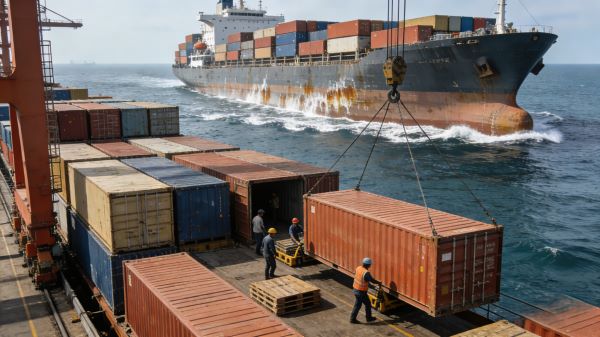
Optimize multi-batch loading sequence planning: Classify batch cargo units by vibration resistance and voyage adaptability. Arrange high-stability freight in high-sway vessel zones and place vulnerable cargo in mid-ship low-turbulence positions to reduce rolling probability.
How to build standardized pre-booking risk control workflows
Structured pre-booking procedural frameworks unify risk inspection standards for high-volume freight and block systemic loopholes that induce rolled cargo bottlenecks.
How templated booking systems enhance risk consistency
Customized booking templates integrate cargo safety verification items into routine operational workflows, reducing human omission errors in high-frequency batch shipment processing.
The recommended approach is to categorize enterprise clients by cargo commodity type, trade lane attribute and shipment frequency to develop exclusive booking check templates. Each template embeds lane-adaptive stowage criteria, securing material specifications and seasonal risk prompts. Operational staff can execute standardized verification procedures for batch orders, minimizing subjective judgment discrepancies and stabilizing pre-shipment risk control quality.
Can staged double verification suppress risk amplification
Two-stage pre-booking and pre-loading verification mechanisms intercept subtle stowage defects before vessel departure, preventing minor flaws from escalating into batch cargo rolling incidents.
Forwarders should note that single-point inspection cannot fully mitigate risks in high-volume freight logistics. The combination of pre-booking data auditing and pre-loading on-site validation forms a closed-loop risk control system. Data verification corrects parameter mismatches and specification deviations, while on-site inspection rectifies irregular stuffing and securing operations, jointly inhibiting rolled cargo bottleneck formation.
What operational adjustments reduce batch freight rolling risks
Targeted operational optimizations based on pre-booking risk assessment results further consolidate stowage stability and resolve high-volume freight transportation bottlenecks.
Adapt void filling tactics to lane turbulence levels: Adjust dunnage layout and inflatable airbag filling density according to route turbulence data confirmed during booking. Deploy comprehensive void filling for high-turbulence routes to restrict synchronous cargo sliding and rotational movement.
Implement layered multi-point lashing for batch cargo: Adopt segmented layered securing and multi-point tension lashing for unified-spec batch freight. Layered fixation disperses concentrated vibration stress and prevents integrated cargo stack linkage rolling under continuous hull movement.
Reserve premium container equipment for special batches: Allocate qualified containers with flat floor panels and intact side structures for overweight, oversized or high-value enterprise batches during booking. Exclude aged containers with structural defects that compromise stowage balance.
Sync booking risk data with terminal stevedore teams: Transmit all pre-booking inspection results and customized stowage requirements to on-site loading teams in advance. Real-time data alignment ensures terminal operations fully comply with pre-defined safety standards.
What operational losses result from inadequate pre-booking inspections
Insufficient pre-booking risk validation leads to clustered rolled cargo incidents, triggering continuous operational pressures and economic losses for forwarders serving enterprise clients.
According to Drewry 2024 global container damage and claims analysis, over 38% of batch freight indemnity cases originate from neglected pre-shipment stowage risk verification. Unlike isolated small-quantity cargo damage, batch rolling incidents cause large-scale cargo abrasion, extrusion deformation and synchronized delivery delays. Forwarders are liable for cargo remediation fees, terminal restuffing charges and contractual breach compensation, resulting in measurable operational losses.
Beyond direct economic losses, recurring batch cargo safety issues undermine long-term enterprise partnership stability. Large corporate shippers adopt standardized supplier performance evaluation systems covering cargo safety indicators. Persistent stowage risk loopholes downgrade forwarder service credibility and threaten the sustainability of high-value long-term contractual orders.
Conclusion: Empower high-volume freight safety with proactive booking mechanisms
High-volume enterprise freight transportation is defined by batch-scale operations, standardized cargo specifications and low fault tolerance, making systematic pre-booking risk control the core measure to eliminate stowage bottlenecks. Conventional passive order-processing workflows fail to meet the safety management demands of large-scale container shipments.
By establishing categorized pre-booking inspection templates, implementing staged double verification mechanisms, and deploying lane-adaptive stowage optimization tactics, forwarders can intercept latent stowage defects from the source. Standardized booking risk management effectively eliminates batch cargo linkage rolling caused by operational inertia and inspection oversights, stabilizing overall transportation safety for enterprise freight.
Against the backdrop of turbulent global maritime markets with frequent route adjustments and fluctuating sea conditions, refined proactive booking management serves as a reliable risk barrier to avoid rolled cargo and sustain consistent, high-quality delivery performance for high-volume enterprise freight batches.

Last
How global forwarders choose transshipment port hubs with optimal container crane productivity levels
Global forwarders choose transshipment port hubs with optimal container crane productivity levels to streamline container transit
Next
Helping destination consignees choose shipping route options that reduce local terminal handling charges
Professional freight forwarders assist overseas consignees to choose shipping route options that reduce local terminal handling ch

