






The one-year suspension of China–U.S. port fee measures is approaching a new deadline. In November 2025, China and the United States reached an agreement on related trade and economic arrangements. The United States suspended measures arising from its Section 301 investigation into China’s maritime, logistics, and shipbuilding sectors, while China suspended its corresponding countermeasures against the United States. Both suspensions were set to remain in place for one year. Under the current arrangements, the suspension will expire on November 9, 2026. Neither side has announced an extension or cancellation of the measures. If no new arrangements are made before the deadline, the previously suspended port fees could resume.
Key Highlights
• November deadline: The suspension of China–U.S. port fee measures is scheduled to expire on November 9, 2026.
• U.S. measures: The U.S. fees previously applied to vessels owned or operated by Chinese entities and to Chinese-built vessels.
• Chinese measures: China’s fees covered U.S.-flagged, U.S.-built, and U.S.-owned or operated vessels, among others.
• Calls for early reinstatement: U.S. senators have called for the port fees to be reinstated ahead of schedule, but the measures remain suspended.
Suspension Reaches Key Deadline on November 9
The latest round of China–U.S. port fee measures began in 2025. The Office of the United States Trade Representative previously launched a Section 301 investigation into China’s maritime, logistics, and shipbuilding sectors and implemented the related port fee measures in October 2025. China subsequently introduced corresponding countermeasures, imposing special port service fees on vessels with U.S. links. To ease trade and economic tensions, China and the United States reached an interim agreement in November 2025 and suspended their respective port fee measures from November 10 for one year.
Under this timeline, November 9, 2026, will be the key expiry date. Unless either side announces an extension or policy adjustment, the suspended fees will automatically resume after the deadline. With approximately ten weeks remaining, the approaching deadline has become an important consideration for logistics costs and vessel deployment on China–U.S. trade lanes.
U.S. Senators Elizabeth Warren and Mark Kelly have jointly written to the Office of the United States Trade Representative, calling for the port fees targeting Chinese-linked vessels to be reinstated ahead of schedule. However, the United States has not issued any official notice reinstating the fees. The measures on both sides remain suspended, and no temporary charges have been introduced. Policy discussions and official announcements over the next ten weeks will determine the direction of operating costs on China–U.S. trade lanes toward the end of this year and early next year.
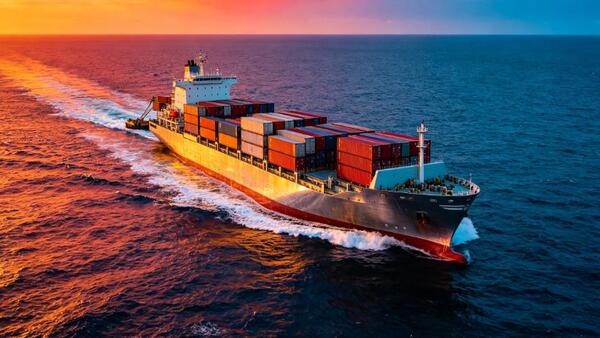
How the U.S. Port Fees Would Apply If Reinstated
Under the rules previously introduced following the Section 301 investigation, the U.S. port fees would not apply uniformly to all vessels calling at U.S. ports. Instead, fees would be assessed according to each vessel’s links to China, with two main categories. Vessels owned or operated by Chinese entities would be charged USD 50 per net ton. Chinese-built vessels would be charged the higher of USD 18 per net ton or USD 120 per container.
The cost of each port call could vary significantly depending on vessel tonnage, nominal container capacity, and the operating entity. Previous industry estimates indicated that the fees could be passed through to overall logistics costs, potentially increasing total transportation costs by USD 600–900 per container. The potential annual cost for major shipping companies could reach several billion dollars, affecting freight rates, capacity deployment, and sailing schedules on China–U.S. trade lanes. These figures are scenario-based estimates, and actual costs will depend on the implementation rules if the measures are reinstated.
China’s Corresponding Countermeasures Could Also Resume
In response to the U.S. measures, China previously introduced special port service fees targeting vessels with U.S. links. The fees applied to U.S.-flagged vessels, U.S.-built vessels, vessels owned or operated by U.S. companies, and vessels owned by companies meeting specified U.S. shareholding thresholds. The rules were specifically targeted and did not apply broadly to all vessels.
China adopted a progressively increasing fee structure. The initial rate introduced in October 2025 was RMB 400 per net ton and was increased to RMB 640 per net ton in April 2026, with further increases originally scheduled. If the suspension expires on November 9 without a new agreement between the two sides, China’s tiered port service fees will also resume.
Operational Impact on Freight Forwarders and Shippers
The measures remain suspended, and no additional fees are currently being charged. However, the approaching deadline already presents a potential operational risk. If the port fees resume, shipping lines may need to reassess the vessels deployed on China–U.S. services, adjust fleet deployment, and revise service structures to avoid high compliance costs. This could lead to service reductions, tighter space availability, higher freight rates, and new surcharges.
Freight forwarders and shippers do not need to react prematurely, but they should prepare contingency plans. Booking rates and schedule reliability on China–U.S. trade lanes around November should be monitored closely. Companies should also review the ownership, operator, and country of build of vessels used for their shipments to assess potential cost changes. For long-term orders and fixed-price contracts, additional room should be allowed for cost fluctuations to avoid losses or quoted rates falling below actual costs after any policy change.
Three outcomes remain possible: an extension of the suspension, changes to the rules, or reinstatement of the fees as scheduled. No final decision has been announced. Official developments over the next ten weeks will shape logistics costs on China–U.S. trade lanes in the fourth quarter and early next year.
Sources and Disclaimer
Sources include the Office of the United States Trade Representative (USTR), China’s Ministry of Transport, Reuters, and other publicly available industry information. This article is provided solely for reference by the international logistics and freight forwarding industry. Specific policies remain subject to the latest official announcements.
Last
Strike at the Port of Rotterdam Set for September 4; Vessel Operations and Trucking May Be Affected
Dutch ports are set to face industrial action in early September. On August 3, local time, FNV Havens, the port workers’ union aff
Next
Mundra Port Restricts the Use of Off-Dock Empty Container Depots from September 1, Changing Container Pickup and Return Arrangements
Empty container operations at India’s Mundra Port are set to undergo a major adjustment. Port operator Adani Ports and Special Eco

