




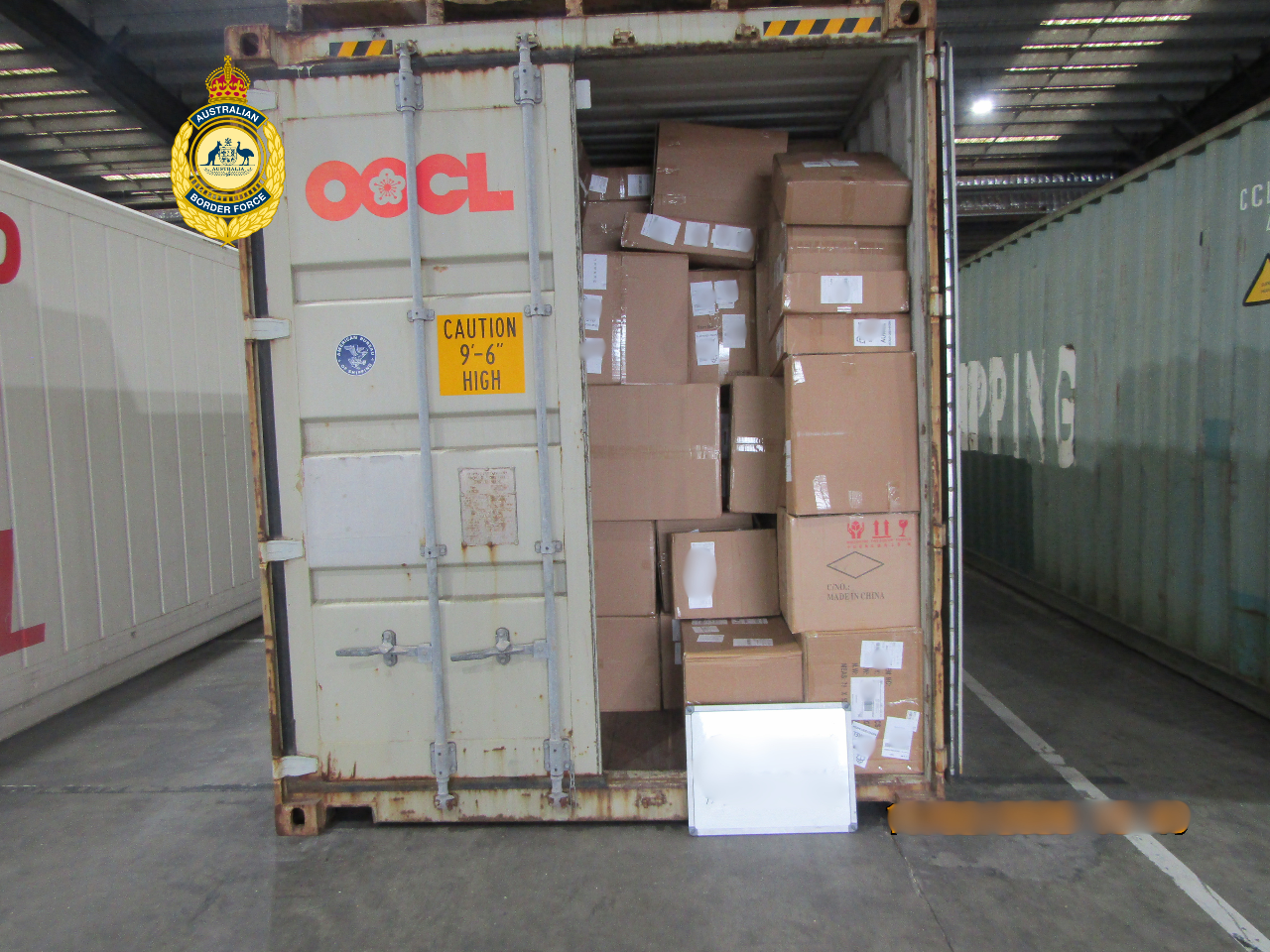
The Australian Border Force (ABF) and the anti-smuggling authorities of China Customs recently worked together to uncover a transnational tobacco-smuggling operation. Chinese authorities had provided Australia with information on 112 suspicious containers scheduled to arrive between January and May 2026, most of which ultimately arrived at the Port of Sydney. The ABF conducted targeted inspections and found illegal tobacco in 91 containers, seizing more than 60 million cigarettes and 60 kg of loose-leaf tobacco. The duties and taxes allegedly evaded exceeded AUD 92 million.
Key Highlights
• Targeted screening: Australian authorities identified 112 suspicious containers for risk screening before arrival, with illegal tobacco found in 91 of them.
• Seizures: Authorities seized more than 60 million cigarettes and 60 kg of loose-leaf tobacco, involving over AUD 92 million in allegedly evaded duties and taxes.
• Goods used as cover: The tobacco was concealed among legitimate goods, including LED lighting products and printers, and shipped from Shanghai to Australia.
• Cross-border cooperation: China and Australia continue to share enforcement intelligence, extending container risk screening further upstream in the transportation chain.
Australia Conducts Targeted Inspections of 112 Pre-Identified Containers
A significant aspect of the case is that the containers were not selected through random inspections after arriving in Australia. They had already come to the attention of enforcement authorities while in transit. According to the ABF, the anti-smuggling authorities of China Customs had shared relevant intelligence with Australia, prompting the ABF to monitor 112 suspicious containers. The containers were scheduled to arrive in Australia between January and May 2026, with most ultimately arriving at the Port of Sydney. The ABF subsequently conducted targeted inspections of the containers.
Illegal tobacco was found in 91 of the 112 containers, representing a detection rate of more than 80%. This indicates that the operation relied on cross-border intelligence sharing, risk identification, and targeted inspections rather than conventional random checks. The ABF said information shared by the anti-smuggling authorities of China Customs since July 1, 2025, had also helped Australian authorities seize more than 89 million cigarettes, 11 tonnes of loose-leaf tobacco, and one million e-cigarettes at the border.
Illegal Tobacco Concealed Among LED Lighting Products and Printers
According to information from the investigation, the illegal tobacco was suspected to have been produced in Southeast Asia before entering China and being transferred to logistics facilities. It was concealed among legitimate commercial goods and shipped from Shanghai to Australia. Legitimate goods used as cover included ordinary products such as LED lighting equipment and printers. Most of the containers involved ultimately arrived at the Port of Sydney.
The smuggling network did not use a separate, informal transport network. Instead, it attempted to move the goods through established international trade and container shipping channels. For freight forwarders, carriers, and other logistics service providers, the risk highlighted by the case is not limited to tobacco or any other specific commodity. The broader concern is whether the actual cargo matches the declared information. Even a container with an ordinary commodity description and standard routing may be selected for customs risk screening if there are irregularities in its actual contents.
China–Australia Intelligence Cooperation Moves Cargo Screening Further Upstream
The illegal tobacco seized by Australian authorities involved more than AUD 92 million in allegedly evaded duties and taxes, while more than 60 people suspected of participating in the smuggling network were arrested in China. Australian authorities described the operation as a significant action against an international illegal tobacco network and emphasized the importance of international cooperation and reliable intelligence sharing in identifying specific containers and shipments.
For the international logistics industry, the shift toward earlier regulatory intervention is particularly important. Freight forwarders have traditionally viewed customs inspections primarily as procedures conducted after cargo reaches the destination port. This case shows that overseas intelligence, cross-border risk information, and data linked to specific containers may influence inspection arrangements before arrival. Freight forwarders and cargo owners handling China–Australia shipments should therefore pay closer attention to the consistency of customer background, cargo origin, actual packing details, and commercial documents.
Suspicious Containers in Regular Supply Chains Require Closer Cargo and Document Checks
For legitimate freight forwarding companies, this does not mean that all ordinary cargo will face more stringent inspections. It does, however, underline the importance of compliance checks before shipment. Companies should exercise greater caution if the commodity description, quantity, or value provided by a customer differs materially from the actual cargo, or if the cargo origin and commercial background cannot be reasonably explained. Customer screening, verification of cargo origin, declaration review, and confirmation of packing information are particularly important for China–Australia routes, Australian imports, and higher-risk cargo categories.
The case also highlights a broader point for the international logistics industry: a container is only the means of transport, while the actual cargo and its declaration determine the regulatory risks it may face. As customs authorities in China and Australia strengthen intelligence cooperation, freight forwarders need to monitor not only schedules, freight rates, and destination-port operations, but also whether the cargo matches its description and whether the declaration is compliant. For unusual orders, potential issues should be identified during booking, packing, and declaration rather than addressed only after the container reaches Australia.
Sources
The Australian Border Force (ABF), China Customs, and other publicly available information.
Disclaimer
Figures in this article are based on information published by the relevant authorities. This article is provided solely for industry reference. Please refer to the latest official announcements.
Last
U.S.-Flagged Cargo Ship SLNC York Takes On Water, Crew Evacuated as Further Schedule Arrangements Awaited
On August 18, local time, the U.S.-flagged multipurpose cargo ship SLNC York began taking on water while sailing in the Pacific Oc
Next
Three China-Linked VLCCs Change Course as Only Nine Vessels Transit the Strait of Hormuz in a Single Day
Commercial shipping through the Strait of Hormuz has yet to return to normal. According to Bloomberg, three China-linked very larg

