




MSC is continuing to expand and renew its fleet of ultra-large containerships. On August 18, Zhoushan Changhong International Shipyard formally began construction of CHB2052, a 21,700 TEU LNG dual-fuel containership for Mediterranean Shipping Company (MSC). The vessel will measure 366 meters in length and 61.3 meters in beam, with a design speed of 19 knots. It was jointly developed and designed by Changhong International and the CIMC Offshore Engineering Institute (CIMC ORIC). Publicly available information indicates that this is another large containership project between Changhong International and MSC, following their cooperation on 10,300 TEU, 11,500 TEU, and 19,000 TEU vessels.
Key Highlights
• Construction begins: Work has formally started on the new 21,700 TEU vessel as MSC continues to develop its ultra-large containership fleet.
• LNG dual-fuel propulsion: The vessel currently under construction will use an LNG dual-fuel system.
• Ammonia-ready design: A related vessel design previously received Approval in Principle (AiP) from DNV and can be adapted for ammonia fuel.
• Larger vessel classes: Cooperation between MSC and Changhong International now covers containerships ranging from 10,300 TEU to 21,700 TEU.
MSC Continues to Move from 10,000 TEU Vessels to the 20,000 TEU Class
Cooperation between MSC and Changhong International is progressing toward larger vessel classes. The two companies have previously worked on 10,300 TEU, 11,500 TEU, and 19,000 TEU containerships. With construction now beginning on the 21,700 TEU vessel, the project marks a further step up in vessel size. On July 30, Changhong International also delivered the 10,300 TEU LNG dual-fuel containership MSC MARIA MARILYN X to MSC, 274 days ahead of the contractual delivery date. Together, these projects show that MSC’s large-vessel fleet renewal is continuing.
Large containerships can carry more cargo on suitable long-haul mainline services while supporting fleet renewal and improved fuel efficiency. However, the start of construction does not mean that 21,700 TEU of capacity will be added to the market immediately. Once construction is completed and the vessel enters service, its deployment will depend on cargo volumes, port conditions, the existing fleet, and alliance operating arrangements. Its eventual impact on individual markets will therefore depend on where it is deployed.
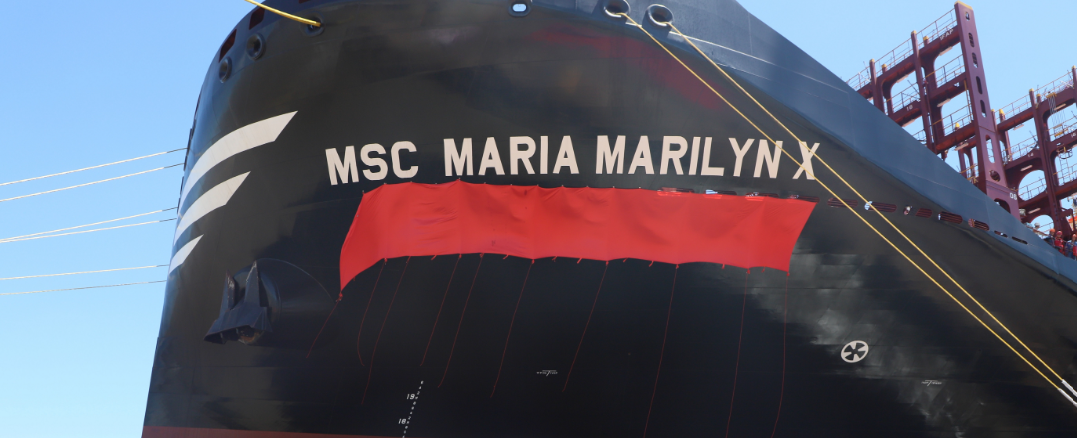
MSC MARIA MARILYN X
Construction Begins on 21,700 TEU Vessel with Ammonia-Ready Features Planned in Advance
CHB2052 will use an LNG dual-fuel propulsion system, but the 21,700 TEU vessel design has also been developed with longer-term alternative fuel applications in mind. In 2025, DNV awarded Approval in Principle (AiP) to Changhong International and CIMC ORIC for a related 21,700 TEU multi-fuel-ready ultra-large containership design. According to DNV, in addition to LNG propulsion, the design can incorporate a new-generation ammonia-fueled main engine and includes dedicated provisions for ammonia fuel storage.
AiP confirms the technical feasibility of a vessel design in principle. It does not mean that CHB2052, which has now entered construction, will use ammonia propulsion. Publicly available information shows that CHB2052 will use an LNG dual-fuel system while retaining the potential for future ammonia fuel applications.
This design approach allows shipowners to use the more established LNG option while retaining flexibility for changes in fuel technology and environmental requirements.
For major container carriers, new vessel designs are moving beyond a sole focus on container capacity to include fuel efficiency, emissions requirements, and future fuel adaptability. Once 21,700 TEU vessels enter service, ports and logistics networks will also require suitable berths, quay cranes, yard capacity, and hinterland transport capacity.
Which Routes Could See Capacity Changes After MSC’s New Vessel Is Delivered?
The start of construction is only one stage of fleet renewal. After delivery, MSC will still need to deploy the vessel according to cargo volumes, port conditions, and its existing fleet configuration. If the vessel adds capacity, capacity per sailing on some mainline services could increase. If it is primarily used to replace an older ship, the increase in total global capacity may be relatively limited, although the vessel mix on the relevant service will still change. Replaced vessels could also be redeployed to other regional markets, leading to further fleet adjustments.
MSC’s future vessel deliveries and vessel deployment will therefore be relevant to major markets including Asia–Europe, Asia–North America, the Middle East, the Mediterranean, and Africa. For freight forwarders, the more direct changes could involve vessel types, services, slot availability, and port calls. As more large newbuildings are delivered, MSC’s fleet renewal will continue to influence capacity deployment across global container shipping.
Chinese shipyards are continuing to secure orders for large containerships, while MSC is advancing LNG dual-fuel and ammonia-ready vessel designs. Global container shipping is therefore undergoing both vessel upsizing and an energy transition. For freight forwarders, the focus should extend beyond individual newbuilding orders to the service deployment and fleet adjustments that follow vessel delivery.
Sources
DNV, Changhong International, and other publicly available shipping information. This article is provided solely for reference within the international shipping, freight forwarding, and supply chain industries. Specific vessel deliveries, fuel configurations, and service deployment are subject to the latest information from the relevant shipowners and shipyards.
Last
Three China-Linked VLCCs Change Course as Only Nine Vessels Transit the Strait of Hormuz in a Single Day
Commercial shipping through the Strait of Hormuz has yet to return to normal. According to Bloomberg, three China-linked very larg
Next
FedEx, Ryder, and Other Logistics Companies Scale Back, with Over 7,000 U.S. Supply Chain Jobs Affected
The U.S. freight and logistics market is undergoing another round of adjustments. The latest Freight Distress Report shows that ap

