



In the complex landscape of international freight forwarding, Global Port Depth/Berthing is a critical factor that directly influences the operational efficiency and cost-effectiveness of large vessel operations. For forwarders managing global supply chains, understanding this concept is key to avoiding delays and optimizing service quality.
What Are Deep-Water Ports and How Do They Relate to Global Port Depth/Berthing?
Deep-water ports are maritime facilities with channel and berth depths sufficient to accommodate large vessels, typically those with a draft of 14 meters or more. Global Port Depth/Berthing links these port specifications to real-world operations, governing vessel access and loading capacity.
A port’s depth is measured as the vertical distance from the water surface to the seabed, and it dictates the maximum draft a vessel can safely have when berthing. Vessels with a deeper draft require more water to remain buoyant, especially when fully loaded.
Forwarders should note that deep-water port classifications vary by region, but most industry standards recognize ports with a minimum depth of 14 meters as suitable for large container ships and bulk carriers. According to UNCTAD 2026 preliminary data, approximately 39% of global ports qualify as deep-water ports, while the remaining 61% have varying degrees of depth restrictions.
This imbalance creates challenges for forwarders, as the majority of ports cannot accommodate the largest vessels without adjustments to cargo load or berthing schedules. Such adjustments often disrupt supply chain timelines and increase operational costs.
Why Are Deep-Water Ports Critical for Global Forwarders?
Deep-water ports are critical for global forwarders because they enable efficient handling of large vessels, reduce transit times, and minimize additional costs associated with cargo reduction or route diversion. Their role has become even more prominent as vessel sizes continue to grow.
The Growing Demand for Deep-Water Access Amid Vessel Upsizing
The global shipping industry has seen a steady trend toward larger vessels, as carriers seek economies of scale to lower per-unit costs. According to UNCTAD 2026 data, the average size of container ships has increased by 16% over the past five years, with many ultra-large container vessels (ULCVs) requiring a draft of 14.8 meters or more when fully loaded.
This vessel upsizing has increased demand for deep-water ports. Forwarders often rely on these ports to avoid the inefficiencies of transshipment or partial cargo unloading. A common mistake is for forwarders to assume that major global hubs automatically have deep-water capabilities, leading to last-minute disruptions when vessels cannot berth fully loaded.
How Vessel Restrictions at Non-Deep-Water Ports Impact Forwarders
Vessel restrictions at non-deep-water ports—such as draft limits, berth size constraints, and tidal restrictions—can significantly impact forwarder operations. These restrictions often force carriers to reduce cargo loads, wait for high tide, or divert to alternative ports, all of which add time and cost.
According to Freightos Baltic Index (FBX) 2026 Q1 data, routes serving ports with severe depth restrictions often see 19-24% higher freight rates compared to routes with deep-water ports. This is due to the additional expenses of cargo reduction, diversion, and extended berthing time, which forwarders either pass on to clients or absorb, reducing profit margins.
Which Regions Lack Sufficient Deep-Water Ports?
While deep-water ports are distributed globally, several regions face significant shortages, creating bottlenecks for forwarders managing shipments to those areas. These shortages are often driven by geography, limited funding for infrastructure upgrades, or environmental constraints.
North American East Coast: Many ports along the U.S. East Coast, including New York/New Jersey and Savannah, have depths ranging from 12.2 to 14.3 meters. According to the Port of Savannah 2026 interim report, its main channel depth of 14.3 meters limits fully loaded ULCVs to berthing only at high tide, causing average delays of 10-14 hours per vessel. The port is currently investing $4.5 billion in infrastructure upgrades over the next decade to address these limitations.
Southeast Asia: Ports like Jakarta (Indonesia) and Manila (Philippines) have maximum depths as low as 10.2 meters, restricting them to smaller feeder vessels. According to ITC Trade Map 3.0 (2026) data, transshipment through deep-water hubs like Singapore adds 3-7 days to delivery times for shipments to these ports, as the updated platform tracks real-time transshipment delays more accurately.
South America: Beyond Brazil’s Porto de Suape, which deepened its channel to 20 meters in early 2026, many South American ports face challenges. The Port of Callao (Peru) has varying depth limits by cargo type—12.0 meters for breakbulk and ro-ro, 15.5 meters for bulk, and 16.0 meters for containers—with average cargo handling cost increases of 20-25% for vessels restricted by draft, according to Peru’s Port Authority 2026 data.
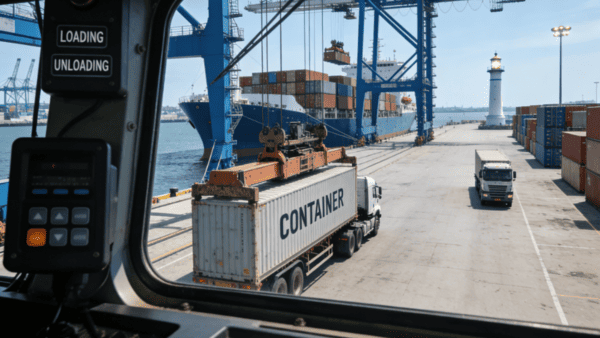
Mediterranean: Ports such as Piraeus (Greece) and Haifa (Israel) have depths of 13.5-15.2 meters, which can accommodate most large vessels but require partial unloading for ULCVs over 24,000 TEU. UNCTAD 2026 data shows Mediterranean ports handle 30% of global container traffic, making their restrictions a key concern for EMEA route managers.
How Do Vessel Restrictions Disrupt Day-to-Day Forwarder Operations?
Vessel restrictions at non-deep-water ports disrupt forwarder operations in multiple ways, from loading decisions to client commitments. These disruptions create ripple effects throughout the supply chain, affecting both efficiency and profitability.
Reduced Cargo Capacity and Efficiency Loss
When a port’s depth is less than a vessel’s required draft, carriers must reduce cargo loads to lower the draft. According to Drewry 2026 Q1 maritime research data, vessels calling at non-deep-water ports often carry 13-17% less cargo than their maximum capacity, reducing efficiency and increasing per-unit costs.
For forwarders, this means needing to book additional vessels or consolidate shipments to meet client demand. This not only increases costs but also extends lead times, which can strain client relationships and lead to lost business.
Berthing Delays and Tidal Dependencies
Berthing delays are a common issue at ports with insufficient depth, as vessels often wait for high tide to berth safely. The Panama Canal’s 2026 draft restrictions, due to ongoing drought conditions, have exacerbated this problem—reducing neo-panamax lock draft limits to 43.5 feet (13.2 meters) and causing average waiting times of over 22 days in the first quarter of 2026.
The recommended approach to mitigate these delays is for forwarders to coordinate closely with carriers and port authorities to schedule berthing during high tide windows. This requires advance planning and real-time communication, as tide times vary by location and season.
What Strategies Can Forwarders Use to Navigate Deep-Water Port Shortages?
Forwarders can adopt several practical strategies to navigate deep-water port shortages, minimizing disruptions and controlling costs. These strategies focus on advance planning, flexibility, and leveraging available infrastructure.
Conduct Pre-Shipment Depth Verification: Before booking a vessel, forwarders should verify the current depth limits of the destination port, including seasonal variations and ongoing dredging projects. This can be done through port official websites or direct communication with port authorities, as depth limits can change due to sedimentation or infrastructure works.
Optimize Vessel Selection and Cargo Loading: The recommended approach is to match vessel draft to port depth limits whenever possible. For non-deep-water ports, forwarders can use smaller vessels or consolidate cargo to reduce draft, while working with carriers to adjust loading patterns for stability and compliance with maritime safety regulations.
Leverage Transshipment Hubs: For destinations with severe depth restrictions, forwarders can use deep-water transshipment hubs to transfer cargo to smaller feeder vessels. For example, shipments to Jakarta often use Singapore’s deep-water port (20.5 meters) as a hub, reducing the risk of delays and cargo damage.
Negotiate Flexible Berthing Schedules: Forwarders can negotiate with carriers and port authorities to secure berthing slots during high tide windows, when depth limits are temporarily higher. This flexibility can significantly reduce waiting times and improve on-time performance for client shipments.
Monitor Port Infrastructure Upgrades: Tracking dredging and expansion projects helps forwarders plan future shipments. For example, the Port of Baltimore is dredging to 15.2 meters, expected to accommodate larger vessels by late 2026, offering new routing options for forwarders managing shipments to the U.S. East Coast.
How Are Ports Addressing Depth Limitations to Support Forwarders?
Ports worldwide are investing in infrastructure upgrades to address depth limitations, recognizing that deep-water capabilities are essential for remaining competitive. These upgrades focus on dredging, channel expansion, and operational improvements.
Dredging: The Primary Solution for Deepening Ports
Dredging is the most common method to increase port depth, involving the removal of sediment from channels and berths. According to Gitnux 2026 dredging industry statistics, global marine dredging spending is projected to reach $25.6 billion by 2027, with 2026 spending estimated at $22.3 billion, a 15% increase from 2025, as ports race to accommodate larger vessels.
Brazil’s Porto de Suape completed a dredging project in early 2026, deepening its external channel to 20 meters, allowing Suezmax tankers to berth fully loaded and enhancing its role as a regional fuel logistics hub. Similarly, the Port of Rotterdam spends approximately $132 million annually on dredging to maintain its 24.5-meter depth, according to its 2026 annual report.
Beyond Dredging: Improving Berthing Efficiency
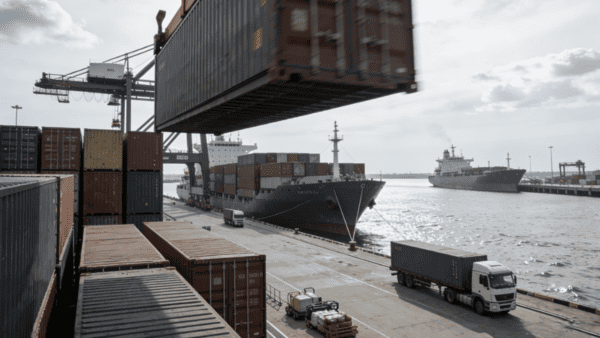
A common mistake among port authorities is focusing solely on dredging without addressing other operational inefficiencies. Modern ports are adopting automated mooring systems, such as Cavotec’s Moor Master, which reduces mooring time from 40+ minutes to seconds, improving turnaround efficiency.
APM Terminals Tanger Med 2 reduced mooring time by 71% and unmooring time by 23% after implementing automated mooring, improving overall efficiency even with existing depth limits. These improvements help forwarders reduce berthing delays and meet client deadlines.
What Future Trends Will Shape Deep-Water Port Access?
Several future trends will shape deep-water port access, including vessel upsizing, environmental regulations, and geopolitical shifts. Forwarders who stay ahead of these trends can proactively adjust their strategies to mitigate risks.
Continued Vessel Upsizing
According to UNCTAD 2026 data, the number of ULCVs (over 24,000 TEU) is expected to increase by 30% by 2028, requiring drafts of 15 meters or more. This will put additional pressure on ports to deepen channels, as those unable to accommodate these vessels may lose business to deeper competitors.
Environmental Regulations and Draft Implications
The International Maritime Organization (IMO) finalized its net-zero framework in October 2025, reshaping vessel design and fuel use. Alternative fuel vessels now represent over 58% of new orders, and their heavier fuel systems may increase draft by 0.3-0.5 meters, exacerbating existing depth restrictions.
Forwarders should note that these regulatory changes will require closer coordination with carriers to ensure vessels comply with both environmental standards and port depth limits, as non-compliance can result in fines and shipment delays.
Geopolitical Shifts and Route Diversification
Geopolitical tensions are reshaping global shipping routes, with UNCTAD 2026 data showing the average voyage haul has increased from 4,831 miles in 2018 to 5,410 miles in 2026. This shift means forwarders may need to use alternative deep-water ports to avoid high-risk routes, even if they are farther from the final destination.
In conclusion, understanding deep-water ports and vessel restrictions is essential for global forwarders seeking to optimize operations and maintain competitive advantage. By leveraging proactive strategies, monitoring industry trends, and staying informed about port upgrades, forwarders can navigate depth limitations effectively. Global Port Depth/Berthing remains a core consideration for forwarders, as it directly impacts efficiency, costs, and client satisfaction in an increasingly complex global supply chain.
Last
Forwarder Advancement: Mastering Contract Details and Practices in Breakbulk Shipping
For global freight forwarders, mastering Breakbulk Chartering and its associated contract details is a cornerstone of delivering r
Next
Ultimate Transit Times: How to Achieve Next-Day Delivery on Japan-Korea Routes
The Japan-Korea Next-Day service has become a critical competitive edge for forwarders operating in Northeast Asia, as businesses