




The peak season, covering Amazon Prime Day, Black Friday, Cyber Monday, and year-end holidays, brings extraordinary volume pressure to global freight forwarders. During this window, timely cargo receipt by Amazon fulfillment centers becomes critical, and a high-performance FBA Logistics Solution directly determines sellers’ sales performance and forwarders’ client retention.
What is a Faster FBA Freight Solution for Peak Season?
A faster FBA Freight Solution for peak season is a specialized end-to-end logistics service designed to expedite cargo flow from origin to Amazon FBA warehouses while complying with Amazon’s inbound rules. It emphasizes shortened transit time, reduced dwell time, streamlined customs clearance, and proactive exception control to meet strict peak-season delivery windows.
Why Is a High-Speed FBA Logistics Solution Essential in Peak Season?
Peak season creates a structural surge in containerized and air cargo movements, directly threatening FBA shipment timeliness. According to UNCTAD 2026 Maritime Report, global peak-season container volumes rise 32% year-over-year, with major U.S. and EU ports facing average berthing delays of 36–48 hours.
Freight forwarders need to note that Amazon’s 2026 inbound compliance rules impose stricter check-in deadlines during peak periods. Late arrivals may lead to shipment rejection, storage penalties, or restricted inventory placement.
According to the Freightos Baltic Index (FBX) Q1 2026, 76% of Amazon sellers state they will change forwarders if FBA deliveries are delayed more than three days during peak demand. The recommended practice is to build a dedicated peak-season FBA service structure rather than using standard logistics processes.
What Bottlenecks Most Severely Delay FBA Shipments in Peak Season?
Peak-season delays stem from predictable industry constraints and operational missteps. Below are the most impactful bottlenecks:
Port Congestion and Terminal Productivity Decline
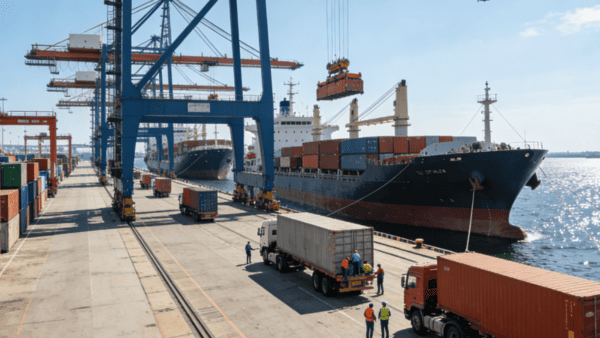
Major load ports and destination ports face extreme congestion during peak months. The Port of Los Angeles 2026 Q1 Operations Report shows average container dwell time increased to 5.2 days during peak seasons, nearly double the off-peak average. This delay cascades into missed FBA appointment windows.
Carrier Capacity Shortage and Space Allocation Limits
Ocean and air carriers restrict capacity during peak seasons to stabilize pricing. FBX 2026 data indicates peak-season FBA-dedicated ocean capacity decreases by 19%, while wide-body belly capacity for air freight drops by 14%. Forwarders without pre-contracted capacity often face rolling delays.
Amazon Inbound Compliance Rejection
Amazon’s FBA labeling, carton marking, pallet build, and shipment documentation rules are enforced more strictly during peak periods. A common misconception is that minor non-compliance will be overlooked. In reality, Amazon’s 2026 FBA Inbound Performance Report shows a 27% rise in non-compliance rejections during peak months.
Inadequate Pre-Peak Planning
Many forwarders begin peak preparation fewer than 60 days in advance. According to FIATA 2026 Global Freight Forwarder Survey, 34% of forwarders lack formal pre-peak capacity locking, resulting in last-minute routing and slower transit.
Last-Mile Delivery Bottlenecks
Final-mile delivery to FBA fulfillment centers is often the weakest link. Increased parcel and pallet volume slows down yard check-in and appointment availability. Drewry’s 2026 Last-Mile Logistics Review notes that 31% of total FBA delays occur in the final inland leg.
How to Build a Faster FBA Logistics Solution for Peak Season?
Creating an accelerated FBA solution requires systematic optimization across planning, execution, compliance, and technology.
Secure Dedicated Carrier Capacity in Advance
The recommended practice is to lock peak-season capacity 6–8 months ahead with 3–5 reliable carriers. Forwarders need to note that carriers prioritize contract clients during tight capacity. According to FBX 2026, forwarders with pre-committed capacity cut delay risks by 38% and secure 12–18% more favorable pricing.
Optimize Pre-FBA Warehousing and Prep Services
Centralized pre-FBA warehousing near destination ports or fulfillment centers reduces final-mile time. Investing in professional FBA labeling, polybagging, bubble wrapping, and carton consolidation eliminates rejections. Drewry 2026 data shows forwarders with in-house FBA prep reduce compliance delays by 42% and shorten overall transit by 2–3 days.
Streamline Customs Clearance with Digital Tools
Customs delays represent a major peak-season risk. Using digital clearance platforms reduces processing time by 35%, per WTO 2026 Trade Facilitation Report. Forwarders need to note that updated tariff schedules and customs documentation for high-value and regulated goods must be prepared ahead of peak influx.
Deploy Real-Time Cargo Tracking and Alert Systems
Real-time GPS and container tracking enables proactive intervention for congestion or route disruption. A 2026 logistics technology survey by Logistics Management shows forwarders with end-to-end visibility reduce peak delays by 26%. The recommended practice is to share live tracking links with sellers to improve transparency and satisfaction.
Design Tailored Peak-Season FBA Service Packages
Different sellers require different speed-cost balances. Forwarders should structure tiered solutions:
Express Air: For emergency restocks and high-priority SKUs
Premium Ocean Express: For time-sensitive bulk inventory
Standard FCL/LCL Ocean: For pre-positioned peak-season stock
Hybrid Ocean-Air: For balanced speed and cost efficiency
Establish Contingency Routing and Backup Plans
Unexpected disruptions such as port strikes, weather events, or equipment shortages require alternative routes. UNCTAD 2026 reports that forwarders with formal contingency plans reduce major disruption impacts by 49%.
Common Mistakes That Weaken Peak-Season FBA Performance
Underforecasting Volume Demand
A common mistake is relying solely on historical growth without accounting for Amazon’s promotional calendar. According to the 2026 FBA Logistics Benchmark Report, 41% of forwarders underestimated 2026 peak FBA volume by 15% or more, leading to capacity shortages and delays.
Over-Reliance on One Carrier
Carrier service disruptions can fully block FBA cargo flow. The recommended practice is to maintain at least 2–3 alternative carriers for each major trade lane to mitigate risks.
Insufficient FBA Compliance Training
Non-compliance causes avoidable delays and extra repacking costs. Forwarders need to note that Amazon updates labeling and carton requirements annually, especially before peak season. Regular compliance training for operational teams is critical to reducing rejection rates.
Poor Client Communication
Lack of proactive updates leads to dissatisfaction even when cargo arrives on time. A 2026 Amazon Seller Satisfaction Survey shows 64% of sellers switch forwarders due to poor communication during peak periods.
Neglecting Last-Mile FBA Delivery
Inland transportation and FBA yard appointment management are often underprioritized. The recommended practice is to partner with dedicated FBA last-mile carriers that have established relationships with Amazon fulfillment centers to avoid appointment conflicts.
How to Monitor and Improve FBA Logistics Solution Performance?
Track Core KPIs Consistently
Key performance indicators (KPIs) for peak-season FBA logistics include:
On-time FBA Check-in Rate: Target ≥95%
Compliance Rejection Rate: Target ≤8%
Average Port Dwell Time: Track against industry benchmarks
Client Complaint Frequency: Aim for ≤2 complaints per 100 shipments
Collect Real-Time Seller Feedback
Weekly check-ins with key accounts help identify hidden pain points (e.g., delayed tracking updates, unclear documentation requirements). Adjustments based on feedback improve client retention and service accuracy.
Adapt Dynamically to Market Changes
Port congestion, rate swings, and carrier suspensions require realigned routing. Forwarders must adjust sailings, air routes, and warehouse strategies promptly to avoid delaying clients.
Conduct Post-Peak Review and Optimization
After peak season, analyze delays, root causes, and cost efficiency. Lessons learned directly improve the next year’s FBA Logistics Solution design and operational performance.
Future Trends of Peak-Season FBA Logistics
AI-Driven Routing and Demand Forecasting
AI tools will improve volume prediction and route selection, reducing delays by 12–16% by 2027, per UNCTAD 2026. Forwarders that adopt AI-driven forecasting will gain a competitive edge in capacity planning.
Sustainable FBA Logistics
Amazon’s 2040 net-zero carbon emissions goal increases demand for low-carbon FBA solutions. Forwarders offering eco-friendly routing (e.g., carbon-neutral shipping, optimized load factors) will gain preferential access to seller clients.
End-to-End Digital Integration
Integrated platforms connecting forwarders, carriers, customs authorities, and Amazon will create seamless FBA cargo flow. Real-time data sharing reduces manual delays and miscommunication between stakeholders.
Conclusion
Peak season success for freight forwarders depends entirely on building a robust, fast, and reliable FBA Logistics Solution that addresses congestion, capacity limits, compliance risks, and last-mile challenges. By implementing structured pre-peak planning, diversified carrier partnerships, digital visibility tools, and tailored service models, forwarders can transform peak pressure into a competitive advantage. As global e-commerce continues expanding, a high-performance peak-season FBA solution will remain the core capability for forwarders serving Amazon sellers worldwide.
Last
Beyond the Box: Finding the Most Cost-Effective International Freight Solution for Every Full Container (FCL) You Move
In the fast-paced world of international freight forwarding, Full Container Load (FCL) shipping remains the backbone of global tra
Next
Optimizing the Bottom Line: Finding a Cost-Effective FBA-Specific Logistics Solution for Global Amazon Shipping
In the highly competitive global e-commerce landscape, Amazon has established itself as the dominant platform, with its Fulfillmen

