




As Sino-European trade continues to heat up, China to Germany shipping, as the core logistics channel connecting trade between the two countries, undertakes more than 80% of the global transportation of import and export goods between China and Germany. For freight forwarders, the ability to obtain direct contract rates from carriers directly determines their profit margins and market competitiveness. However, the selection of carrier resources and the application of bargaining skills hide many industry inside stories. This article will deeply dissect the cooperation logic of China to Germany shipping carriers and guide freight forwarders step by step to break through bargaining barriers and lock in more advantageous direct contract rates.
What is a China to Germany Shipping Carrier? What Are the Core Advantages?
A China to Germany shipping carrier refers to a first-level agent that signs long-term Contracts of Affreightment (COA) with mainstream shipping companies such as COSCO Shipping, Hapag-Lloyd, and Maersk, owns stable capacity resources, and can directly provide direct contract rates to freight forwarders and foreign trade enterprises. Its core advantage is skipping intermediate price markups, enabling it to connect with downstream customers at lower prices and with more stable shipping space, which is also the core resource sought after by freight forwarders.
According to the latest April 2026 maritime report data from UNCTAD (United Nations Conference on Trade and Development), the carrier shipping space prices on the China to Germany shipping route are 15%-25% lower than those of second-level and third-level agents on average, and the peak season shipping space guarantee rate reaches 91%, which is much higher than the 65% of ordinary agents. For freight forwarders, cooperating directly with carriers can not only reduce costs but also seize the market initiative during the peak season when shipping space is tight, avoiding customer loss caused by "container rolling" and "temporary price increases".
The recommended approach is that when selecting carriers, freight forwarders should not only focus on the price but also give priority to verifying their cooperation qualifications with shipping companies—whether they have a formal COA, how long the cooperation period is, and whether the core route focuses on China to Germany shipping. These are the key factors to judge the strength of a carrier. A common misunderstanding is that some freight forwarders blindly pursue low prices and cooperate with "fake carriers" that have no actual shipping space resources, which ultimately leads to unguaranteed shipping space and temporary price increases, resulting in more losses than gains.
Why Is It Difficult for Freight Forwarders to Obtain High-Quality Direct Contract Rates? What Are the Core Barriers?
Many freight forwarders report that although they have contacted many service providers claiming to be "carriers", they still cannot obtain competitive direct contract rates. The core reason is that they have not broken through the cooperation barriers of carriers and have fallen into industry cognitive misunderstandings.
Barrier 1: Tiered Pricing Mechanism, Limited Bargaining Space for Small and Medium-Sized Freight Forwarders
The direct contract rates of carriers are not "one-size-fits-all" but are priced in tiers according to core indicators such as the freight forwarder's shipping volume, cooperation stability, and payment collection speed. According to the latest April 2026 China to Germany shipping freight rate report released by the Shanghai Shipping Exchange, freight forwarders with an annual shipping volume of more than 500 TEUs can obtain direct contract rates that are 20%-30% lower than those with an annual shipping volume of less than 100 TEUs, which is also a price barrier that is difficult for small and medium-sized freight forwarders to break through.
Barrier 2: Lack of Cognition and Capabilities, Easy to Fall into Bargaining Misunderstandings
Most freight forwarders have insufficient understanding of the cooperation logic of carriers, mistakenly believing that "they can get direct contract rates as long as they inquire". In fact, carriers are more inclined to establish in-depth bonds with long-term and stable cooperative partners. In addition, some freight forwarders lack professional bargaining capabilities and do not understand the composition of China to Germany shipping freight rates (base freight + surcharges + miscellaneous fees), making them easily misled by the "low-price gimmicks" of carriers and ignoring hidden costs such as container detention fees and port detention fees, resulting in no actual reduction in overall costs.
Barrier 3: "Fake Carriers" Flood the Market, Interfering with the Selection of High-Quality Resources
Freight forwarders need to note that there are many "fake carriers" in the current market. Such service providers do not have direct shipping space themselves but only obtain second-hand prices from first-level carriers and then markup and sell them to downstream freight forwarders, essentially belonging to second-level and below agents. These "fake carriers" cannot provide stable direct contract rates and may also impose temporary price increases and roll containers when shipping space is tight, bringing huge performance risks to freight forwarders.
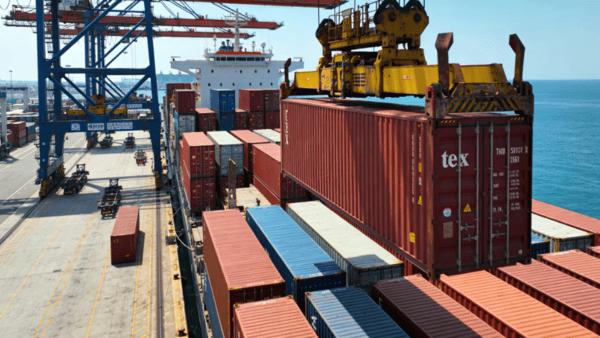
How to Accurately Select China to Germany Shipping Carriers? 4 Core Judgment Criteria
Selecting a reliable China to Germany shipping carrier is the premise of obtaining high-quality direct contract rates. Freight forwarders can quickly identify the strength of carriers and avoid industry traps through the following 4 core criteria.
Verify the Authenticity of Qualifications: Prioritize verifying the carrier's business license (which must include the business scope of "international freight forwarding") and NVOCC (Non-Vessel Operating Common Carrier) qualification (verifiable through the official website of the Ministry of Transport); at the same time, request a copy of the formal COA with the shipping company, and refuse service providers that cannot provide qualification certificates. Freight forwarders need to note that "virtual carriers" with less than 3 years of establishment and no physical office address should never be cooperated with to avoid problems such as fund misappropriation and unguaranteed shipping space.
Evaluate Capacity Resources: Focus on inquiring about the carrier's shipping space reserve at major Chinese ports such as Shanghai, Shenzhen, and Ningbo, and core German ports such as Hamburg and Bremerhaven, whether there are fixed weekly routes, and the shipping space guarantee plan during the peak season (such as the Christmas stocking period and before the Spring Festival). According to the latest April 2026 industry data, high-quality carriers should have a peak season shipping space guarantee rate of more than 88% and be able to provide flexible shipping space adjustment plans.
Verify Price Transparency: Request the carrier to provide a detailed breakdown of China to Germany shipping direct contract rates, clearly indicating all costs such as base freight, Bunker Adjustment Factor (BAF), Terminal Handling Charge (THC), and Entry Summary Declaration (ENS) fee, and refuse "package prices" and "vague quotes". The recommended approach is to have the carrier commit to "no hidden costs" and include relevant clauses in the cooperation agreement to avoid subsequent disputes.
Inspect Service Capabilities: Focus on inspecting the carrier's customs clearance capabilities, after-sales response speed, and whether it has a local German agent. The customs clearance link of China to Germany shipping is complex. If the carrier has an independent local European customs clearance channel, it can shorten the customs clearance time to 3 days, which is 50% faster than the industry average, effectively avoiding additional costs caused by goods being detained at the destination port. At the same time, the after-sales response should be 24-hour standby, and the processing time for abnormal issues (such as customs inspection and shipping schedule delays) should not exceed 24 hours.
5 Bargaining Skills for Freight Forwarders to Get Direct Contract Rates, Easily Reducing Costs by 15%-25%
After selecting high-quality carriers, mastering professional bargaining skills is the key to truly obtaining more competitive China to Germany shipping direct contract rates. The following 5 skills, verified by industry practice, can help freight forwarders break through price barriers and lock in the best prices.
Exchange "Stable Shipping Volume" for Low Prices: Carriers value long-term and stable shipping volume most. Freight forwarders can calculate their average monthly and annual shipping volume in advance, sign a long-term cooperation agreement (such as 1 year or more) with the carrier, and commit to a fixed shipping volume to strive for lower direct contract rates. According to industry practices, freight forwarders that commit to an annual shipping volume of more than 300 TEUs can get an additional 8%-12% discount on the base freight.
Flexibly Choose Cooperation Modes: Freight forwarders can choose flexible modes such as "container space booking cooperation" and "LCL (Less than Container Load) consignment" according to their own shipping characteristics. For freight forwarders with stable shipping volume, container space booking cooperation can lock in long-term low prices and avoid cost increases caused by freight rate fluctuations; for small and medium-sized freight forwarders with unstable shipping volume, the LCL consignment mode can be selected to reduce the transportation cost of a single piece of goods through the carrier's resource integration.
Master Freight Rate Fluctuation Rules for Accurate Bargaining: China to Germany shipping freight rates are affected by factors such as seasons, shipping schedules, and geopolitics. Freight forwarders need to master the rules of freight rate fluctuations and choose the right bargaining time. According to the latest April 2026 data from the Freightos Baltic Index (FBX), March-April and September-October each year are the low periods of freight rates, with the largest bargaining space; while June-August and November-December are the peak seasons, with rising freight rates and smaller bargaining space. The recommended approach is to sign a long-term agreement with the carrier during the low freight rate period to lock in low prices.
Bargain by Bundling Value-Added Services: Freight forwarders can bundle value-added services such as customs clearance, trailer, and cargo insurance with China to Germany shipping space, and request the carrier to provide preferential treatment on value-added services on the basis of direct contract rates. For example, bundling customs clearance services can help strive for a 10%-15% reduction in customs clearance fees, and bundling trailer services can reduce inland transportation costs, thereby achieving an overall reduction in costs.
Compare Prices Among Multiple Carriers for Reverse Bargaining: Freight forwarders should not only contact one carrier but also screen 3-5 high-quality carriers at the same time to obtain detailed quotes. Then, based on the best quote among them, conduct reverse bargaining with other carriers to strive for more advantageous prices. Freight forwarders need to note that when comparing prices, they should ensure that the quotation standards are consistent (such as the same route, container type, and cost scope) to avoid the pointlessness of price comparison due to different quotation standards.
Post-Cooperation Pitfall Avoidance Guide: How to Maintain the Advantage of Direct Contract Rates and Avoid Risks?
Obtaining China to Germany shipping direct contract rates does not mean everything is fine. Freight forwarders also need to do a good job in post-cooperation risk control to avoid price increases and shipping space loss caused by improper operations and maintain their own cost advantages.
Clarify Cooperation Terms to Avoid Contract Traps: When signing a cooperation agreement with the carrier, it is necessary to clearly define the validity period of the direct contract rate, freight rate adjustment mechanism, shipping space guarantee terms, hidden cost agreements, default compensation standards, and other core contents. For example, it is agreed that the freight rate adjustment shall be notified in writing 7 working days in advance. If the carrier unilaterally increases the price, it shall bear the corresponding liability for breach of contract; the scope of shipping space guarantee shall be clarified. If the container is rolled due to the carrier's reason, the carrier shall compensate the freight forwarder for the corresponding losses.
Track Freight Rate Dynamics in Real Time and Adjust Strategies Timely: China to Germany shipping freight rates fluctuate frequently. Freight forwarders need to pay real-time attention to the FBX index, freight rate data released by the Shanghai Shipping Exchange, and shipping space adjustment notices from shipping companies. If the freight rate drops sharply, they can negotiate with the carrier to adjust the direct contract rate; if the freight rate rises, they can use the previously signed long-term agreement to lock in low prices and avoid cost increases.
Standardize Operation Procedures to Avoid Additional Costs: When shipping goods, freight forwarders need to accurately provide information such as the name, weight, volume, and HS code of the goods to avoid additional costs such as customs inspection and document amendment caused by incorrect information; at the same time, submit customs declaration documents and confirm shipping space in strict accordance with the time required by the carrier to avoid shipping space cancellation and additional costs such as container detention fees and port detention fees caused by operational delays.
Review Cooperation Regularly and Optimize Cooperation Modes: Freight forwarders need to regularly review the cooperation situation with the carrier, including price execution, shipping space guarantee, after-sales response, etc., and communicate and solve problems in a timely manner if any. At the same time, optimize the cooperation mode according to changes in their own shipping volume. For example, after the shipping volume increases, they can renegotiate with the carrier to strive for more preferential direct contract rates; if the shipping volume decreases, they can switch to the LCL consignment mode to reduce cooperation costs.
For freight forwarders, the direct contract rate of China to Germany shipping is not only the key to reducing costs but also the core factor to enhance market competitiveness. In the current context of slowing global maritime trade growth and frequent freight rate fluctuations, only by accurately selecting high-quality carriers, mastering professional bargaining skills, and doing a good job in post-cooperation risk control can they break through industry barriers and obtain more competitive direct contract rates. In the future, with the continuous deepening of Sino-German trade, the importance of the China to Germany shipping route will be further enhanced. Only by deeply cultivating carrier resources and optimizing cooperation modes can freight forwarders gain a firm foothold in the fierce market competition and achieve sustainable development.
Last
China to Germany Sea Shipping: Optimal Loading Strategies for E-commerce Goods, General Goods, and Sensitive Goods
As a core logistics channel for China-EU trade, China-to-Germany sea shipping carries a large number of transportation needs for e
Next
China-to-Germany Sea Shipping Dangerous Goods (DG) Operation Process: Professional Compliance Advice from Shanghai Port
With the continuous deepening of trade relations between China and Germany, China-to-Germany sea shipping has become one of the co

