



UK Electronic Trade Documents Act Implementation delivers formal legal recognition for electronic title transfer mechanisms, supporting blockchain-based maritime document operations for global freight forwarding practitioners. Paper-driven title endorsement and cargo ownership handovers have long been associated with processing delays, ambiguous liability allocation, and frequent operational disputes across cross-border supply chains. This updated regulatory framework acknowledges distributed ledger technology as a compliant solution for maritime document governance, requiring targeted competency upgrades for in-house documentation teams to execute standardized, regulation-aligned blockchain title transfers.
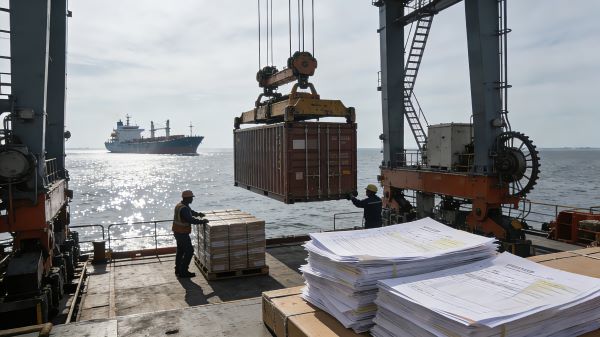
What legal standards does the new UK act set for blockchain maritime title transfers?
The Electronic Trade Documents Act 2023 defines unified legal benchmarks for electronic document possession and transfer that align with core functional attributes of blockchain infrastructure. The legislation abolishes traditional physical possession prerequisites and grants equivalent legal validity to exclusive digital document control and ledger-tracked transfers for mainstream maritime trade paperwork.
According to UK Law Commission 2025 regulatory guidance, systems eligible for electronic trade document processing must support exclusive single-party control and complete divestment upon transaction completion. These two core functional requirements match inherent characteristics of mainstream permissioned blockchain networks, laying a solid legal foundation for blockchain-powered maritime title transfer adoption in UK-related trade routes.
How do legal requirements distinguish blockchain transfers from ordinary digital file exchanges?
Routine digital file sharing only supports simple data transmission without ownership detachment or exclusive control mechanisms. In contrast, blockchain title transfers regulated under the UK Act trigger verifiable, irreversible ownership separation after each verified transaction. Once a documentation team finalizes a blockchain bill of lading title handover, the original holder loses all endorsement and operational control rights, complying with statutory anti-duplication and risk control provisions.
Forwarders should note that the Electronic Trade Documents Act maintains technology-neutral attributes and does not enforce blockchain adoption for digital document processing. Distributed ledger platforms represent one of the commonly adopted compliant alternatives to traditional paper documentation, with flexible transformation pathways available for forwarding enterprises of varying scales.
Why targeted documentation team training is essential for blockchain title compliance
Specialized professional training bridges operational gaps between conventional paper document workflows and blockchain-based title transfer protocols regulated by the updated UK trade legislation. Most frontline documentation staff accumulate extensive experience in physical document processing but lack structured training on ledger-based ownership verification and compliant digital endorsement procedures.
A common mistake is that many forwarding teams regard general digital operation proficiency as adequate for blockchain title transfer compliance. Basic file management and cloud sharing operations fail to meet the exclusive control and full divestment criteria specified in UK electronic maritime trade regulations, creating latent compliance vulnerabilities in daily business operations.
According to UNCTAD 2024 maritime digitalization industry research, approximately 42 percent of digital compliance discrepancies in global freight operations originate from insufficient staff familiarity with regulated electronic title transfer protocols. Undertrained personnel may perform incomplete blockchain transfers, retain residual document access permissions, or omit formal transfer record archiving, which may trigger invalid title validation and cross-border cargo ownership disputes.
Structured, scenario-based training enables documentation teams to differentiate compliant blockchain transfer practices from non-standard digital operations. It helps staff strictly implement regulatory requirements for exclusive ownership switching, immutable ledger logging, and multi-party stakeholder verification, supporting legally enforceable title transfers for all UK-connected maritime shipments.
What core blockchain title transfer workflows require standardized team training?
Blockchain-enabled maritime title transfers involve multi-stage operational procedures that differ significantly from conventional paper endorsement workflows. Standardized staff training focuses on regulation-aligned operational specifications to sustain full compliance with UK Electronic Trade Documents Act Implementation requirements.
Pre-transfer document validity verification: Operational teams need to confirm blockchain document unique identifiers, platform compliance certification status, and real-time ownership records before initiating any title transfer actions. This workflow verifies electronic document eligibility under UK legal standards and prevents operations on unregulated, non-compliant digital records.
Regulation-aligned ownership divestment execution: Staff need proficient skills to activate complete ownership detachment on permissioned blockchain ledgers. Accurate execution ensures outgoing holders lose all document access, modification, and endorsement privileges immediately after transaction confirmation, satisfying core statutory divestment rules.
Multi-party identity matching and endorsement logging: Blockchain title transfers require precise alignment between ledger-registered participant identities and actual trade stakeholders. Trained teams conduct systematic identity verification and formal endorsement recording to reduce risks associated with unauthorized participant intervention.
Immutable transaction evidence archiving: Teams are required to systematically archive blockchain transaction hashes, precise timestamps, and ownership alteration logs. These verifiable records serve as valid legal evidence for customs clearance, trade finance review, and commercial dispute resolution in UK maritime trade scenarios.
Standardized transfer anomaly handling: Professional training equips staff with practical solutions for common blockchain operational anomalies, including network verification delays and permission matching inconsistencies. Standardized response protocols mitigate sustained compliance loopholes caused by unresolved transfer failures.
What key training modules help teams master compliant blockchain operations?
Systematic training modules integrate statutory regulatory clauses and practical technical operations to build comprehensive professional competencies for forwarding documentation teams. Each module addresses typical compliance pain points in blockchain title management under the UK’s electronic trade regulatory framework.
Regulatory framework interpretation training: This module covers core provisions of the Electronic Trade Documents Act 2023 governing electronic title possession and transfer. It helps staff clarify legal boundaries for blockchain operations and distinguish regulation-compliant digital transfers from informal operational practices.
Blockchain ledger mechanism practical training: Frontline personnel learn fundamental distributed ledger logic, immutable data recording mechanisms, and exclusive ownership control principles. Practical hands-on sessions connect abstract regulatory rules with on-site maritime document operational scenarios.
Cross-border title transfer scenario simulation: Training simulations cover mainstream UK import, export, and transshipment cargo title transfer scenarios. Staff practice standardized workflows for diverse trade contexts to maintain consistent compliance across varied business conditions.
Compliance audit and evidence management training: The module teaches standardized ledger record sorting, transaction evidence retention, and internal self-audit methodologies. It supports long-term operational standardization and adaptive adjustment to evolving regulatory inspection requirements.
The recommended approach is to adopt tiered training arrangements based on staff job responsibilities and professional seniority. Junior documentation personnel focus on basic operational specifications, while supervisory teams undertake advanced regulatory interpretation and anomaly management training to build layered, systematic team capabilities.
What operational benefits do trained teams bring to UK maritime freight business?
Documentation teams with standardized blockchain operation training support stable compliance performance for digital title transfers and generate measurable operational improvements for forwarders managing UK maritime cargoes. Standardized digital workflows optimize processing efficiency while lowering legal exposure and financial risks in cross-border title governance.
According to Drewry 2025 global freight digitalization analytics, standardized blockchain document transfer workflows shorten maritime title endorsement cycle durations by approximately 65 percent in comparison to traditional paper-based processing. For UK-Europe short-sea corridors and UK-Asia long-haul shipping routes, streamlined digital title handovers reduce cargo port dwelling durations and improve overall supply chain turnover efficiency.
Trained operational teams effectively reduce human-factor compliance errors and lower the occurrence probability of title-related commercial disputes. Immutable blockchain records generated through standardized workflows deliver transparent ownership traceability, cutting negotiation costs and time expenditures for post-incident dispute settlement. Stable compliance performance helps forwarding enterprises strengthen market credibility in global maritime trade markets.
Forwarders should note that proficient standardized blockchain title operation skills have become a practical service advantage for enterprises focusing on UK trade routes. As digital document system adoption expands across global trade participants, professional documentation teams support smoother business adaptation and more stable client service delivery compared to teams without systematic training.
What long-term team building strategies support sustained digital compliance?
Sustained compliance with UK electronic maritime document regulations relies on continuous team capability iteration rather than one-time centralized training. Forwarding enterprises need to establish long-term talent development mechanisms to adapt to incremental updates in digital trade regulatory and technical environments.
Build periodic regulatory update training mechanisms: Organize quarterly knowledge refresh sessions covering adjustments to UK electronic trade document rules and iterative upgrades of mainstream blockchain document platforms. This practice keeps internal operational standards aligned with prevailing regulatory and technical requirements.
Compile internal operational standard guidelines: Develop unified written protocols for blockchain title transfer operations based on statutory requirements and practical business experience. Standardized internal documentation reduces operational randomness and supports consistent execution across team members.
Implement regular assessment and incentive mechanisms: Conduct routine operational evaluations focusing on blockchain transfer compliance accuracy and procedural standardization. Reasonable incentive mechanisms encourage staff to maintain stable, high-quality operational proficiency in daily workflows.
Facilitate cross-industry technical exchanges: Arrange team learning and communication activities with digital platform operators and industry digitalization institutions. Continuous external learning helps teams accumulate practical experience for compliant digital document operations.
In summary, UK Electronic Trade Documents Act Implementation establishes standardized legal pathways for blockchain-based maritime title transfers, making professional documentation team training a core component of modern freight operational compliance. Targeted capability upgrading resolves capability mismatches between traditional paper document workflows and digital regulatory requirements, assisting global forwarders in delivering efficient, standardized, and legally compliant maritime title management for UK cross-border trade businesses.

Last
Eliminating paper bill fraud risks following the official UK legal Electronic Trade Digital Documents Act UK implementation
UK Electronic Trade Documents Act Implementation delivers a pivotal regulatory upgrade that mitigates long-standing vulnerabilitie

Next
Ensuring smooth asia europe trade flows by tracking the recent EU customs security updates and border import policy
Global freight forwarders rely heavily on predictable cross-border protocols, making EU Import Policy compliance a core priority f