




Stringent global Customs Inspection Policy enforced across major international trade corridors frequently triggers prolonged container holds at gateway ports, bringing tangible operational challenges for freight forwarders managing client delivery expectations. In recent years, upgraded border compliance criteria and more frequent physical inspections have extended standard clearance timelines and disrupted scheduled cargo deliveries. According to UNCTAD 2025 maritime transport data, policy-driven customs delays account for approximately 38 percent of extended container dwell times at global ports, raising consistent communication pressure between forwarding teams and overseas cargo buyers.
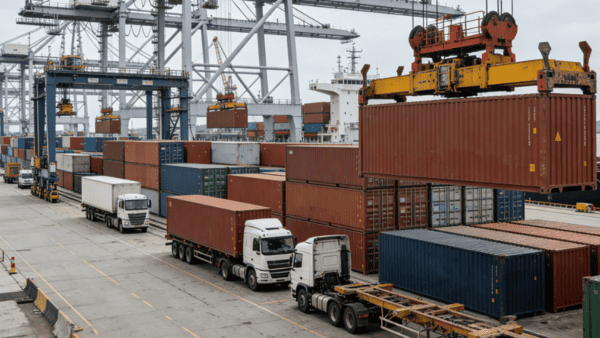
What leads to prolonged container holds under updated Inspection Policy rules
Prolonged customs hold ups refer to extended container detention periods at border checkpoints caused by rigorous enforcement of revised Customs Inspection Policy, which broadens verification coverage and lengthens official review procedures. Such delays stem from systematic regulatory updates rather than temporary port operational anomalies.
Many national and regional authorities have upgraded border supervision frameworks in recent years to enhance cross-border trade security. Regulatory teams now implement higher inspection frequencies for high-risk commodity groups and random container batches across mainstream trade lanes.
Modern customs verification workflows no longer focus merely on document auditing. Standard procedures include comprehensive physical cargo checks, origin credential validation, and tariff code cross-verification. This multi-layered inspection mechanism naturally extends overall clearance cycles for conventional cross-border shipments.
Forwarders should note that policy-induced customs holds carry longer recovery cycles and higher uncertainty compared with conventional logistics disruptions. Weather interruptions and routine port congestion feature relatively predictable resolution timelines, while inspection progress relies heavily on regulatory manpower arrangements, policy execution cycles, and document compliance quality.
How do unregulated delivery expectations affect forwarding cooperation stability
Unmanaged buyer delivery expectation gaps during customs hold events generate trust inconsistencies and contractual disputes that weaken long-term cooperative ties for forwarding enterprises. Timely and transparent expectation adjustment serves as a vital soft skill for sustained client retention in cross-border logistics services.
A common mistake is issuing fixed delivery confirmations without reserving reasonable buffers for potential policy delays. Many forwarders formulate delivery schedules based on ideal transit scenarios, overlooking uncertainties introduced by evolving Customs Inspection Policy requirements.
When severe customs holds occur, overseas buyers may face production scheduling adjustments, order fulfillment delays, and temporary inventory shortages. These practical operational disruptions often lead to negative feedback toward logistics service providers.
According to WTO 2024 global trade logistics monitoring data, information asymmetry during customs delay events contributes to a notable share of post-service cooperation disputes in international freight forwarding. Enterprises that fail to provide progressive status updates tend to receive lower client evaluation scores, even after resolving all operational issues completely.
What core operational hurdles do forwarders face during policy-based customs holds
Forwarders encounter multi-dimensional operational and communicative hurdles when severe customs hold ups occur under strict Customs Inspection Policy enforcement, covering information gaps, variable delay durations, and inconsistent client cognition. These combined challenges increase the complexity of daily cross-border logistics coordination.
Acquiring timely official inspection progress: Most customs authorities release inspection updates through intermittent official notifications instead of real-time open data interfaces. Forwarders face difficulties obtaining accurate processing timelines to support effective and transparent buyer communication during prolonged holds.
Calculating flexible delay durations accurately: Updated Inspection Policy introduces flexible review standards that create inconsistent clearance cycles for similar cargo types. Traditional fixed delay estimation models struggle to adapt to variable policy execution intensity across different periods and regions.
Balancing truthful updates and stable client sentiment: Overly vague status updates may trigger buyer distrust, while excessively conservative delay forecasts may induce unnecessary supply chain adjustments. Maintaining objective and balanced information delivery requires accumulated industry experience and standardized communication protocols.
Handling repeated supplementary document submissions: Revised inspection frameworks often require additional compliance documents that were not mandatory for previous shipments. Frequent supplementary material submissions further extend container holding cycles and increase repetitive communication work with buyers.
Managing incremental incidental cost accumulation: Extended container detention generates progressive demurrage, terminal storage, and handling fees. Forwarders need to coordinate cost verification and liability confirmation with buyers while advancing clearance procedures, raising overall operational burdens.
Forwarders should note that these operational hurdles exist across the industry rather than arising from individual enterprise errors. As global trade regulatory standards continue to iterate, policy-related delay uncertainties will remain a regular variable in cross-border logistics operations.
How to build proactive expectation management systems for customs hold scenarios
Proactive expectation management systems assist forwarders in standardizing communication logic during policy-driven customs holds, minimizing information gaps and stabilizing buyer cognition regarding shipment delays. Standardized workflows replace passive emergency responses with pre-established risk control mechanisms.
Integrate policy delay reminders into pre-shipment notifications: The recommended approach is embedding standardized regulatory delay reminders within booking confirmations and pre-shipment notices. Brief explanations regarding current Customs Inspection Policy tightening trends help buyers form basic risk awareness in advance.
Deliver structured periodic progress updates: Set stable update frequencies throughout customs holding periods, informing buyers of real-time inspection status, ongoing processing steps, and feasible clearance time ranges. Regular structured updates reduce passive client inquiries and ease operational anxiety on the buyer side.
Convert policy terminology into practical supply chain impacts: Translate professional customs policy adjustments into plain-language analysis of delivery schedule impacts. This practice helps buyers understand delay rationality without overemphasizing regulatory complexity or avoiding service accountability.
Complete preemptive document optimization and correction: Proactively inspect and revise potential document defects in accordance with prevailing Customs Inspection Policy specifications. Preemptive compliance adjustments reduce supplementary submission frequencies and shorten overall inspection cycles.
Prepare feasible contingency logistics solutions: Develop practical backup plans such as priority inspection applications and subsequent vessel booking arrangements for long-duration holds. Tangible alternative solutions enhance buyer recognition of forwarders’ professional service capabilities.
According to Drewry 2024 logistics efficiency statistics, forwarding enterprises equipped with standardized pre-delay communication workflows record fewer client disputes and higher repeat cooperation rates during policy-induced customs disruption events.
Which communication tactics suit policy-based customs delay scenarios
Targeted communication tactics tailored for strict Inspection Policy enforcement scenarios enable forwarders to deliver delay information objectively while preserving long-term client partnership stability. Balanced information sharing maintains service transparency and healthy business interactions.
Adopt data-supported objective statement frameworks: Explain customs hold situations based on official policy clauses and real port inspection data instead of subjective speculation. Citing updated Customs Inspection Policy rules strengthens the credibility of delay explanations for overseas buyers.
Prioritize solution-oriented communication content: A common mistake is focusing excessively on delay causes without elaborating on follow-up resolution measures. Most buyers pay more attention to problem-solving progress and revised delivery arrangements than passive cause analysis.
Adopt differentiated communication modes for diverse clients: Use concise standardized notifications for regular cooperative clients and detailed customized reports for long-term strategic partners. Differentiated communication modes balance service efficiency and personalized interaction.
Announce delay impacts via reasonable interval estimation: Avoid rigid and absolute time predictions. Provide adjustable delay time ranges based on historical policy inspection data, allowing buyers to moderately adjust downstream production and inventory schedules.
Optimize post-clearance delivery arrangements actively: After customs clearance completion, accelerate terminal pickup, container dispatch, and final delivery procedures to offset partial delayed schedules. Positive post-incident service optimization alleviates negative impressions caused by previous hold ups.
How to mitigate expectation mismatch risks through long-term institutional optimization
Long-term institutional optimization mechanisms help forwarders adapt to iterative Customs Inspection Policy adjustments and reduce recurring expectation mismatch risks in cross-border service scenarios. Systematic upgrades replace temporary emergency handling with sustainable operational capability improvement.
Establish dynamic policy tracking and filing systems: Continuously collect and categorize updated inspection rules for core trade lanes to build a real-time regulatory database. Regularly revise internal operational standards to align with latest Customs Inspection Policy requirements.
Optimize contractual clauses for policy delay scenarios: The recommended approach is refining service contract terms to clarify liability scopes for policy-induced delays. Standardized contractual specifications lower dispute risks arising from regulatory force majeure situations.
Accumulate lane-specific delay data for risk reference: Record inspection durations, verification types, and clearance cycles across different trade lanes. Summarize customized delay coefficient references to support accurate pre-shipment risk prompts and buyer expectation guidance.
Organize regular internal policy and skill training: Conduct routine training covering updated Customs Inspection Policy rules and matched client communication skills. Ensure frontline operation and sales teams maintain consistent professional judgment on policy delay risks.
Upgrade pre-booking risk evaluation workflows: Add systematic policy inspection risk assessment links in pre-shipment workflows. Deliver proactive risk reminders for high-risk commodities and ports with frequent policy inspections to advance expectation management.
In recent years, the overall tightening trend of global border inspection supervision has formed a stable industry background. Forwarding enterprises with complete policy response systems can sustain steady service quality and client trust amid continuous regulatory adjustments.
How does expectation management shape comprehensive service competitiveness
Scientific buyer expectation management during customs hold incidents reflects the comprehensive risk control and service capabilities of modern forwarding enterprises. Operational precision and standardized client communication jointly build service differentiation in the mature global freight market.
Most forwarding enterprises provide homogeneous basic transportation services across mainstream trade lanes. Differentiated emergency handling and transparent communication mechanisms serve as important service advantages during policy-induced logistics disruptions.
Timely, solution-oriented communication during customs delays helps improve buyer recognition of enterprise professional value and stabilize long-term cooperative relationships. According to Freightos Baltic Index 2025 quarterly industry data, enterprises with systematic customs delay management frameworks maintain relatively stable client retention levels amid fluctuating market conditions.
Persistent regulatory updates and policy-driven customs delays remain common variables in cross-border logistics operations. Comprehensive mastery of Customs Inspection Policy changes, matched with standardized expectation management workflows, allows forwarders to mitigate dispute risks, stabilize buyer partnerships, and support steady business development in complex global trade environments.
Last
Accelerating destination port container release speeds via cloud based global shipping document platforms using secure eBL interoperability standards
Global eBL Interoperability Standardsformulate unified secure data transmission and cross-platform verification protocols for elec

Next
Protecting cross border e commerce fulfillment lines from border delays triggered by sudden us import customs De Minimis exemption policy changes
US De Minimis Policy Changes have restructured operational protocols for cross-border e-commerce logistics, urging global freight

