




OFAC Sanctions Compliance in Logistics has become a non-negotiable operational standard for global freight forwarders, as cross-border shipping complexities and stricter regulatory enforcement expose logistics firms to notable legal and financial risks across international trade networks.
What Defines OFAC Sanctions Compliance in Global Logistics Operations?
OFAC sanctions compliance in logistics refers to the systematic adherence to U.S. Treasury Office of Foreign Assets Control (OFAC) regulations that govern all cross-border shipping, freight forwarding, and supply chain transactions involving U.S. jurisdictions, assets, or regulated parties. It covers full lifecycle tracking of shipment stakeholders, cargo origins, transit routes, and end recipients to mitigate potential sanctions violations.
Logistics-focused OFAC compliance differs from general trade compliance frameworks, as it targets the entire end-to-end shipment lifecycle. This scope covers cargo booking, carrier procurement, customs clearance, in-transit handling, final delivery, and post-transaction record retention. This holistic compliance model addresses the unique operational vulnerabilities of freight forwarders, who serve as core intermediaries linking diverse global trade participants.
As key supply chain intermediaries, forwarders bear vicarious liability for non-compliant activities conducted by their third-party partners and subcontractors. Most standalone trading entities operate with fixed counterparty networks, while forwarders interact with hundreds of regional shippers, consignees, and carriers annually, expanding their exposure to unregulated high-risk transactions.
A common mistake is that many mid-sized global forwarders treat OFAC compliance as a one-time documentation verification task rather than a continuous operational management process. This fragmented compliance approach creates persistent operational loopholes for unvetted sanctioned party interactions and unapproved cross-border transactions, which serve as primary triggers of regulatory penalties in modern global logistics.
Why Do Global Forwarders Face Elevated Legal Penalty Risks for OFAC Violations?
Global freight forwarders occupy a high-risk intermediary position in international trade ecosystems, which contributes to higher OFAC violation liability exposure compared with many standalone trading enterprises. Their multi-party transaction structures and cross-regional operational scope expand potential compliance vulnerabilities.
According to official OFAC 2024 enforcement statistics, logistics and supply chain service providers accounted for 22 percent of all U.S. sanctions violation penalties issued across global industries. The average civil fine for confirmed logistics violations reaches approximately $450,000 per incident. These figures reflect that logistics entities remain a key focus of modern regulatory enforcement due to their frequent cross-jurisdictional transaction activities.
Forwarders should note that vicarious liability represents a core risk factor in logistics OFAC compliance governance. Under the U.S. International Emergency Economic Powers Act (IEEPA), freight forwarders hold full legal accountability for sanctions violations occurring within their managed shipments. This liability applies even when forwarders do not initiate prohibited transactions, provided they fail to conduct mandatory due diligence on third-party carriers, consignees, shippers, and intermediaries.
OFAC sanction list updates further amplify compliance challenges for global logistics enterprises. The Specially Designated Nationals (SDN) List and Sectoral Sanctions Identification List receive weekly revisions, with dozens of new entities and individuals added throughout each calendar year. Forwarders that rely on static, infrequently updated screening protocols fail to capture newly sanctioned parties, resulting in avoidable compliance breaches.
Modern global logistics operational structures also increase compliance complexity. Most international forwarders adopt multi-leg transit routing models and layered subcontractor cooperation systems. Regional freight handling, customs brokerage, and last-mile delivery services are commonly outsourced to local third-party firms. This decentralized operational model forms opaque supply chain nodes where unregulated and non-compliant interactions may occur without primary forwarder oversight.
What Severe Legal Penalties Await Non-Compliant Logistics Forwarders?
Non-compliance with established OFAC sanctions rules in global logistics triggers tiered civil, criminal, and operational penalties. These regulatory sanctions can disrupt long-term international freight business operations and generate substantial economic losses for logistics service providers.
Criminal penalties for willful violations: Intentional circumvention of formal OFAC regulatory requirements, including falsifying shipment party credentials or routing cargo through sanctioned jurisdictions, may lead to corporate fines up to $1 million per violation. Individual personnel involved in intentional breaches may face federal criminal charges with incarceration terms of up to 20 years, in accordance with IEEPA statutory provisions.
Strict-liability civil fines: Civil penalty sanctions represent one of the most common regulatory outcomes for logistics firms involved in negligent or unintentional OFAC violations. Per 2025 OFAC civil penalty inflation adjustments published by the U.S. Department of the Treasury, the minimum fine for each violation is $332,180, or twice the value of the underlying transaction, whichever amount is greater. Penalty amounts may rise progressively for repeated violations within a fixed timeframe.
Asset seizure and transaction blocking: OFAC holds statutory authority to freeze U.S.-based assets belonging to logistics firms with confirmed sanctions violations. The agency may also block ongoing and future cross-border transactions that access U.S. financial systems, which can disrupt trans-Pacific and trans-Atlantic freight service operations significantly.
Industry debarment and reputational damage: Severe or repeated OFAC violations may result in logistics firms being added to U.S. denied party lists. This regulatory action restricts corporate cooperation rights with U.S. government agencies, major U.S.-headquartered carriers, and multinational enterprise clients. Industry data indicates such debarment may reduce mid-sized forwarders’ operational revenue by 40 to 70 percent.
Secondary regulatory sanctions: Entities with confirmed OFAC non-compliance face intensified supervision from WTO and UN trade regulatory bodies, alongside regional customs authorities. Enhanced regulatory scrutiny leads to higher cargo inspection frequencies, extended customs clearance cycles, and long-term compliance monitoring that increases routine operational costs.
A common mistake is underestimating the cumulative risks associated with repeated minor compliance violations. Many logistics forwarders assume low-value shipment breaches trigger negligible regulatory consequences. In practice, OFAC implements progressive penalty scaling mechanisms for enterprises with ongoing violation records, with fine increments of around 50 percent for subsequent offenses within three-year review cycles.
How Does Rigorous Denied Party Screening Eliminate Core OFAC Compliance Risks?
Rigorous denied party screening functions as a foundational preventive control mechanism for standardized OFAC sanctions compliance. The practice enables global freight forwarders to proactively identify and mitigate potential sanctioned party interactions across all stages of cross-border freight operations.
The recommended approach is to deploy real-time, continuous compliance screening frameworks instead of traditional batch pre-shipment verification workflows. This operational method adapts to the dynamic update cycles of OFAC sanction lists and addresses multi-party transaction risks inherent in global logistics businesses. Static pre-shipment screening only verifies party compliance status at a single time point, creating vulnerabilities from post-booking regulatory list revisions.
Full stakeholder screening coverage: Comprehensive compliance screening must cover all transaction-related stakeholders, including shippers, consignees, notification parties, carrier operators, customs brokers, and regional subcontract logistics providers. Per 2024 OFAC enforcement case summaries, oversights of regional subcontractor compliance status contribute to 35 percent of documented logistics sanctions violations.
Real-time OFAC list synchronization: Logistics firms may integrate internal screening systems with live OFAC regulatory databases, including the SDN List, Foreign Sanctions Evaders List, and Sectoral Sanctions List, to support frequent data synchronization. This operational practice reduces compliance gaps arising from weekly official list updates that manual screening processes struggle to capture.
Fuzzy matching and alias detection: Forwarders can deploy advanced compliance screening technology equipped with fuzzy name matching, formal address verification, and business alias recognition functions. Sanctioned entities often adopt alternate business names and modified address information to evade routine compliance checks, a behavioral pattern linked to multiple documented logistics compliance incidents in recent years.
Multi-tier risk validation workflows: Establishing hybrid automated and manual risk review mechanisms supports balanced operational efficiency and compliance rigor. Automated systems clear low-risk screening flags, while professional compliance teams conduct manual reviews for high-risk matching results. This structure reduces unnecessary operational disruptions from false positive alerts while addressing potential compliance hazards.
Post-transaction continuous monitoring: Effective compliance governance requires screening protocols to extend beyond individual shipment completion. Forwarders need ongoing monitoring of long-term cooperative relationships with external partners, as compliant entities may be added to OFAC sanction lists during active contract terms.
Forwarders should note that basic name-matching screening procedures no longer meet current regulatory compliance standards. Modern OFAC enforcement mechanisms prioritize contextual compliance verification, which includes validation of business registration credentials, tax identification numbers, operational jurisdiction scope, and historical transaction records to confirm accurate counterparty identity.
What End-to-End OFAC Tracking Protocols Support Full Compliance?
Total OFAC tracking in global logistics refers to end-to-end transaction monitoring and documentation mechanisms. These structured protocols verify and archive all key shipment data to demonstrate adequate sanctions due diligence during regulatory audits and official investigations.
Shipment origin and cargo verification tracking: Compliance teams must maintain verified documentation of cargo manufacturing origins, official commodity classification codes, and commodity end-use attributes. These verification steps help forwarders adhere to jurisdiction-specific OFAC embargo rules, which impose restrictions on goods originating from sanctioned territories regardless of transaction counterparty status.
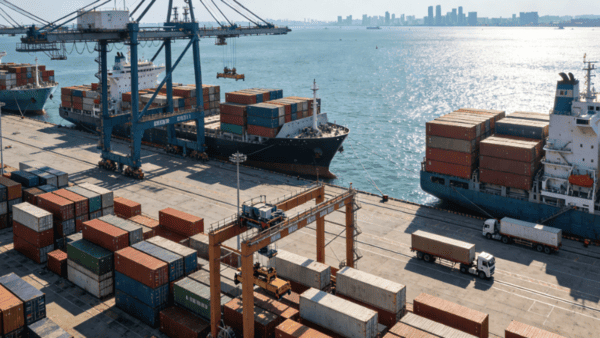
Transit route sanctions mapping: Integrating real-time global sanctions jurisdiction mapping tools supports route risk assessment for all freight shipments. Forwarders need to avoid shipment transit through comprehensively sanctioned territories such as Crimea, Cuba, Iran, North Korea, and Syria. According to UNCTAD 2024 maritime trade analysis, 18 percent of unintentional logistics OFAC violations stem from unvetted international transit routes.
Financial transaction tracking and validation: Continuous monitoring of all shipment-related capital flows constitutes a key compliance step. This includes verification of freight charges, customs duties, subcontractor service fees, and cross-border payment channels to prevent transactions involving sanctioned financial institutions or blocked asset accounts.
Audit-ready compliance record retention: OFAC regulatory requirements mandate logistics enterprises to retain all compliance documentation for a minimum of seven years. Retained materials cover screening logs, route risk verification reports, counterparty validation records, and internal compliance decision files to support official audits.
Exception and escalation tracking: Standardized compliance governance requires full documentation of screening exceptions, internal risk assessment reports, escalation processing records, and license application materials for high-risk transactions. Transparent exception tracking records demonstrate sufficient regulatory due diligence, which can reduce penalty magnitudes during violation investigations.
The recommended approach is to centralize all OFAC tracking data through unified cloud-based compliance platforms accessible to global operational teams. Standardized centralized data management helps reduce regional compliance disparities commonly observed in decentralized global forwarder operational networks.
How Can Forwarders Build a Sustainable OFAC Compliance Framework to Avoid Penalties?
Sustained OFAC sanctions compliance development relies on embedding standardized screening and tracking protocols into core corporate operational workflows. Treating compliance as a standalone administrative task fails to address evolving regulatory risks in global logistics.
Forwarders should note that regulatory authorities show preference for enterprises with proactive, structured compliance programs over entities that only conduct remediation after violations occur. Per 2024 official OFAC Compliance Framework guidance, firms with fully documented compliance systems may obtain penalty reductions of up to 80 percent during violation investigations.
Regular team compliance training: Quarterly systematic OFAC sanctions training for operational, sales, and subcontractor teams serves as one of the commonly adopted risk prevention methods. Training content covers updated sanction list changes, typical violation case studies, and standardized screening protocol specifications. Industry analysis indicates human operational errors contribute to nearly 40 percent of logistics compliance failures.
Third-party compliance audits: Bi-annual independent external compliance audits help enterprises identify unaddressed screening gaps, tracking loopholes, and procedural inconsistencies. External audit outcomes provide objective compliance effectiveness verification for regulatory review purposes.
Risk-based compliance scaling: Tiered compliance management mechanisms allow forwarders to adjust screening and tracking intensity based on shipment risk profiles. Enhanced compliance protocols apply to high-risk trade lanes, territories adjacent to sanctioned regions, and high-value commodity shipments. This risk-matching model balances compliance effectiveness and operational cost control.
Voluntary disclosure protocols: Establishing standardized internal workflows for voluntary disclosure of unintentional compliance breaches supports regulatory risk mitigation. Timely voluntary disclosure paired with targeted corrective action implementation serves as an effective method to reduce or eliminate regulatory penalties for unintended violations.
A common mistake is suspending compliance framework updates during stable operational cycles. OFAC sanctions policies and targeted regulated entities undergo continuous adjustments. Static compliance frameworks gradually lose regulatory adaptability, exposing global forwarders to emerging violation risks across diverse international trade lanes.
In the complex, dynamically regulated landscape of international freight forwarding, rigorous denied party screening and comprehensive end-to-end monitoring form the backbone of robust OFAC Sanctions Compliance in Logistics, enabling global forwarders to mitigate severe legal penalties, preserve operational integrity, and sustain compliant cross-border trade operations across diverse global jurisdictions.

Last
How transpacific retail forwarders adjust DDP air freight pricing models following aggressive us federal De Minimis threshold policy changes
US De Minimis Policy Changes have restructured the full cost architecture of transpacific cross-border retail logistics, prompting

Next
Resolving unjust terminal detention charges for china to us shippers citing FMC protective Ocean Shipping Regulatory Reform Act Compliance
Cross-border logistics service providers serving China to US trade lanes frequently encounter unfair terminal detention penalties

