




MSDS Validity for Dangerous Goods acts as a core compliance benchmark for ocean carriers to review hazardous cargo booking applications, influencing the ability of freight forwarders to secure shipping space for cross-border maritime shipments. Un-updated MSDS documents that conflict with prevailing dangerous goods regulatory standards account for a notable share of liner space rejection cases in recent maritime logistics practices. Ocean liner dangerous goods departments implement strict document review protocols to control vessel safety hazards and meet international maritime compliance obligations, leading to routine denial of space requests for non-compliant MSDS files. This article discusses key causes of carrier booking rejection, mainstream regulatory evaluation criteria, typical operational errors among forwarders, and practical preventive solutions to help global logistics teams lower booking failure risks linked with outdated MSDS documentation.
What causes ocean liners to reject dangerous goods booking requests?
Ocean liner dangerous goods space rejection refers to the formal denial of hazardous cargo booking applications by carrier compliance teams due to non-compliant documentation, inconsistent classification data, or unqualified safety certification records. Carriers balance vessel operational safety and cross-border regulatory compliance during every dangerous goods document review session.
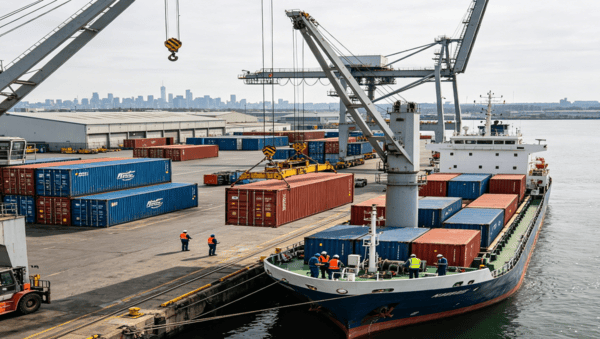
Maritime transportation carries concentrated operational risks for vessels, and hazardous cargo supported by non-compliant documentation may trigger fire, chemical corrosion, or liquid leakage incidents during long-haul ocean voyages. According to UNCTAD 2024 maritime transport review data, document compliance issues contribute to around 40% of dangerous goods booking rejections by major global liner companies, with outdated MSDS files constituting a frequent violation category.
Forwarders should note that ocean carriers bear primary legal accountability for hazardous cargo safety throughout entire voyages. Unupdated MSDS documents may result in incorrect cargo classification and undisclosed hazard characteristics, which can expose carriers to port state control penalties, vessel detention, and commercial liability claims. This accountability framework encourages liner dangerous goods bureaus to maintain rigorous review standards for invalid MSDS documentation.
Why do unupdated MSDS documents lose dangerous goods regulatory validity?
Unupdated MSDS documents fail to align with revised hazard classification standards and safety specifications set by international maritime regulations, resulting in ineligible qualification for dangerous goods customs declaration and shipping filing. Global hazardous goods shipping frameworks undergo continuous iteration to adapt to evolving maritime safety management requirements.
The IMDG Code follows a two-year revision cycle to update hazard classification clauses, packaging specifications, and stowage guidelines for industrial chemical commodities. The newly implemented IMDG Amendment 42-24 introduces revised testing requirements for multiple common chemical products, making MSDS files compiled under older versions incompatible with current compliance standards.
A common mistake is that many forwarding teams reuse archived MSDS files for extended periods, assuming stable product formulas correspond to unchanged hazard profiles and continuous document validity. Regulatory adjustments can modify official classification benchmarks even without alterations to product ingredients, creating mismatches between legacy MSDS content and active dangerous goods shipping rules.
According to World Shipping Council 2024 cargo inspection deficiency statistics, approximately 11.39% of global hazardous cargo inspection failures relate to outdated or mismatched compliance documents, with unupdated MSDS files forming a considerable portion of repeated industry violations.
What MSDS update scenarios trigger liner space rejection?
Several typical operational scenarios can cause unupdated MSDS documents to lose regulatory validity and lead to ocean liner space request rejection. Familiarity with these scenarios supports effective pre-booking document self-inspection for freight practitioners.
Regulatory iteration without synchronous MSDS revision: The recommended approach is to conduct targeted MSDS updates whenever core maritime dangerous goods regulations release formal amendments. Failure to align document content with prevailing IMDG Code versions leads to routine booking denial by liner dangerous goods compliance departments.
Expired third-party laboratory test records: Forwarders should note that all hazard descriptions recorded in MSDS files require support from valid third-party laboratory test reports. Test data exceeding the standard five-year validity window for general chemicals or four-year window for high-risk special goods renders corresponding MSDS documentation invalid for shipping application.
Product parameter adjustment without file synchronization: Minor modifications to product concentration, impurity ratios, or packaging configurations require matching MSDS data revision. Unupdated parameter details create inconsistencies between documented descriptions and actual cargo conditions, resulting in compliance rejection during carrier review.
Absence of regional compliance supplementary clauses: Trade lanes covering Europe, Southeast Asia, and Oceania require MSDS files to include localized hazard control clauses. Outdated documents missing these regional compliance provisions face regular rejection by local liner branch offices.
How do carrier dangerous goods bureaus audit MSDS validity?
Ocean liner dangerous goods bureaus adopt structured multi-dimensional auditing workflows to verify MSDS Validity for Dangerous Goods across maritime shipments. The systematic review framework covers document timeliness, data accuracy, and regulatory compatibility.
Auditors first verify the regulatory basis referenced during MSDS compilation, checking whether adopted GHS and IMDG versions match currently enforced industry standards. Any mismatch between document foundations and active regulatory rules results in immediate space application rejection.
Auditors then validate the issuance date and valid cycle of attached laboratory test reports. Timely test data serves as a core evaluation metric for MSDS authenticity and compliance status, with expired test records uniformly classified as invalid qualification evidence.
The final step involves cross-verification among MSDS classification entries, cargo declaration forms, and packaging certification documents. A common mistake is that operational staff revise declaration content independently without updating supporting MSDS files, generating data discrepancies that cause audit non-compliance.
What operational losses arise from MSDS-related booking rejections?
Space rejection stemming from invalid and unupdated MSDS documents generates measurable operational and financial losses for forwarding organizations, disrupting cross-border shipment schedules and supply chain coordination.
Shipment schedule disruption risks
Rejected space applications require forwarders to revise MSDS files and resubmit booking requests, which disrupts pre-planned vessel loading arrangements. During peak shipping seasons, delayed applications may require waiting for one to three subsequent vessel sailings, extending overall cargo delivery lead times.
Incremental logistics cost increases
According to Drewry 2024 global freight cost assessment data, repeated booking submissions and delayed shipments incur extra administrative charges, port storage fees, and urgent document revision expenses. For time-sensitive industrial cargo, delivery delays may also trigger contractual compensation liabilities between logistics providers and cargo owners.
Long-term cooperative credit impacts
Repeated booking rejection events caused by invalid MSDS files generate negative operational records within liner cooperative management systems. Accumulated non-compliance records may lower corporate credit standings, influencing space allocation priorities during high-demand shipping periods.
How to avoid liner space rejection caused by invalid MSDS?
Global freight forwarders can apply standardized pre-booking management protocols to mitigate MSDS validity risks and improve the pass rate of dangerous goods space applications.
Maintain continuous regulatory tracking: The recommended approach is to assign dedicated compliance staff to monitor iterative updates of IMDG Code, GHS standards, and regional dangerous goods regulations. Teams can arrange targeted MSDS revision and content synchronization once revised rules take formal effect.
Conduct full pre-booking MSDS inspection: Forwarders should note that comprehensive document inspection is necessary before space application submission, covering test data validity, regulatory version matching, and consistency between documented content and actual cargo attributes.
Optimize supplier document delivery mechanisms: Establish standardized cooperation terms with upstream suppliers to ensure updated MSDS files and valid test reports for every cargo batch, reducing reliance on outdated archived documentation.
Reserve buffer time for document adjustment: Retain three to five working days of preparation time before shipment cutoff dates for document review and revision. This practice reduces booking failure probabilities arising from unforeseen MSDS non-compliance issues.
What long-term benefits come with standardized MSDS validity management?
Consistent standardized management of MSDS Validity for Dangerous Goods helps forwarding enterprises optimize hazardous cargo operation workflows and reduce comprehensive compliance risks in global maritime logistics businesses.
Enterprises with systematic MSDS management protocols maintain relatively stable booking approval rates and shipment schedules for dangerous goods transportation. According to WTO 2024 trade facilitation research, standardized document management systems help international logistics entities lower hazardous cargo shipment failure rates by around 30%.
Compliant and timely updated MSDS documentation also helps forwarders build professional and credible cooperative profiles among liner carriers and cargo shippers, supporting steady expansion of cross-border dangerous goods logistics service networks.
In summary, unupdated and non-compliant MSDS documentation serves as a key factor behind ocean liner dangerous goods space rejection incidents. Consistent inspection and maintenance of MSDS Validity for Dangerous Goods represent essential daily operations for global freight forwarding teams. Proactive document revision, standardized pre-booking audits, and adaptive regulatory compliance help mitigate booking failure risks and support stable, rule-compliant maritime transportation for all types of hazardous cargo.
Last
Standardizing title handover operational steps for triangular trade offshore document setups using a secure hbl vs ocean mbl switching guide
A secure HBL vs ocean MBL switching guide supports global freight forwarders in standardizing title handover workflows for triangu
Next
Maintaining global supplier identity confidentiality across multi country split consolidation networks via a strict hbl vs carrier mbl switching guide
A strict HBL vs carrier MBL switching guide assists international freight forwarders in safeguarding supplier identity confidentia

