



OOG (Out of Gauge) cargo transport refers to specialized maritime shipping solutions for oversized and overweight shipments exceeding standard container dimensional and weight thresholds, requiring professional marine survey endorsement and customized terminal handling arrangements during vessel loading. Global freight forwarders frequently encounter unplanned terminal handling charge liabilities on OOG project cargo due to non-standard stowage practices, delayed survey document submission, and inconsistent regional port operational protocols. Refined liability management for such incremental charges helps forwarding firms stabilize profit margins within the competitive project logistics sector.
What defines survey-verified OOG cargo transport in terminal operational scenarios?
Survey-verified OOG cargo describes out-of-gauge shipments with official certification from qualified marine surveyors, confirming non-compliance with standard container dimensional and weight limits for routine port and vessel loading operations. These certified shipments trigger specialized terminal workflows and tiered extra fee structures distinct from general containerized freight.
Independent marine survey reports serve as core authoritative documentation for port authorities and shipping carriers to categorize and process OOG cargo prior to loading. Unlike informal self-declared oversized freight, survey-endorsed records document precise over-length, over-width, over-height, and overweight parameters. These verified metrics govern terminal handling protocols, onboard stowage positioning, and surcharge calculation standards across mainstream global ports.
Standard 20ft and 40ft containerized cargo adopts automated, batch-based terminal operations, while OOG cargo demands manual intervention, specialized lifting equipment, and segregated yard allocation. These customized operational requirements generate incremental terminal resource consumption and corresponding service fees that do not apply to conventional container shipments.
According to UNCTAD 2024 Maritime Transport Review, non-containerized and out-of-gauge project cargo consumes 30–45% more terminal operational resources per unit of cargo compared to standard container freight. Increased resource expenditure derives from repeated cargo positioning, dedicated heavy equipment deployment, and enhanced manual lashing and inspection procedures.
Forwarders should note that self-declared OOG status without formal survey validation is not recognized by most international container terminals. Uncertified oversized shipments may face loading rejection or conditional handling with additional risk-related surcharges, creating unbudgeted liability exposures for forwarding businesses.

Why do OOG cargo projects generate extra terminal handling charge liabilities?
Incremental terminal handling charge liabilities for OOG project cargo stem from mismatches between standardized terminal operational frameworks and the customized handling requirements of out-of-gauge shipments during vessel stowage and loading. Operational, procedural, and regional regulatory variables collectively drive additional logistical expenditures.
How do physical cargo characteristics increase terminal operational costs?
Modern container terminals rely on automated gantry systems and compact stacking protocols to process standard freight efficiently. OOG cargo’s oversized dimensions and excessive weight disrupt these standardized workflows. Such shipments require heavy-duty mobile cranes, segregated storage zones, and supervised manual stowage, all of which extend operational hours and consume additional terminal resources.
A common mistake is that forwarding practitioners prioritize base ocean freight pricing while overlooking incremental costs linked to OOG cargo physical attributes. Extended yard occupation, dedicated equipment rental, and repeated positioning adjustments contribute to unplanned operational expenses that erode project profit margins.
How do procedural and regulatory variables create liability risks?
Port supervision protocols for out-of-gauge freight vary significantly across global shipping regions. Most international terminals mandate secondary safety inspections for survey-certified OOG cargo before vessel loading. Non-compliant lashing configurations, unstable stowage layouts, or outdated survey documentation result in repeated inspections, on-site rectifications, and operational delays.
According to Drewry 2024 global project cargo logistics reports, procedural non-compliance and documentation inconsistencies account for approximately 40% of unplanned terminal surcharges in cross-border OOG shipping operations. Most cost increases tied to human error and procedural gaps are avoidable through structured pre-shipment compliance management.
What categories of extra terminal handling charges apply to OOG loading operations?
OOG cargo vessel loading involves a range of scenario-based terminal surcharges, each tied to distinct equipment usage, labor input, and facility occupation. Clear classification of these charge items enables forwarders to conduct accurate cost budgeting and proactive liability control.
Specialized equipment rental fees: Standard container loading utilizes fixed automated shore cranes, whereas OOG cargo requires mobile heavy-lift cranes, high-capacity forklifts, and customized auxiliary lifting tools. Terminal operators calculate equipment charges based on cargo weight deviation and operational complexity. Forwarders should note that equipment idling caused by delayed cargo arrival generates supplementary overtime service fees.
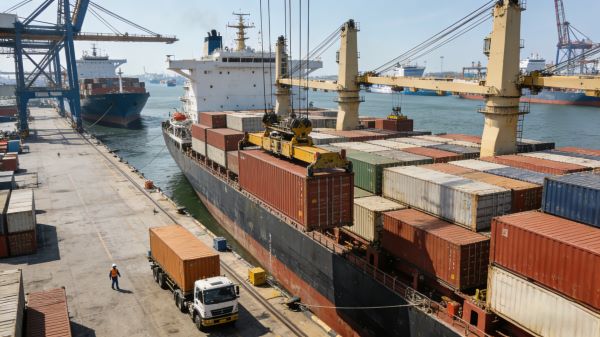
Segregated yard occupation fees: Out-of-gauge shipments cannot adopt dense stacking layouts like standard containers and require independent temporary storage zones to prevent structural damage and safety hazards. The recommended approach is one of the commonly adopted industry practices that forwarders confirm terminal yard allocation rules in advance to minimize idle occupation duration and associated charges.
manual operation surcharges: OOG cargo stowage calibration, lashing reinforcement, and positional adjustment rely on skilled manual operational teams. Terminals levy labor surcharges according to working hours and staffing scale. A common mistake is insufficient estimation of repeated manual adjustments required for complex OOG stowage, which leads to budget overruns on labor costs.
Secondary inspection and rectification fees: All survey-certified OOG cargo undergoes mandatory pre-loading safety verification. Substandard stowage stability, incomplete hazard labeling, or non-compliant securing systems trigger secondary inspections and on-site corrections, bringing extra labor and time-related expenditures.
Berthing window overtime fees: OOG loading schedules coordinate closely with vessel berthing windows. Inability to complete stowage within approved berthing periods due to cargo adjustment work leads to terminal overtime operational charges and supplementary berth occupation fees.
What practical strategies mitigate OOG terminal handling liability risks?
Effective liability control for OOG terminal handling costs depends on pre-shipment cost benchmarking, standardized document governance, and real-time on-site operational supervision to reduce unplanned financial expenditures.
Conduct comprehensive pre-loading cost benchmarking: Analyze official survey report data to quantify cargo out-of-gauge magnitude, forecast required terminal equipment and labor resources, and itemize potential surcharge items. According to ITC Trade Map 2024 cross-border logistics statistics, systematic pre-shipment cost evaluation helps reduce unplanned OOG terminal expenditures by around 22% for typical project cargo shipments.
Adopt standardized survey document submission timelines: Submit fully updated, officially endorsed OOG survey reports to terminal operators and shipping carriers three to five working days prior to cargo arrival. Advanced document submission supports terminal resource scheduling and yard planning, lowering the probability of delay-induced supplementary charges.
Refine stowage and lashing configurations in advance: Align cargo stowage layouts and securing schemes with vessel load plans and terminal safety specifications before cargo arrival. One-time compliant stowage reduces the need for repeated rectification and secondary inspections. The recommended approach is one of the commonly adopted industry practices that deploy dedicated on-site coordinators to supervise full loading procedures.
Execute written liability scope confirmation: Negotiate and document terminal charge standards and liability boundaries with terminal operational teams before loading commencement. Clarify cost-bearing responsibilities for charges arising from terminal scheduling adjustments versus cargo-specific attributes to reduce post-shipment billing disputes.
Maintain dynamic OOG cost archival systems: Organize terminal surcharge standards across different ports and trade lanes, establishing a dynamically updated cost database for project cargo quotation and risk reference. Forwarders should note that port fee structures adjust gradually alongside local labor cost fluctuations and terminal equipment upgrades.
What operational advantages come with standardized OOG liability management?
Structured terminal handling liability management optimizes the cost control framework for OOG project cargo services, supporting steady operational profitability and improved service credibility for global forwarding enterprises.
Recent years witness consistent growth in global oversized equipment shipping demand, alongside rising market competition in specialized project logistics segments. Many forwarding entities encounter profit compression and client disputes due to poorly controlled OOG terminal surcharges and inconsistent cost transparency. Standardized liability governance alleviates such operational challenges effectively.
According to Freightos Baltic Index (FBX) 2024 quarterly logistics cost analytics, forwarding teams with systematic OOG cost and liability management frameworks maintain relatively stable profit margins on project cargo contracts, showing better financial resilience compared with teams using reactive cost settlement workflows.
Forwarders should note that robust OOG terminal cost control capabilities serve as a key indicator of project cargo service professionalism. Transparent and predictable cost management lowers client dissatisfaction caused by unanticipated fees and fosters stable long-term cargo owner partnerships.
Overall, rigorous terminal handling charge liability oversight during vessel loading constitutes a vital component of professional OOG (Out of Gauge) cargo transport project delivery, underpinning sustainable operational development for forwarders focusing on specialized international project freight services.
Last
Complete standard operating procedures for tracking a shipper owned box from empty gate out till final soc container operation process completion
The SOC container operation process covers standardized end-to-end management protocols for shipper owned containers, encompassing
Next
Guiding customer service teams on express release workflows by analyzing structural swb vs negotiable original bill of lading difference impact
Understanding the core structural swb vs negotiable original bill of lading difference is critical for freight forwarder customer