




Standardized on-site operation and visual recording by warehouse unloading teams constitute the core onshore procedure to form a complete Container Cargo Damage Evidence Chain for incoming container cargo structural damage claims. In global container logistics, structural cargo damage disputes frequently arise from ambiguous handover records at warehouse unloading terminals, where irregular manual operations result in incomplete or legally invalid on-site evidence. In recent years, continuous expansion of global containerized cargo throughput has raised higher operational standards for terminal warehousing and cargo handover procedures. According to UNCTAD 2025 maritime logistics statistics, approximately 32 percent of cross-border container cargo damage disputes fail to secure expected compensation due to insufficient visual evidence collected during warehouse unloading processes. For global freight forwarders, optimizing standardized training systems for frontline unloading staff serves as one of the practical approaches to stabilize claim settlement efficiency and standardize cargo damage evidence filing systems.
Why does warehouse unloading operation affect container cargo damage evidence integrity
Warehouse unloading acts as the critical terminal handover node for recording container structural conditions and completing visual evidence filing for cross-border shipments. Non-standard unloading workflows and irregular recording practices create structural gaps within the Container Cargo Damage Evidence Chain and lower the admissibility of collected evidence in commercial claim reviews and maritime arbitration cases.
A common mistake is that many forwarding enterprises allocate most risk control resources to maritime transit monitoring while neglecting standardized management of terminal warehouse unloading links. Most structural defects including cargo extrusion, container wall deformation, and internal stacking collapse can only be fully observed and documented during container opening and unpacking procedures. Frontline unloading staff with inadequate professional awareness often skip detailed panoramic shooting and precise status registration, leaving no valid on-site proof to verify damage occurrence timing and corresponding liability subjects.
Forwarders should note that warehouse unloading represents the transitional handover stage between ocean carrier liability and inland logistics service liability. Any structural damage identified at this stage requires standardized visual documentation to distinguish defects generated during sea carriage, international transshipment, or terminal warehousing. Inconsistent operational standards among on-site teams lead to subjective liability judgment, which contributes to recurring commercial disputes across global supply chain cooperation scenarios.
According to WTO 2024 global trade dispute analysis reports, logistics claim cases unresolved due to insufficient unloading visual records account for a notable share of annual cross-border trade disputes. Industry data indicates that non-standard frontline operations, rather than technical equipment shortages, remain a major constraint restricting the improvement of digital evidence system maturity in container logistics.

What operational flaws cause visual evidence deficiency during unloading procedures
Irregular staff operation habits and imperfect on-site management mechanisms serve as primary factors leading to missing, blurry, or legally invalid visual evidence during container warehouse unloading. These operational deficiencies disrupt the continuity and systematic integrity of cargo damage evidence accumulation in daily logistics practices.
Incomplete panoramic shooting practices: Many unloading staff focus solely on partial shooting of obvious damaged areas instead of conducting full-container panoramic recording and layer-by-layer cargo condition documentation. Limited shooting perspectives fail to reflect the overall structural status of containers and cargo, leaving room for inquiries about pre-existing damage conditions during claim reviews.
Unified information labeling absence: A considerable number of on-site visual materials lack accurate timestamp, warehouse location, and container number annotation. Without standardized labeling specifications, visual files cannot be accurately bound with specific shipment information, which weakens their independent evidentiary validity in commercial settlement scenarios.
Non-standard damage classification and filing: On-site teams often adopt vague textual descriptions to record cargo abnormalities without matching standardized visual archives and damage category labels. Inconsistent description criteria cause inconsistent evidence presentation during insurance verification and maritime arbitration processes.
Delayed archiving and manual sorting errors: Multiple forwarding teams adopt centralized manual evidence sorting after daily operations instead of real-time digital uploading and archiving. Postponed processing increases risks of image loss, file confusion among different shipments, and omission of key structural damage details.
Insufficient pre-job professional training: Newly recruited unloading employees generally receive limited systematic training on evidence retention specifications. Such staff struggle to identify potential subtle structural defects, including minor deformation, extrusion traces, and structural cracks, which affect comprehensive evidence collection and subsequent liability judgment.
What core training modules standardize on-site visual evidence collection
Systematic professional training for warehouse unloading staff integrates standardized shooting specifications, structural damage identification criteria, and digital evidence archiving workflows. These targeted training modules help frontline teams form unified visual recording capabilities and ensure traceable, high-quality evidence output in each container unloading operation.
Full-angle container condition shooting training: The training formulates unified shooting sequences covering container exterior integrity, seal condition, door opening status, internal wall structure, floor flatness, and overall cargo stacking structure. Trained staff follow fixed shooting distances and perspectives to record comprehensive container status before and after unpacking.
Professional structural damage identification training: The curriculum classifies common container structural damage types, including rigid deformation, cargo extrusion collapse, support frame displacement, and packaging structural fracture. Staff learn to distinguish damage caused by sea transportation, transshipment collision, and improper unloading operation to support objective liability division.
Standardized evidence labeling and data binding training: Training content includes unified annotation specifications for container numbers, vessel voyage information, unloading timestamps, warehouse locations, and damage category tags. Standardized operation realizes one-to-one accurate binding between visual materials and shipment basic data.
Real-time digital archiving and submission training: Staff master the operation of unified logistics evidence management terminals to complete real-time uploading of on-site photos and videos. This workflow eliminates errors and omissions caused by delayed manual sorting and protects the originality and authenticity of on-site evidence.
Abnormal damage emergency evidence retention training: Teams learn standardized emergency processing workflows for major structural damage, large-area cargo collapse, and container structural failure. Timely evidence locking before cargo rearrangement and cleaning ensures complete retention of key dispute-related evidence.
How to implement standardized staff training for sustainable evidence management
Phased, standardized training implementation mechanisms enable forwarding enterprises to steadily improve the professional competency of unloading teams and achieve long-term standardized management of on-site evidence collection. Scientific training frameworks avoid fragmented teaching and inconsistent operational standards across different staff groups.
Compile enterprise exclusive operational training manuals: Forwarders should note that universal industry training materials fail to match personalized business scenarios and claim standards of individual enterprises. Customized manuals combining internal unloading workflows, frequent damage types, and insurance settlement rules help staff form scenario-based operational awareness.
Adopt hierarchical training for different employee groups: The recommended approach is to implement differentiated training strategies. New employees receive full-process standardized operational training, while experienced staff participate in regular targeted training for error-prone evidence collection links to correct accumulated irregular working habits.
Set up on-site simulation assessment mechanisms: Enterprises arrange simulated container unloading and damage recording scenarios to assess staff proficiency in standardized shooting, damage identification, and evidence archiving. Staff who pass comprehensive assessments obtain qualifications for independent unloading and evidence collection work.
Establish daily inspection and random sampling systems: Specialized management posts conduct daily inspections and random sampling on submitted visual evidence quality. Timely standardized guidance and rectification suggestions are provided for non-standard operational behaviors to maintain consistent evidence quality.
Optimize training content with real business cases: Enterprises incorporate typical unresolved cargo damage dispute cases caused by insufficient evidence into daily training. Practical case analysis helps staff recognize the practical value of standardized evidence retention and improve operational initiative in daily work.
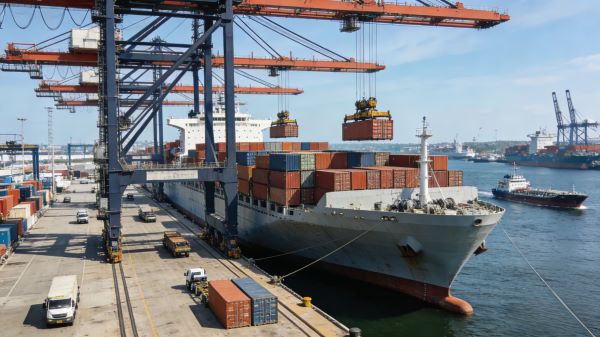
What practical values does standardized unloading training bring to forwarder enterprises
Continuous standardized training for warehouse unloading staff optimizes the terminal collection link of cargo damage evidence systems. Such optimization helps logistics enterprises reduce claim-related operational risks and improve the overall standardization level of cross-border logistics service workflows.
According to Drewry 2024 global freight service efficiency statistics, forwarding enterprises with complete standardized unloading evidence training systems record relatively more stable claim settlement cycles. The proportion of claim rejections arising from insufficient or invalid evidence shows a declining trend compared with the general industry level, reflecting improved operational risk control capabilities.
Standardized visual evidence collection helps enterprises accurately define liability boundaries among carriers, shippers, and inland logistics service providers. Complete panoramic shooting records and classified damage documentation offer objective data support for dispute negotiation, which helps mitigate unreasonable compensation claims and reduce controllable economic losses in commercial disputes.
In recent years, global cross-border logistics market competition has gradually shifted from price-oriented competition to service standardization and risk management capability competition. Enterprises with mature evidence management systems deliver more transparent and reliable logistics services, which helps consolidate long-term cooperative relationships with global shippers, insurance institutions, and supply chain participants.
Against a backdrop of increasingly rigorous international trade dispute verification standards and refined logistics risk management requirements, optimizing on-site visual recording workflows through systematic unloading staff training has become a feasible digital management method for modern forwarding enterprises. This operational optimization effectively supplements and improves the full-link Container Cargo Damage Evidence Chain, providing reliable on-site data support for daily risk prevention and efficient cross-border dispute resolution.

Last
Avoiding peak season congestion surcharges exploring how to save costs using Southeast Asia transshipment port handling differences
Global freight forwarders can effectively mitigate seasonal maritime surcharge expenses and stabilize operational profit margins w

Next
Integrating predictive API routing models learning how to save logistics costs using global transshipment port transit differences
Modern freight forwarding relies on data-driven route optimization to reduce operational expenses, and forwarders can effectively

