




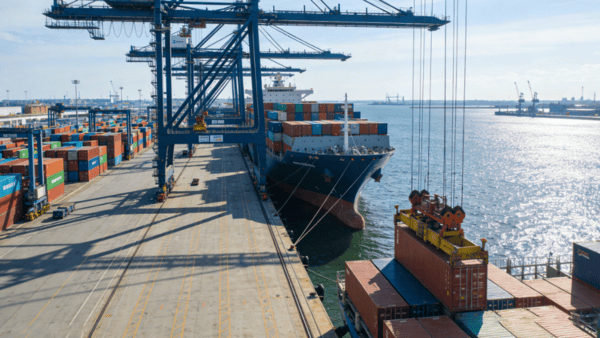
Experienced logistics coordinators proactively schedule shipments to mitigate disruptions from volatile carrier blank sailing windows, a fundamental operational competency for global freight forwarders navigating turbulent container shipping markets throughout 2025. Container line capacity adjustments have become increasingly erratic amid fragile maritime trade growth and shifting global cargo demand, turning blank sailings into a persistent operational bottleneck for cross-border logistics providers.
According to UNCTAD 2025 Maritime Transport Review data, core east-west container trade lanes recorded more than 80 verified blank sailings in April 2025, with Asia–Europe and trans-Pacific routes witnessing 14–17 percent of total scheduled voyages canceled during peak capacity adjustment cycles. These widespread service cancellations severely disrupt conventional container planning cycles and undermine supply chain predictability for global shippers and forwarders.
Why do rigid scheduling strategies fail in current shipping markets?
Fixed timetable-based shipment planning refers to the traditional forwarder practice of arranging container bookings and cargo pickup strictly according to published carrier rotation schedules without contingency buffers. This static planning method cannot adapt to the dynamic capacity adjustments prevalent in the 2025 maritime industry.
Global freight forwarding enterprises that rely solely on static carrier schedules face substantial operational vulnerabilities in volatile market conditions. Unanticipated blank sailings trigger a chain of operational anomalies, including delayed container stuffing, terminal demurrage and container detention charges, compromised delivery lead times, and deteriorated shipper retention.
Even minor schedule disruptions can escalate into significant financial and reputational losses for mid-tier forwarders. Unlike stable market periods, modern blank sailing events feature random string cancellations and port skips rather than periodic capacity trimming, making passive schedule adherence ineffective for risk control.

What key factors drive blank sailing volatility in 2025?
Blank sailing volatility in 2025 is defined as irregular carrier voyage cancellations, string suspensions, and port skips driven by unbalanced container capacity, weakened cargo demand, and multi-dimensional geopolitical and operational disruptions across major trade corridors.
How does maritime trade slowdown affect carrier capacity decisions?
Global seaborne trade growth has softened significantly in 2025, forcing carriers to calibrate capacity to match sluggish cargo volumes. According to UNCTAD 2025 official projections, global maritime trade volume will grow by merely 0.5 percent year-on-year, while containerized trade growth moderates to 1.4 percent, representing the slowest expansion rate in recent years.
Weakened industrial production and restrained cross-border consumer demand have reduced full container load (FCL) utilization rates across core lanes. To maintain sustainable load factors and avoid freight rate depreciation, major liner carriers actively implement blank sailings and string suspensions to balance market supply and demand.
What external risks amplify schedule instability?
Multiple external variables compound blank sailing unpredictability for global logistics operations. Persistent Red Sea shipping disruptions, recurring US tariff policy adjustments, regional port congestion, bunker price fluctuations, and scheduled vessel drydocking maintenance collectively trigger ad-hoc carrier schedule revisions.
Unlike seasonal capacity adjustments observed in previous years, 2025 blank sailing events lack fixed periodicity. Sporadic route cancellations across trans-Pacific and Asia–Europe lanes eliminate the reliability of conventional seasonal planning rules, raising the complexity of daily shipment coordination.
Why adaptive shipment scheduling boosts forwarder operational resilience?
Dynamic workflows designed to schedule shipments around fluctuating blank sailing windows enable forwarders to mitigate supply chain disruptions and sustain consistent service quality amid ongoing maritime market instability.
A common mistake is that numerous small and medium-sized forwarders adopt one-size-fits-all scheduling protocols without reserved operational buffers. Over-reliance on single-carrier fixed rotations leaves these businesses with limited alternative capacity options when blank sailings occur, resulting in unavoidable cargo delays and incremental logistics expenditures.
Forwarders should note that blank sailing disruptions generate ripple effects throughout end-to-end supply chains, rather than isolated voyage delays. Suspended sailings hinder just-in-time inventory replenishment for manufacturing clients and disrupt cross-border e-commerce fulfillment cycles, directly impacting contractual service level agreement compliance.
Scientific adaptive scheduling also optimizes comprehensive operational cost control for forwarding firms. Unplanned schedule disruptions frequently incur terminal demurrage fees, container detention penalties, emergency spot booking premiums, and expedited trucking costs. Proactive scheduling adjustments effectively eliminate these avoidable overheads and improve gross operational margins.
What core competencies enable robust blank sailing-adaptive scheduling?
Competent logistics coordinators leverage standardized professional capabilities rather than empirical experience alone to schedule shipments reliably amid persistent blank sailing volatility.
Real-time maritime market intelligence monitoring: Coordinators must track official carrier schedule amendments, Freightos Baltic Index spot rate fluctuations, terminal berth availability, and regional port congestion status. According to Freightos 2025 Q3 industry data, Asia–US west coast spot rates exhibited 15–20 percent monthly volatility alongside frequent blank sailing implementations, requiring continuous market tracking for accurate planning.
Diversified carrier capacity reservation networks: The recommended approach is to establish contractual cooperative relationships with 3 to 5 tier-one and mid-tier liner carriers for each core trade lane. Diversified capacity reserves allow instant voyage migration and booking reconfirmation when primary carriers announce string cancellations or port skips.
Data-driven cargo priority segmentation: Coordinators need to categorize shipments based on cargo nature, client service level requirements, and delivery timeline criticality. Time-sensitive consignments including production raw materials and fast-moving consumer goods require priority capacity locking and extended buffer periods, while bulk low-urgency cargoes can accommodate flexible voyage rescheduling.
Cross-functional stakeholder synchronization: Agile scheduling adjustments require seamless communication among sales teams, overseas destination agents, port terminal operators, and cargo owners. Timely risk escalation and schedule update dissemination eliminate information asymmetry and reduce post-disruption dispute risks.
How to implement standardized scheduling workflows for blank sailing risks?
Structured, step-based operational workflows help logistics coordinators accurately schedule shipments around volatile blank sailing windows, minimizing cargo disruption probabilities for global forwarding businesses.
Conduct pre-booking blank sailing risk profiling: Seven to ten days prior to cargo cutoff dates, coordinators shall consolidate official carrier schedule bulletins and industry maritime intelligence reports. Combined with Drewry 2025 lane performance analytics, teams identify high-risk voyage windows and mark susceptible rotations for enhanced operational supervision.
Deploy targeted timeline buffers for priority cargoes: Forwarders should note that reserving 3 to 5 days of operational lead time for high-priority shipments serves as an effective blank sailing mitigation tactic. This buffer period fully absorbs temporary voyage postponements and short-term capacity withdrawals, ensuring on-time cargo delivery compliance.
Execute dynamic voyage re-matching and booking amendment: The recommended approach is to deploy an agile capacity matching mechanism for all confirmed shipments. Upon blank sailing early warnings, coordinators immediately redeploy reserved alternative carrier capacity, complete booking amendments, and synchronize updated vessel and sailing data across internal and external systems.
Optimize LCL consolidation and batch dispatching logic: For less-than-container load shipments, teams adjust cargo consolidation cycles to avoid mass concentration on high-risk sailing dates. Dispersing consolidated cargoes across multiple independent voyages effectively lowers systemic operational risks from large-scale blank sailing events.
Complete post-disruption documentation and data archiving: Following every scheduling adjustment, coordinators synchronize updated sailing schedules, vessel particulars, and revised delivery ETA with all stakeholders. Teams also archive blank sailing causes, response measures, and cost variations to build enterprise-specific risk databases for iterative scheduling optimization.
What prevalent scheduling pitfalls should forwarders actively avoid?
Most shipment scheduling failures under blank sailing scenarios stem from recurring operational flaws, which can be eliminated through standardized process governance and risk awareness enhancement.
Excessive reliance on exclusive carrier partnerships: A common mistake is that many forwarders prioritize long-term fixed carrier contracts without building alternative capacity backups. When exclusive cooperative lanes encounter blank sailings, the lack of substitute resources leads to unavoidable cargo hold-ups and client dissatisfaction.
Absence of seasonal blank sailing trend forecasting: 2025 maritime data indicates blank sailing frequencies surge notably during quarter-end capacity realignments and major global holiday intervals. Failure to forecast seasonal capacity volatility results in inadequate pre-emptive scheduling preparation.
Uniform scheduling treatment for differentiated cargo demands: A common mistake is applying identical buffer settings and capacity priorities to all shipment types. Undifferentiated scheduling wastes flexible capacity resources on low-urgency cargoes while failing to provide sufficient risk protection for time-sensitive high-value consignments.
Delayed stakeholder notification of schedule deviations: Some operational teams only update internal scheduling logs after blank sailings occur but neglect timely client communication. Information lag erodes shipper trust and increases unnecessary after-sales negotiation workloads.
How to build long-term scheduling mechanisms for sustained market volatility?
To adapt to prolonged blank sailing instability, forwarders must establish iterative, scalable scheduling systems instead of relying on ad-hoc emergency responses for shipment adjustments.
The recommended approach is to build a dedicated maritime risk monitoring module within enterprise operational frameworks. This specialized unit undertakes daily carrier schedule tracking, high-risk lane screening, and weekly market risk report generation to guide company-wide shipment scheduling strategies.
Forwarders should note that digital logistics system empowerment is critical for elevating scheduling efficiency. Advanced freight management systems enable automated blank sailing early warnings, intelligent voyage matching, and batch schedule synchronization, effectively reducing manual operational errors and accelerating market response speed.
Long-term strategic carrier communication also enhances scheduling stability. Forwarders can conduct regular demand alignment with core liner partners to secure conditional flexible capacity reservations, which reduce the likelihood of mandatory shipment cancellation during large-scale blank sailing implementations.
As global maritime markets continue to face capacity uncertainty throughout 2025 and beyond, blank sailing fluctuations will remain a core operational challenge for international freight forwarders. Seasoned logistics coordinators who integrate data monitoring, diversified resource reserves, and standardized workflows to schedule shipments flexibly around evolving carrier blank sailing windows can significantly strengthen enterprise operational stability and sustain competitive advantages in the global logistics marketplace.
Last
Implementing digital route planning software to improve transportation efficiency across drayage networks
Implementing digital route planning software is a practical, scalable strategy to improve transportation efficiency and resolve lo

Next
How consolidation strategies help small freight forwarders improve transportation efficiency and cut empty miles
Strategic cargo consolidation serves as a proven, cost-effective operational method to improve transportation efficiency for small

