




Reliable international logistics experience empowers global freight forwarders to expand cross-border operational coverage, integrate credible local agent resources, and develop customized end-to-end logistics solutions that adapt to evolving global trade and maritime market dynamics.
What defines global logistics reach and verified agent operational experience
Global logistics reach refers to a freight firm’s cross-border network coverage, multi-lane deployment layout, and cross-regional resource mobilization capacity, while verified agent experience stands for practical track records of handling complex localized logistics and customs scenarios.
Current cross-border logistics competition focuses less on single freight rate advantages and more on comprehensive service capabilities. From 2024 to 2025, global trade diversification and supply chain regionalization have raised higher requirements for forwarders’ cross-market service adaptation and on-site execution capabilities.
According to WTO 2025 mid-year trade statistics, global merchandise trade volume maintained a moderate growth rate in 2024, with emerging economies contributing the majority of incremental cargo throughput. This industrial trend requires forwarders to expand global network boundaries while accumulating localized operational capabilities through standardized overseas agent cooperation.
Forwarders should note that extensive global network coverage without practical agent execution experience results in hollow asset layout, which fails to deliver stable cargo delivery quality and effective supply chain risk control in actual commercial operations.
Why global network reach cannot replace hands-on agent logistics experience
Network coverage reflects the spatial scale of a forwarder’s business layout, while professional agent experience determines the executability, compliance standard, and operational stability of customized cross-border logistics solutions.
How market turbulence raises localized execution standards
The global maritime logistics industry has undergone continuous structural adjustment and faced multi-dimensional uncertainties throughout 2024 and 2025. According to UNCTAD 2025 maritime industry data, global seaborne cargo volume achieved a 2.2% year-on-year increase in 2024, while the 2025 growth projection declines to 0.5% due to sluggish global goods demand and frequent regional shipping disruptions.
Persistent geopolitical frictions, prolonged Red Sea shipping suspensions, and seasonal Panama Canal water level shortages have triggered large-scale vessel rerouting and global route restructuring. Global shipping ton-mile volume rose by nearly 6% in 2024, representing longer transportation mileage and more complex operational workflows for cross-border cargo movements.
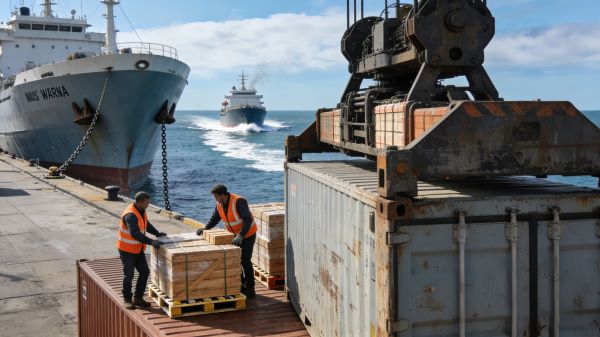
Under such volatile market conditions, mere network layout cannot resolve on-site operational exceptions including port congestion, iterative customs policy updates, and regional inland capacity shortages. Only local agents with long-term field experience can formulate targeted disposal schemes to secure consistent cargo transit stability.
What operational defects exist in experience-deficient global network layouts
Many freight forwarding enterprises expand overseas agent networks rapidly by focusing solely on regional coverage quantity, without conducting rigorous verification of partners’ practical service capabilities. Blind scale expansion leads to inconsistent service standards and weak on-site emergency response capacity across different global regions.
A common mistake is that forwarders regard broad global network coverage as sufficient core competitiveness, ignoring potential operational risks brought by unvetted agent resources. These risks include delayed customs clearance, prolonged cargo dwell time, and non-standard document declaration processes.
For cross-border projects involving special commodities, time-sensitive shipments, and multi-modal transportation combinations, localized agent operational experience directly influences project delivery quality. Professional local teams adapt to regional regulatory differences and market fluctuations more efficiently than remote centralized operation teams.
What core values do experienced agent resources bring to global solution development
Verified local agent experience provides forwarders with localized policy support, standardized compliance workflows, and mature exception-handling systems to develop differentiated and market-oriented global logistics solutions.
Accurate local policy and compliance adaptation: Seasoned local agents maintain stable communication channels with local customs authorities, terminal operators, and transportation supervision departments. They track real-time updates on regional trade policies, tariff adjustment rules, and clearance supervision standards, helping forwarders embed compliant operational logic into global solution design and avoid penalties caused by information asymmetry.
Stable localized resource scheduling capacity: Long-term local market operation enables qualified agents to accumulate controllable resources covering terminal berthing quotas, inland drayage capacity, public warehousing space, and carrier booking slots. These stable local resources support forwarders in designing reliable end-to-end cross-border transportation schemes for corporate clients.
Systematic exception handling and risk mitigation: Agents with rich field experience form standardized disposal workflows for common logistics risks such as customs inspection detention, terminal congestion delays, and temporary capacity shortages. This practical experience allows global logistics solutions to reserve reasonable risk buffer mechanisms and improve overall project stability.
Insight support for regional market demands: Frontline agent teams summarize localized cargo transportation characteristics, seasonal shipping fluctuation rules, and regional logistics pain points. These practical industry insights help forwarders optimize solution frameworks, realize customized service matching for different regional markets, and enhance long-term client cooperation stickiness.
How to integrate global reach and agent experience to build competitive logistics solutions
The organic integration of global network coverage and verified agent field experience is one of the commonly adopted approaches for forwarders to build standardized, differentiated, and risk-controllable global logistics service systems.
Match network layout with agent capability positioning: Forwarders need to classify global regional markets based on trade growth potential, route operational complexity, and policy supervision intensity. Arrange high-experience agent resources for high-complexity and high-value regions, and deploy standardized cooperative resources for mature stable markets to achieve hierarchical and refined network resource allocation.
Standardize solution modules based on local practical experience: The recommended approach is to extract replicable mature operational processes from agent field cases, form unified global service modules covering customs clearance, cargo transportation, warehousing management, and exception disposal, and retain flexible adjustable links to meet regional personalized service demands.
Establish dual verification mechanisms for network and experience: Formulate regular performance assessment standards for cooperative agents, taking regional project completion rate, exception resolution efficiency, and client service satisfaction as core evaluation indicators. Dynamically optimize partner resources to ensure synchronous upgrading of global network scale and service experience quality.
Realize two-way empowerment between global layout and local experience: Transmit unified global service standards and operational specifications to local agent teams, and feed localized practical experience back into global solution iteration and upgrading. This two-way optimization model helps forwarders build service systems that balance global standardization and regional market adaptability.
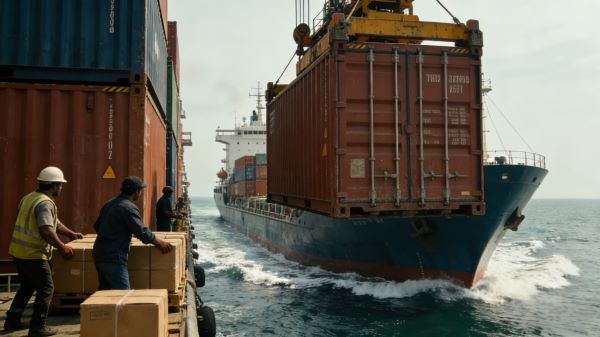
Forwarders should note that simply stacking network resources and scattered agent cases cannot form sustainable competitive logistics solutions. Only through systematic integration, standardized refinement, and continuous iterative optimization can fragmented local experience be transformed into scalable and replicable global service capabilities.
How does integrated layout resist complex global market risks
The combination of global operational coverage and verified agent field experience effectively improves supply chain resilience, enabling forwarders to flexibly respond to frequent market fluctuations and regional shipping uncertainties during 2024 to 2026.
What market risks can integrated layouts effectively mitigate
According to Drewry 2025 Q2 global shipping industry report, container freight rates on mainstream transoceanic routes maintain high-frequency volatility, and regional shipping interruption risks remain prominent. Forwarders relying on single trade lanes or single regional resources face obvious operational vulnerability and risk of business suspension.
A multi-regional network layout supported by experienced local agents allows flexible route diversion and resource replacement. When individual trade lanes encounter port congestion, policy adjustment, or temporary shipping suspension, local agent teams can quickly launch alternative transportation schemes to guarantee continuous cargo delivery.
How localized experience enhances solution cost controllability
Remote operation without localized field experience often leads to unreasonable resource scheduling and redundant operational costs. Local agents with long-term market accumulation can provide optimized route planning, scientific warehousing arrangement, and efficient clearance solutions, effectively reducing unnecessary operational consumption.
According to Freightos Baltic Index 2025 quarterly operational data, forwarders with mature integrated network and agent experience systems achieve 7% to 11% lower comprehensive operational costs on mainstream routes than peers that only expand network scale blindly.
What market opportunities can integrated layout bring to forwarders
The coordinated development of global network coverage and localized agent practical experience helps forwarders adapt to diversified global trade trends and capture incremental market opportunities in emerging trade regions.
Emerging markets in Southeast Asia, the Middle East, and Latin America have maintained steady import and export growth from 2024 to 2025, with rising market demand for customized and integrated cross-border logistics services. These regions feature complex trade policies, fragmented transportation resources, and personalized logistics demands, putting forward higher requirements for localized service capabilities.
Forwarders with comprehensive global coverage and verified local agent experience can quickly adapt to emerging market rules, accurately match local enterprise logistics demands, and launch targeted integrated logistics solutions to gain stable market share in emerging regional competition.
Conclusion
Against the background of ongoing global trade restructuring and persistent shipping market volatility, blind network scale expansion can no longer bring sustainable competitive advantages for freight forwarding enterprises. Effectively leveraging global operational reach and cooperating with seasoned local agents to develop compliant, stable, and risk-resilient logistics solutions has become a core development strategy for modern forwarders. Continuous accumulation and in-depth application of professional international logistics experience help enterprises balance global service standardization and localized market adaptation, cope with complex industrial changes steadily, and achieve long-term stable development in the competitive global logistics market.
Last
Working with regional feeder vessels as temporary port congestion solutions for urgent shipments
Freight forwarders can deploy regional feeder vessel collaboration mechanisms as flexible and reliable port congestion solutions t
Next
Sharing our lcl shipping experience handling multi supplier consolidation cargo this peak season
LCL Shipping Experience covers professional operational workflows, risk mitigation tactics and supply chain coordination skills fo

