






In cross-border logistics, the biggest nightmare isn’t customs inspections or transit delays — it’s when cargo arrives, but the billing falls into chaos.Recently, at the Port of Benghazi in Libya, a dramatic “Rashomon” scenario unfolded: one shipment triggered three conflicting invoices, entangling six parties across four countries in a complex debt dispute. The cargo was stranded, the Bill of Lading went “missing,” and every passing day meant escalating demurrage and storage costs.This case serves as a powerful risk management lesson for all logistics professionals.
I. Uncovering the Chaos: 4 Critical Risks Behind the Dispute
This was no coincidence — it was the inevitable result of layered risks in multi-tier subcontracting.
1. Personal Promises ≠ Corporate Commitments
An intermediary in the UAE initially quoted a low rate, based on which the Turkish agent secured the client. However, once the cargo arrived, the salesperson had left the company — and the company refused to honor the original quote.
In freight forwarding, verbal agreements and individual promises carry no binding force. Staff turnover can instantly invalidate prior commitments, leaving intermediaries and consignees to bear the consequences.
2. Multi-layer Subcontracting Blurs Creditorship
The Turkish agent believed the UAE intermediary was both the partner and creditor. In reality, the Chinese executing party — who prepaid the freight and controlled the Bill of Lading — held the actual leverage.
With multiple layers involved, the true creditor becomes unclear. The payer doesn’t know whom to pay, while the party controlling cargo release doesn’t receive funds — leading to deadlock and mutual losses.
3. Lack of Transparency Leads to Cost Manipulation
The actual ocean freight cost from the Chinese operator was never disclosed to the downstream parties. A low upfront quote attracted the deal, but the final invoice surged significantly.
This information asymmetry erodes trust instantly, often triggering disputes perceived as “malicious price increases.”
4. Shipping Line Rules Turn Time into Money
The 14-day free storage period acts as a ticking clock. Once exceeded, demurrage and detention charges escalate rapidly.
Ultimately, these additional costs are borne by shippers, consignees, and freight forwarders alike.
II. Breaking the Deadlock in 7 Days: How the Crisis Was Resolved
With free storage about to expire and losses mounting, the dispute was resolved within seven days through:
1.Pragmatic negotiation: All parties abandoned extreme positions and focused on minimizing losses rather than assigning full liability.
2.Platform intervention: A neutral B2B logistics platform verified identities, reconciled invoices, and facilitated communication.
3.Clarifying control of cargo rights: The actual party holding the Bill of Lading was identified, enabling final payment and cargo release.
The shipment was successfully released before significant additional charges were incurred.
The key to resolution boiled down to three principles: Identify the true creditor、Ensure transparent reconciliation、Protect the time threshold at all costs. 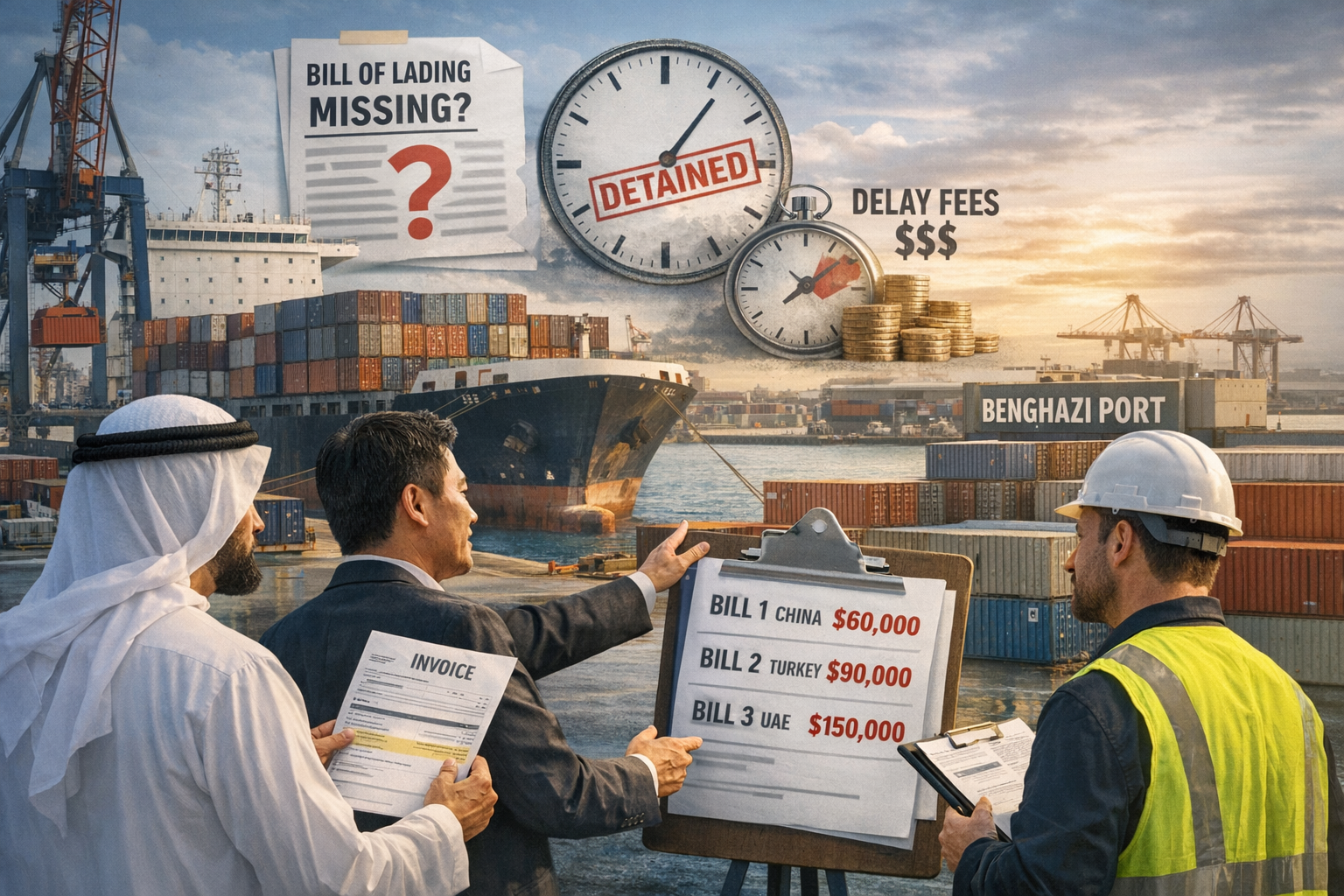
III. Prevention First: 5 Essential Risk Control Practices
Compared to firefighting disputes, prevention is far more effective. This case highlights how to avoid 80% of similar issues:
1. Verify Entities — Trust Companies, Not Individuals
Always confirm counterparties through verified B2B logistics platforms.
Ensure all quotations and commitments are formally documented and company-endorsed.
Agree upfront: staff changes must not affect confirmed terms.
2. Map the Chain — Identify the Real Creditor
In multi-layer transactions, clarify:
Who is the actual operator?
Who controls the Bill of Lading?
Who advances the payment?
Whenever possible, contract directly with the executing party. If intermediaries are involved, clearly define responsibilities, payment flows, and creditor identity in writing.
3. Full Transparency — Confirm Costs Upfront
From quotation to shipment, ensure all charges (ocean freight, local fees, surcharges) are clearly documented.
Avoid vague pricing or hidden costs. Transparency builds trust and prevents disputes.
4. Respect Shipping Rules — Time Is Your Shield
Understand free time rules (detention/demurrage) set by shipping lines.
In case of disputes, prioritize avoiding additional charges. Delays only amplify losses.
5. Leverage Trusted Platforms — Record Everything
Work through reputable B2B logistics platforms with compliance and oversight.
Ensure all communications and confirmations are recorded. In disputes, platforms provide neutral mediation and faster resolution.
Conclusion
This “three-invoice” freight Rashomon is not just about pricing disputes — it reflects deeper industry issues:unclear identities, lack of transparency, and poorly defined agreements.
For logistics professionals, cargo security, financial safety, and business reputation cannot rely on verbal trust. They depend on:Written agreements、Transparent information、Verified platforms、Clear accountability.
Don’t let a simple billing dispute escalate into cargo detention, financial loss, or reputational damage.Stay compliant. Stay transparent. Stay protected.Ensure every shipment moves smoothly — from origin to final delivery.

Last
Countdown to the New PRC Maritime Code: A Must-Read Risk Control Guide for Freight Forwarders — When Cargo Is Unclaimed at Destination, the “Booking Party Bears the Risk” Era Begins
Effective May 1, 2026, Article 93 of the newly amended Maritime Code of the People’s Republic of China will come into force. The l

Next
One Shipment, Two Debts: How an Innocent Freight Forwarder Got Trapped in a “Debt Substitution” Dispute | JCtrans Credit Risk Awareness Month – Risk Control Case Study
In the course of operating within the cross-border freight forwarding industry, it is not uncommon for innocent parties to be drag

