



In international logistics, the Bill of Lading (B/L) is the core document representing cargo ownership. A recent dispute handled by our platform revealed how a single operational error by a freight forwarder resulted in a loss exceeding USD 6,000—leaving the shipper with neither goods nor payment. The lesson is profound.
Case Review: One Small Mistake, Total Loss of Cargo Control
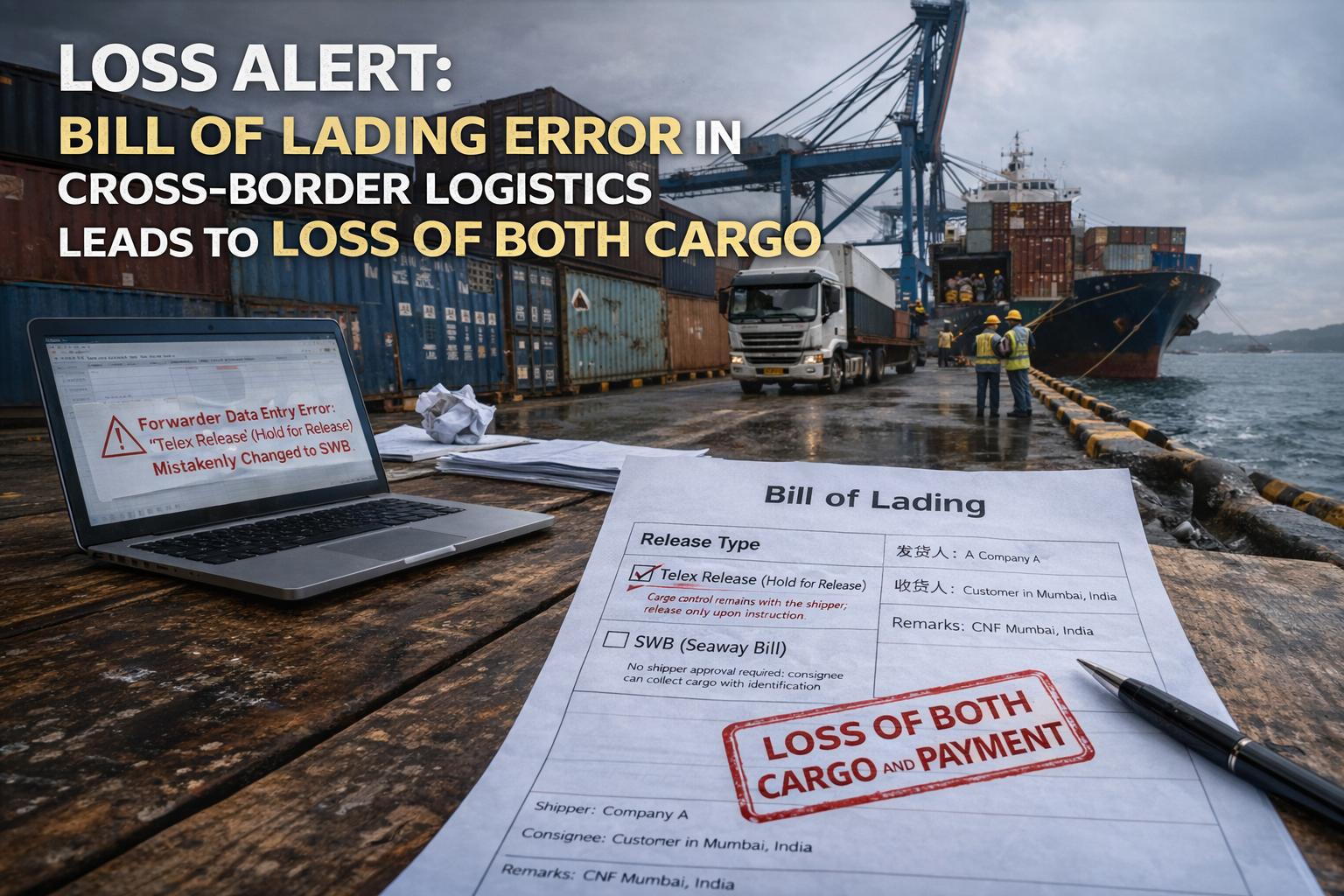
Company A entrusted freight forwarder B to ship four 20GP containers to Mumbai, India, under CNF terms. It was explicitly agreed that the shipment would be released via “Telex Release upon instruction”—a critical safeguard ensuring that cargo would only be released upon A’s authorization after payment was secured.
During the shipping instruction stage, A clearly specified this requirement and reiterated it in writing after paying USD 5,080 in freight charges. B confirmed the instructions multiple times.
However, when A failed to receive payment from the consignee and checked the shipment status in August, they discovered that the cargo had already been released. It was later found that B had mistakenly issued a Sea Waybill (SWB) instead of a “Telex Release upon instruction.”
The difference is critical:
Telex Release upon instruction: The shipper retains control; cargo cannot be released without explicit authorization.
Sea Waybill (SWB): No title of goods; the consignee can collect cargo directly with identification, without shipper approval.
As a result, the platform ruled that freight forwarder B must compensate Company A in full, totaling USD 6,580 (including freight and associated losses).
Three Critical Risk Points to Avoid
1. Clearly distinguish between SWB and Telex Release upon instruction
These are fundamentally different. The latter safeguards cargo control and payment security, while SWB removes control and significantly increases risk.
2. Written confirmation is not enough—verify every detail
Even with written confirmation, always carefully review the draft B/L. Check release type, consignee details, and all critical fields line by line to prevent operational errors.
3. Choose reliable freight forwarders
A forwarder’s internal review process is crucial. Do not select partners based solely on price—evaluate their operational standards and risk control mechanisms to avoid costly mistakes.
Final Thoughts from the Risk Control Team
In cross-border logistics, there is no such thing as a “minor mistake.” The Bill of Lading is the gatekeeper of both cargo ownership and payment security. Only through standardized operations, meticulous verification, and the right partners can businesses avoid losses and ensure smooth transactions.
Risk Prevention: JCtrans Risk Alerts Safeguards Your Business
JCtrans offers a Risk Monitoring feature that allows members to assess partner risk before cooperation. With subscription, users receive real-time alerts on changes in company status, helping proactively mitigate potential risks.
Last
USD 2,500 Deducted Without Authorization! The Cost Trap Freight Forwarders Most Commonly Fall Into Under FOB Terms | JCtrans Credit Risk Awareness Month – Risk Control Case Study
Case BackgroundIn cross-border logistics cooperation, payment disputes arising from destination charges and liability for containe
Next
Email Spoofing and Account Change Fraud: Always Verify Before Payment | JCtrans Credit Risk Awareness Month – Risk Control Case Study
Case BackgroundThis case involves two international freight forwarding companies: Logistics Company A in Vietnam (hereinafter refe