






In cross-border ocean freight and air freight, unclaimed cargo at destination is a high-risk scenario. Consignee disappearance, cargo abandonment, customs clearance obstacles, and similar issues may all trigger this problem. The resulting detention, storage, and related charges can continue to accumulate rapidly, often leading to a chain of claims among cargo owners, freight forwarders, and other related parties. Drawing on court rulings and industry practice, this article breaks down the root causes of this risk, the allocation of liability, and end-to-end Risk Mitigation solutions to help practitioners hold the line on risk control.
I. Unclaimed Cargo: The “Cost Black Hole” in Cross-border Logistics
When cargo arrives at destination and remains unattended, a series of unavoidable costs will be triggered, and the longer the delay, the greater the loss:
● Detention Charges: Containers remain occupied and cannot be turned around, with charges calculated by the day. After several months, the amount may far exceed both the cargo value and even the value of the container itself;
● Storage Charges: Cargo occupies terminal or port yard space and is charged according to standard rates. The longer it remains overdue, the higher the unit cost;
● Basic Local Charges: Including terminal handling charges, documentation fees, customs clearance fees, and other fixed expenses;
● Subsequent Disposal Costs: Return shipment, customs clearance expenses, or costs arising from customs auction or destruction. If the auction fails, all related costs will be borne by the liable party.
It should be noted that cargo abandonment does not mean exemption from liability. Any charges already incurred may still be recovered from the responsible party.
II. Liability Determination: Who Pays for Unclaimed Cargo?
The allocation of liability primarily depends on three key factors: booking identity, bill of lading type, and contractual arrangements. These are also the core elements relied upon in judicial decisions:
1.Booking Identity: If the booking is made in the name of the NVOCC itself without disclosing the actual cargo owner, it will generally be deemed the contractual shipper and bear payment liability. Where the actual cargo owner has been disclosed in writing, the third party may choose to pursue either the principal or the agent;
2.Bill of Lading Type: Under an MBL, the shipping line may directly claim the relevant charges against the booking shipper. Under an HBL, the shipping line will usually recover from the freight forwarder first, and the freight forwarder may then seek reimbursement from the cargo owner after advance payment;
3. Contractual Arrangements: Where the freight forwarding agreement clearly stipulates that destination charges are to be collected and paid on behalf of the relevant party, such clause is lawful and valid, and the entrusted party may not refuse payment without justification.
III. Judicial Consensus: Carriers Have a Duty to Mitigate Loss, and Excessive Charges May Be Reduced at the Court’s Discretion
A common misconception in the industry is that once charges are imposed by the shipping line, downstream parties must pay them in full. However, judicial practice makes it clear that carriers also have a duty to mitigate loss in unclaimed cargo cases. If detention and similar charges are grossly disproportionate to the value of the container, or if the carrier failed to take timely mitigation measures such as return shipment or auction, the court may reduce excessive charges at its discretion rather than fully support the carrier’s claim.
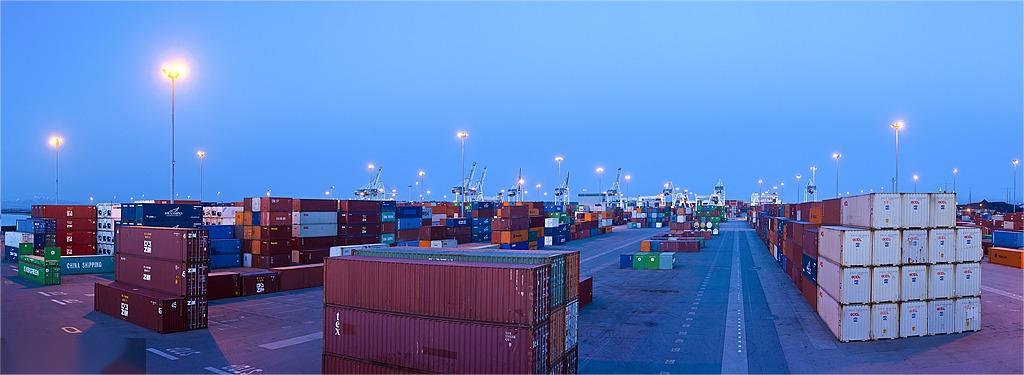
IV. High-frequency, High-risk Scenarios of Unclaimed Cargo
● Extreme Consignee Situations: Unexpected death, loss of contact, bankruptcy, or similar circumstances, resulting in failure to take delivery or complete customs clearance;
● Active Cargo Abandonment by the Consignee: Sharp decline in the overseas market, inverted profit margins, excessive customs clearance costs, or buyer default;
● Trade and Customs Clearance Obstacles: Document discrepancies, missing certifications, customs detention, or policy changes at destination;
● Risks in FOB Nominated Shipment: Where the buyer nominates the freight forwarder or shipping line, once the cargo is abandoned, the shipper may still be pursued for collect freight and destination charges.
V. End-to-end Risk Mitigation: How Cargo Owners and Freight Forwarders Can Avoid Exposure at the Source
(I) Risk Control Priorities for Foreign Trade Factories and Cargo Owners
1.Collect the outstanding balance before shipment, with particular attention to emerging markets and high-risk countries;
2.Under FOB terms, clearly define booking responsibility and the party bearing the relevant charges, and retain written records;
3.Follow up with the consignee before cargo arrival, and promptly initiate return shipment or resale in case of abnormalities.
(II) Risk Control Guide for Freight Forwarders and Logistics Companies
1.Avoid undisclosed bookings. Disclose the actual cargo owner in writing wherever possible to prevent becoming the liable party yourself;
2.Strictly control contract clauses and avoid unfair terms that impose unlimited liability for all destination charges;
3.Act quickly to mitigate loss. Once unclaimed cargo is confirmed, immediately notify the principal and the shipping line, and prioritize options such as return shipment or resale;
4.Challenge clearly excessive charges and file an Online Claim based on the carrier’s duty to mitigate loss, rather than making unconditional full advance payment.
(III) Crisis Handling Process
1.If cargo remains unclaimed upon arrival, immediately notify the principal and the shipping line;
2.Assess cargo value against the related charges, then choose resale, return shipment, lawful abandonment, or auction as appropriate;
3. Retain all communication records, emails, and other documentation throughout the process as evidence for liability defense or recovery.
VI. Conclusion
Unclaimed cargo at destination is a shared risk across both the trade chain and the logistics chain. While consignee-related issues may be external and difficult to control, unclear booking identity, poorly managed contract terms, and delayed handling are the real internal causes that drive practitioners into claim exposure. For cross-border logistics professionals, only by clearly identifying the booking party, defining contractual boundaries, and acting quickly when exceptions arise can losses be kept to a minimum.
Last
Email Spoofing and Account Change Fraud: Always Verify Before Payment | JCtrans Credit Risk Awareness Month – Risk Control Case Study
Case BackgroundThis case involves two international freight forwarding companies: Logistics Company A in Vietnam (hereinafter refe

Next
Cross-Border Logistics “One Entity, Three Locations” Reversal: A Risk Control Alert on “Four Flows Inconsistency” Raised by the Principal
Why did an airfreight service fee agreed as “payment upon receipt of invoice” trigger doubts over the authenticity of the operatin

