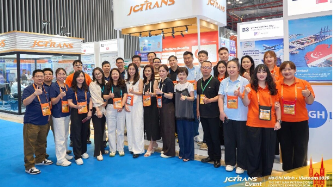



From August 19 to 20, 2026, JCtrans held two industry seminars at its new Shanghai headquarters in the North Bund Jinmao Center in Hongkou District. Located across the Huangpu River from the Oriental Pearl Tower, the new headquarters welcomed freight forwarding professionals and industry experts to discuss how companies can navigate current market conditions and identify future growth opportunities.
The two seminars took different but complementary perspectives. The first focused on strengthening core operations, while the second explored opportunities for overseas expansion. From managing risk amid sharp freight rate fluctuations to expanding into international markets as global supply chains are reconfigured, the sessions addressed issues grounded in current market realities. Speakers shared practical insights that participating companies could apply to their own operations.
Freight Forwarding Business Trends Seminar: Freight Rate Outlook and Risk Mitigation Strategies for the Second Half of the Year
The first seminar, held on August 19, was titled “Freight Rate Turbulence: From Sharp Increases to Steep Declines—The Outlook for the Second Half and Risk Mitigation Strategies for Freight Forwarders.” It focused on five areas: market trends, freight rate dynamics, risk management, profit growth, and industry networking. The seminar addressed a central question: as freight rates enter a period of frequent volatility, how can freight forwarders protect their core business, retain customers, and find new sources of growth?
Market Outlook: Understanding Freight Rate Volatility and Putting Platform Resources to Work
Bryan Lin, Customer Success Manager at JCtrans, opened his presentation with the question, “What happened to the peak season?” Drawing on the SCFI’s rise and subsequent decline, he reviewed the factors behind the latest round of rapid freight rate movements.
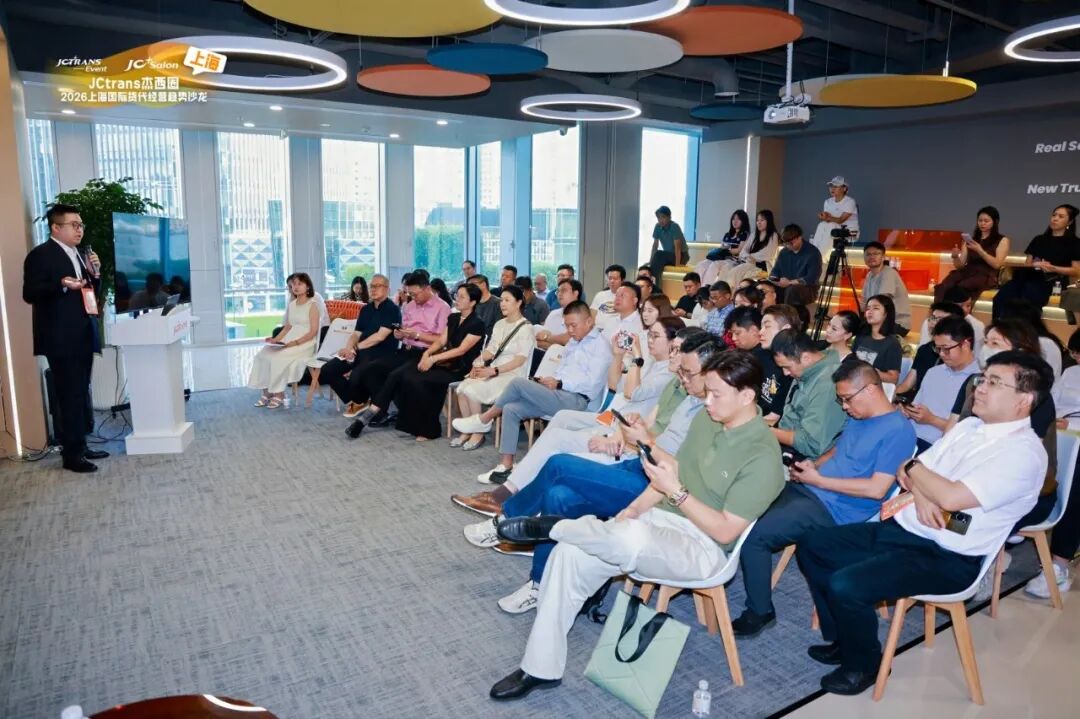
Geopolitical tensions, vessel rerouting, and tariff uncertainty prompted customers to ship earlier than planned. However, this did not represent additional demand; cargo volumes were simply brought forward from the third quarter to the second. With inventories in Europe taking longer to clear, purchasing activity slowing, and new vessels continuing to enter service, excess capacity is once again weighing on the market.
Lin stressed that simply trying to predict whether rates will rise or fall is no longer enough. Companies need to focus less on calling the market and more on building the capabilities needed to respond to it. Drawing on JCtrans resources such as Risk Alerts, company verification, its global network, and Business Opportunity Matching tools, he outlined how freight forwarders can compete on capability rather than price alone.
Practical Business Strategies: Retaining Existing Customers and Securing Higher-Quality Business
George Sun, Director of SHANGHAI WIN-FA INTERNATIONAL FREIGHT FORWARDING CO., LTD, said the current market is not simply in decline but has entered a highly fragmented and unsettled phase. Rates on European routes have rebounded after falling, while Southeast Asia, South America, and the United States are following different trajectories. Blank sailings, weather disruptions, and geopolitical events can alter supply and demand at any time. Traditional assumptions about peak and off-peak seasons are no longer reliable.

He proposed three strategies. First, redefine customer value by providing proactive alerts, sailing schedule updates, and freight rate briefings. Second, segment the customer base and direct resources toward stable, high-potential accounts. Third, strengthen internal operations by making back-office execution, standard operating procedures, and the overall service experience part of the company’s core competitiveness.
“The days when one strong salesperson could solve every problem for a freight forwarding company are over,” he said. “What determines whether customers stay is the strength of the organization behind the service.”
Reshaping Supply and Demand: From Port-to-Port Transport to Supply Chain Services
Maquel Hu, Managing Director of EPSYLOG SHANGHAI CO., LTD, approached the issue from the perspective of changing foreign trade patterns. He said the real challenge for freight forwarders is not identifying a single market turning point, but responding to the continued movement of industries and demand.
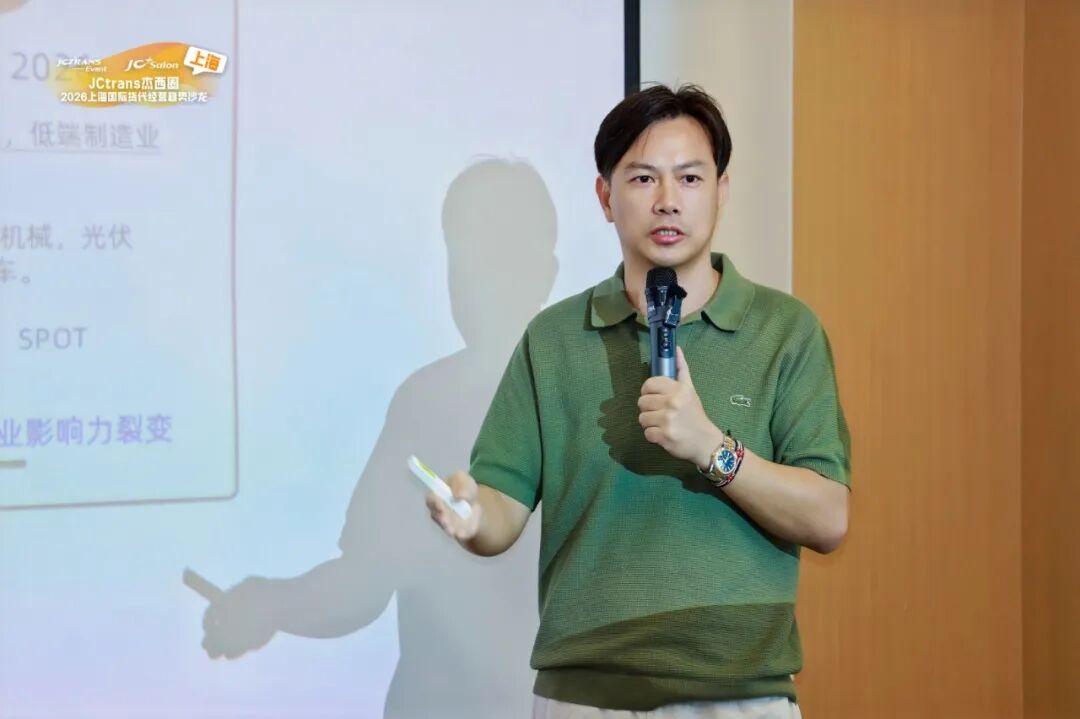
High-value sectors such as new energy, energy storage, solar power, automobiles, and engineering projects are gradually replacing traditional labor-intensive exports. At the same time, the old business model built around margins on freight bookings is becoming obsolete.
“The greatest risk is not making the wrong call on freight rates once,” he said. “It is continuing to serve today’s customers with a business model from 20 years ago.”
Hu said freight forwarders should integrate ocean freight, inland transport, bonded logistics, cross-border services, and multimodal transport around customer needs. Compliance should provide the foundation, while greater customer value should remain the goal. Services need to extend beyond port-to-port transport to door-to-door delivery, project sites, and the entire supply chain.
Roundtable Discussion: Risk Management and Strategic Planning in the Next Phase of the Freight Rate Cycle
The roundtable was moderated by Thomas Shi, JCtrans Key Accounts Director and JCtrans Club General Manager. Five speakers exchanged views on practical issues including freight rate movements, customer retention, and financial risk management.
Lewis Wei, Marketing Director of Shanghai Speedy International Logistics Co., Ltd, noted that Middle East and Red Sea routes remain under pressure from both geopolitical developments and capacity constraints. When freight rates are high, companies must pay particular attention to financial pressure. Customers often have long payment terms, while shipping lines require much faster settlement, making cash flow critical to survival.
Star Zeng, General Manager of SHANGHAI ALLPOWERFUL LOGISTICS CO., LTD., outlined a three-layer approach to risk management covering quotations, vessel space, and operating procedures: verify the facts before quoting, secure space before confirming a rate, and thoroughly review all booking information.
“Rates and space ultimately come down to reliability,” she said. “A strong sense of responsibility does more to retain long-term customers than a small price difference.”
Zhao Xin, General Manager of GENSON LOGISTICS CO., LTD., warned that new vessel capacity would continue to place downward pressure on freight rates. However, geopolitical developments, such as the resumption of Red Sea services, could completely change the direction of the market. The value of market analysis does not lie in guessing future prices, he said, but in identifying variables early and preparing contingency plans.
Simon Xu, Managing Director of Shanghai Asiacargo International Transportation Co., Ltd., advised companies not to choose unreliable channels to save a few dozen dollars when freight rates are high. Freight forwarders should arrange financing channels in advance and conduct compliance reviews early, using creditworthiness and professional expertise to reduce uncertainty.
Andrew Zhang, CEO of SKY-REACH SHANGHAI INTERNATIONAL LOGISTICS CO., LTD, explained how specialist expertise can provide a competitive advantage. Dangerous goods, special containers, and project cargo require advance approvals as well as early confirmation of container equipment and vessel space. Careful planning and reliable execution help companies build lasting customer trust. Over time, profits should come less from freight rate spreads and more from the added value of solutions and services.
Global Growth Seminar: Opportunities for Freight Forwarders as Supply Chains Shift Overseas
The second seminar, held on August 20, was titled “A New Landscape for Going Global: Opportunities for Freight Forwarders as Chinese Brands Relocate Their Supply Chains—from Mexico and the Middle East to Eastern Europe.” It focused on supply chain relocation, emerging markets, overseas agents, multi-leg logistics, and global growth, providing practical direction for Chinese freight forwarders seeking to expand internationally.
Market Insights: From the Relocation of Production Capacity to the Reshaping of Logistics Networks
Chelsea Wang, Customer Success Manager at JCtrans, opened with a series of market figures. In the second quarter of 2026, Southeast Asia accounted for 38% of Chinese brands’ overseas production capacity, followed by Mexico at 15%, Eastern Europe at 7%, and the Middle East at 4%.
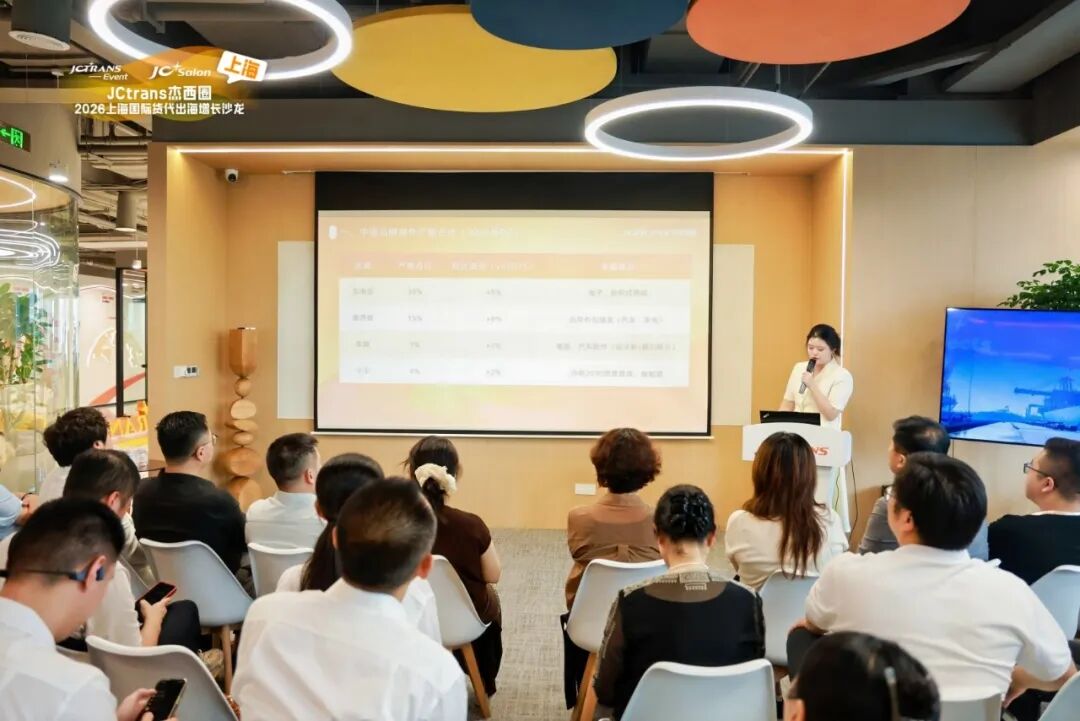
Meanwhile, ocean freight volumes from China to Mexico increased by 32% year on year, airfreight volumes to the Middle East rose by 25%, and rail freight volumes to Eastern Europe grew by 28%. At the same time, profit margins among traditional freight forwarders fell from 6.5% to 4.2%, while those of technology-enabled freight forwarders rose to 15.0%.
Wang said competition among freight forwarders has moved beyond booking rates and now centers on end-to-end logistics design, warehousing, customs clearance, and digital service capabilities.
She also examined the three emerging markets individually. Mexico is benefiting from nearshoring, but complex customs procedures and risks in inland distribution remain major challenges. These can be managed through strategically positioned bonded warehouses and stronger local partnerships.
The Middle East is benefiting from Saudi Arabia’s Vision 2030 and the United Arab Emirates’ role as a transshipment hub, although Red Sea risks and last-mile warehousing and distribution remain bottlenecks. In Eastern Europe, growth in the new energy and automotive sectors is creating opportunities for alternative China–Europe rail corridors and combined rail-air solutions.
Regional Operations: Compliance for China–Mexico Shipments Routed via the United States
JingHua Bao, Strategy & Platform GM at American New Logistics Service Co., LTD, focused on compliance, one of the most critical issues in the United States–Mexico market. He said high-risk practices—including informal or non-compliant customs clearance, the use of borrowed corporate entities, and shell importers—are no longer sustainable. Real competitiveness comes from having a compliant local entity, self-operated warehouses and trucking resources, and the ability to manage the entire shipment process.

Under American New Logistics’ operating model, cargo originating in China is transloaded at a bonded CFS in the United States, cleared at a border crossing, and then transported into Mexico by rail or truck. The rail option takes approximately 12 to 15 days, with customs clearance completed in one to two days.
Bao advised companies to choose carefully between direct services to Mexico and routes via the United States based on the importer’s qualifications, the type of cargo, and the level of risk involved.
Roundtable Discussion: Four Approaches to Overseas Expansion
The roundtable was moderated by Laura Tong, Director, Domestic Customer Success at JCtrans. Four speakers drew on their respective areas of expertise to present different approaches to international expansion.
Vida Ma, General Manager of Whale Logistics (Shanghai) Co., Ltd., described a strategy of following customers into new markets. In 2025, the company established an operation in Port Klang, Malaysia, in direct response to electronics and semiconductor customers relocating production capacity.
She summarized the company’s approach as “plan carefully and expand steadily.” Rather than chasing market trends, the company follows genuine customer demand.
Echo Han, Founder & COO of SHANGHAI OOGSMART LOGISTICS TECHNOLOGY CO., LTD., focused on special containers and oversized cargo. He emphasized developing deep expertise before expanding more broadly and replicating proven domestic capabilities in overseas markets.
“Follow your customers into new markets first,” he said. “Then build the capabilities that give customers a reason to follow you.”
Gabriel Wang, General Manager of SHANGHAI SAFETY INTERNATIONAL FORWARDER CO., LTD., suggested that small and medium-sized freight forwarders begin with markets that have natural barriers to entry, such as the Middle East. By specializing in one country and one specific service segment, they can use professional expertise to offset their lack of scale.
Victor Chang, Deputy General Manager of SHANGHAI STANDARD LOGISTICS CO., LTD., presented a light-asset approach to overseas expansion. He emphasized entering target markets first and building trust over time. Platforms such as JCtrans can help companies find credible agents, test potential partners through actual shipments, and gradually deepen cooperation.

With new opportunities ahead and connections extending worldwide, the two seminars concluded with a lively networking session.
During the events, guests also toured JCtrans’s new Shanghai headquarters and learned more about the thinking behind the new office. From displays of the company’s culture to presentations of its business operations, and from domestic services to global resource connections, the headquarters reflects JCtrans’s ongoing efforts to expand its global network and strengthen its services to the freight forwarding industry.
The tour and discussions gave guests a clearer understanding of JCtrans’s development in recent years, its overseas expansion, and its platform capabilities. They also provided a more direct view of how the platform connects industry resources and facilitates business cooperation.
Zhu Hui, Director of Credit Assurance Operations at JCtrans, also led an on-site product research session on how actual transactions can contribute to a company’s Credibility Profile. He gathered customer feedback on transaction records, credibility building, and Cooperation Risk Protection, providing first-hand input for the continued development and improvement of the membership system.
JCtrans will continue to work with partners worldwide to foster a logistics ecosystem that is more efficient, reliable, and sustainable.