






A cargo vessel caught fire and sank off Southeast Sulawesi, Indonesia, on September 1. LCT Legenda Nusantara 699 was sailing through the Kabaena waters in the Tiworo Strait when the fire broke out. All 13 crew members were evacuated, but two died, four were admitted to intensive care, and seven others were rescued safely. The vessel was sailing from Jakarta to Morowali with heavy equipment and chemicals on board. It sank after the fire could not be brought under control, releasing some of its chemical cargo into the sea and posing risks to the surrounding marine environment and navigational safety.
Key Highlights
• Vessel fire: LCT Legenda Nusantara 699 caught fire in the Kabaena waters of Indonesia, and all 13 crew members were evacuated.
• Casualties and spill: Two crew members died, four were admitted to intensive care, and hazardous chemicals leaked into the sea.
• Pollution response: The vessel sank completely, prompting local authorities to contain the pollution and investigate the cause of the accident.
Preliminary Investigation Links Fire to Chemical Leak
LCT Legenda Nusantara 699 was sailing from Jakarta to Morowali, Indonesia, carrying heavy industrial equipment and drummed chemicals. According to a preliminary investigation report issued by Indonesia’s transportation authorities, conditions at sea may have contributed to the accident.
As the vessel sailed through the Kabaena waters, repeated waves striking it from the side caused cargo on deck to shift and exert pressure on other cargo units. This reportedly damaged an intermediate bulk container (IBC) holding chemicals, causing it to leak. The leaking liquid came into contact with hot steel plating, nearby cargo pallets, and tanks, triggering a chemical reaction and producing thick smoke. The vessel then caught fire, with the flames spreading rapidly.
The authorities have stressed that this is only a preliminary finding and not a final conclusion. Indonesia’s maritime, transportation, and search and rescue authorities are reconstructing the sequence of events, reviewing compliance with cargo loading and securing requirements, and examining the direct link between the cargo shift, chemical leak, and onset of the fire. The final cause of the accident and determination of liability remain subject to further official findings.
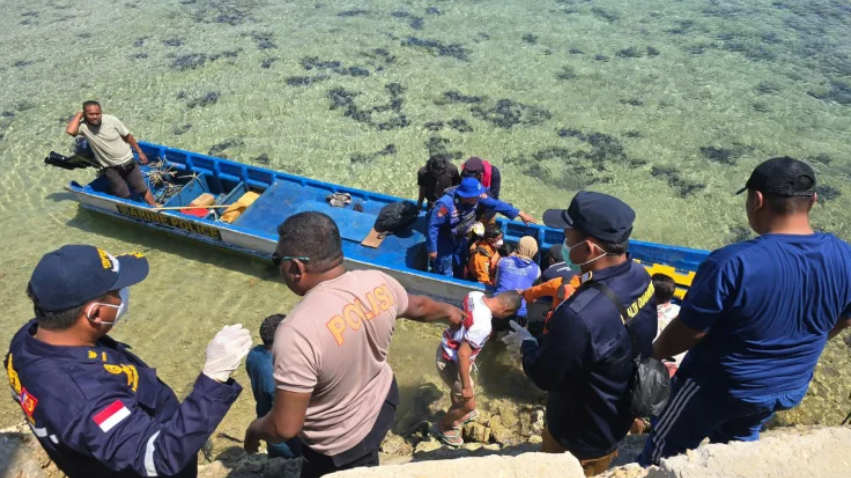
A joint response team evacuates crew members from LCT Legenda Nusantara 699.
All 13 Crew Members Evacuated as Casualty Details Emerge
The fire spread rapidly and released a large volume of toxic chemical fumes. Nearby vessels and Indonesian search and rescue teams responded to the scene, evacuating all 13 crew members and transferring them for medical treatment.
Local medical authorities confirmed that two crew members died in the accident, reportedly from exposure to toxic fumes and burn injuries. Four others were seriously injured after inhaling toxic fumes and were admitted to intensive care at a designated hospital. The remaining seven crew members were reported to be in stable condition following medical examinations. Authorities are continuing to verify the exact causes of the two deaths and update the official casualty records.
Attention Shifts to Pollution Response and Route Monitoring
Following the rescue operation, attention turned to the secondary risks created by the accident. The badly damaged vessel eventually sank completely in the Kabaena waters, and some of the chemicals on board leaked into the surrounding sea, creating a risk of marine pollution. Indonesia’s Directorate General of Sea Transportation, environmental authorities, and search and rescue teams are working together to contain and clean up the spill, monitor the marine environment, and prevent the pollution from spreading.
In terms of shipping disruption, this was an isolated maritime casualty involving a single vessel. No official information currently indicates that the main Jakarta–Morowali route or the waterways around Kabaena and the Tiworo Strait have been closed or placed under traffic restrictions. Port operations and vessel movements in the area are continuing as normal.
Freight forwarders, importers, and exporters arranging shipments on Indonesian routes, particularly seaborne shipments of dangerous goods and heavy equipment, should closely monitor navigational warnings, wreck salvage operations, and any restrictions announced by the Indonesian authorities. They should also confirm cargo acceptance and stowage requirements, as well as any routing changes, with carriers in advance to manage potential delays and compliance risks.
Sources and Disclaimer
Sources include Indonesia’s Ministry of Transportation, ANTARA, Xinhua News Agency, and other publicly available shipping industry information. This article is provided for informational purposes only and is intended for the international logistics and freight forwarding industry. Specific arrangements remain subject to the latest notices issued by the Indonesian authorities and relevant carriers.
Last
FedEx Freight Executive Terminated After Internal Investigation Finds Code of Conduct Violation
FedEx Freight has terminated Michael B. Lyons, Executive Vice President – Chief Specialized Services and Commercial Officer. The c
Next
Maersk Could Fall to Fourth as COSCO SHIPPING Holdings and CMA CGM Close In
The global container carrier capacity rankings could be heading for a major shake-up. According to the latest Alphaliner data rele

