






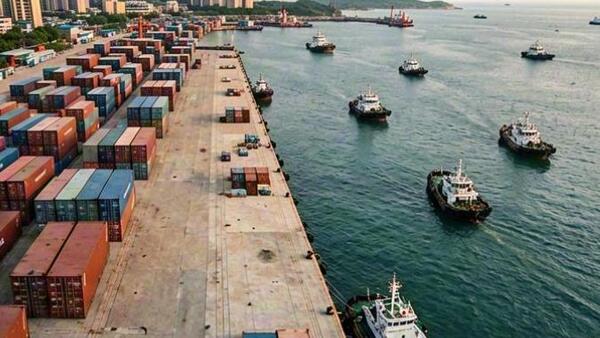
Congestion at container ports worldwide continues to worsen. The latest analysis from shipping consultancy Drewry shows that during the first seven months of 2026, average vessel waiting times worldwide were nearly twice the level recorded during the same period in 2019, while the average port stay for container ships was 31% longer. Of particular concern is that the current congestion cannot simply be attributed to insufficient terminal capacity. Growth in cargo volumes, high berth utilization, schedule disruptions, and severe weather are combining to reduce the buffer available across global liner networks.
Key Highlights
• Longer waiting times: Average vessel waiting times during the first seven months of 2026 were nearly twice the level recorded during the same period in 2019
• Capacity and volume growth: Terminal capacity at nine major container ports increased by 21% between 2019 and 2026, while container volumes grew by 28%
• Rising uncertainty: Port investment, operational efficiency, schedule disruptions, and severe weather are all contributing to congestion and increasing supply chain uncertainty
Why Is Congestion Worsening Despite Additional Port Capacity?
The data show that ports have expanded their capacity. Across the nine major container ports covered by Drewry, average terminal capacity increased by 21% between 2019 and 2026, while container volumes grew by 28% over the same period. Demand therefore grew considerably faster than capacity. Drewry argues that current global port congestion cannot simply be attributed to insufficient terminal investment. High berth utilization, schedule disruptions, and clusters of vessel arrivals caused by unexpected events can also leave ports with little short-term capacity to absorb additional traffic.
However, views within the industry differ. Maersk CEO Vincent Clerc previously said that investment in port, rail, road, and trucking infrastructure had been relatively limited over the past 15 years, and that current export growth in Asia was further exposing these long-standing bottlenecks. The two views focus on different aspects of the issue. Drewry places greater emphasis on the operational efficiency and available buffer at existing ports under high utilization, while Maersk focuses more on the long-term gap between infrastructure investment and growth in trade demand. Current port congestion may therefore result from the combined effects of capacity, investment, operational efficiency, and changing cargo volumes rather than any single factor.
Typhoons and Schedule Disruptions Add to Port Pressure
Short-term disruptions are also worsening congestion. Drewry data show that average global berth waiting times briefly rose to 3.6 days after typhoons affected several regions in early August. Within a liner network, delays to certain sailings can cause vessels to arrive in clusters at subsequent ports. Blank sailings, extra loaders, and schedule adjustments can also disrupt established arrival patterns, leaving some ports under simultaneous pressure across berths, container yards, and inland connections.
This means that additional port capacity does not provide an equivalent amount of operational buffer. When berths operate at consistently high utilization levels, a typhoon, a service adjustment, or a cluster of vessel arrivals can quickly absorb the limited spare capacity. More than 4.3 million TEUs of container ship capacity are currently waiting at ports worldwide, with major export regions such as North Asia requiring particular attention.
Persistent Congestion Increases Supply Chain Uncertainty
Longer port waiting times affect more than vessel berthing. Delays can extend to subsequent port calls, inland transportation connections, warehousing arrangements, and container turnaround. At the same time, vessel deployment across different routes may remain volatile as Red Sea and Suez services gradually resume, Panama Canal transit conditions change, and weather-related disruptions continue worldwide.
For international logistics companies, port congestion is gradually shifting from a temporary problem to an ongoing factor affecting liner network operations. In addition to freight rate movements, companies should pay particular attention to port waiting times, schedule reliability, and actual handling capacity at destination ports. During peak periods, building additional time into transportation and delivery plans has become more important than simply comparing scheduled transit times.
Current conditions at global ports show that competition is no longer determined solely by terminal capacity. It also depends on whether ports can maintain sufficient operational flexibility under high utilization and unexpected disruption. As global trade volumes continue to grow, capacity, efficiency, and the ability to absorb disruption may become critical to the stable operation of ports and shipping networks.
Sources and Disclaimer
Sources include Drewry, Maersk, and other publicly available industry information. This article is intended solely as a reference for the international logistics and freight forwarding industry. Specific port operations and sailing schedules remain subject to the latest information from carriers, ports, and relevant authorities.
Last
Crane Lifting Accident at Mumbai Port Causes Collision and Fire, Injuring Two
A crane lifting accident occurred at Indira Dock in Mumbai Port, India, on the evening of August 30, local time. A mobile crane be
Next
Logistics and Port Facilities Hit in Ukraine Amid Unconfirmed Reports of Strike on DHL Site
On August 31, warehouses and logistics facilities in several parts of Ukraine’s Kyiv region were damaged in drone attacks. Interfa

