






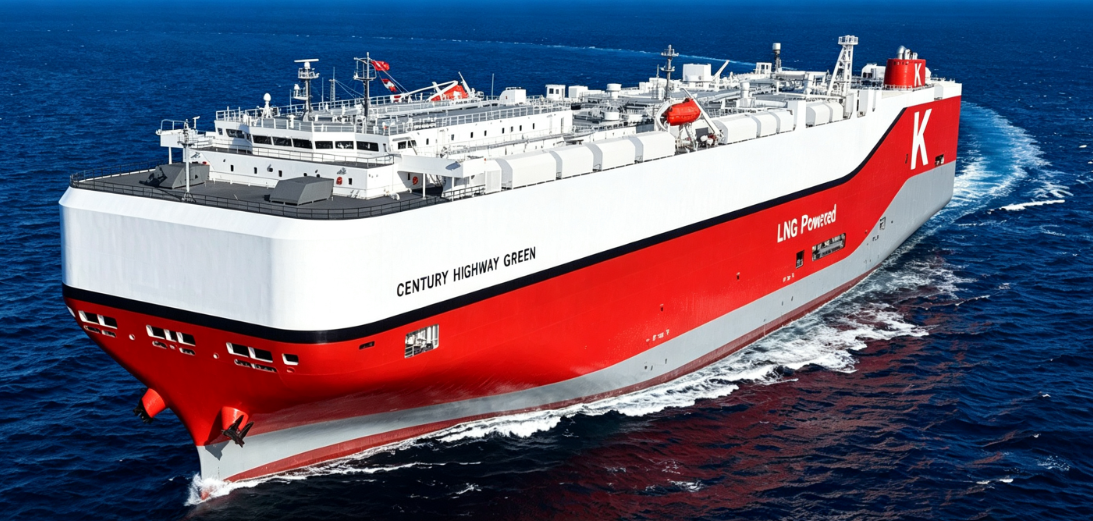
Japanese shipping company K Line is expanding its VLCC newbuilding portfolio. On August 28, K Line announced that it had signed shipbuilding contracts with Japanese shipbuilder Nihon Shipyard for three very large crude carriers (VLCCs). Each vessel will be a 311,000 DWT Malaccamax VLCC, with deliveries scheduled to begin in 2029. The vessels will feature a next-generation design focused on energy efficiency and fuel performance and will primarily transport crude oil from the Middle East to Asia via the Strait of Malacca.
Key Highlights
• Three VLCCs ordered: K Line has ordered three 311,000 DWT VLCCs, with deliveries scheduled to begin in 2029.
• Malaccamax design: The new vessels will mainly serve Middle East–Asia crude oil trades.
• Global VLCC orderbook: Approximately 54.5 million DWT of new VLCC orders were placed worldwide in the first half of 2026, making future capacity growth an important area to monitor.
Three VLCCs Ordered for Delivery from 2029
According to K Line, all three VLCCs will be built by Nihon Shipyard. Each vessel will have a deadweight tonnage of 311,000 tonnes, an overall length of 339.5 meters, and a beam of 60 meters. Deliveries are scheduled to begin in 2029. K Line said the vessels would feature a next-generation, energy-efficient design with improved fuel performance. They will also adopt a Malaccamax design to improve the efficiency of crude oil transportation from the Middle East to Asia.
The intended trade for the vessels is clear from their design. Malaccamax VLCCs are designed for the navigational conditions of the Strait of Malacca and are well suited to connecting crude oil suppliers in the Middle East with major Asian markets. For crude oil supply chains serving Asian import markets, these large tankers can carry substantial volumes over long distances.
VLCC Newbuilding Orders Remain Active
K Line’s order comes as activity in the VLCC newbuilding market continues to rise. Citing data from Maritime Strategies International, Seatrade Maritime reported that approximately 54.5 million DWT of new VLCC orders were placed worldwide during the first six months of 2026, bringing the orderbook-to-fleet ratio to approximately 35%. At the same time, VLCC spot freight rates have remained relatively high, encouraging more shipowners to place newbuilding orders.
However, the increase in newbuilding orders will not lead to an immediate rise in market capacity. K Line’s three new vessels will not begin entering service until 2029. Their actual impact on market supply and demand will therefore depend on crude oil trade volumes, voyage distances, and the retirement of older VLCCs over the coming years.
In the global crude oil transportation market, shipowners are adding capacity while renewing their fleets to improve fuel efficiency. As more large tankers move into the ordering and construction stages, the composition of the global VLCC fleet may continue to change.
Middle East–Asia Remains a Key Crude Oil Trade
K Line said the three VLCCs would transport crude oil between the Middle East and Asia via the Strait of Malacca. Drawing on its extensive experience in crude oil transportation, the company will use the vessels to support stable energy transportation to Japan and other markets.
From an international logistics and shipping perspective, the significance of the order is not limited to the addition of three vessels. The Middle East is a major source of crude oil for Asia, while the Strait of Malacca is an important shipping route connecting the Indian Ocean with major Asian markets. Once deployed, the new vessels will add modern VLCC capacity to this trade.
Companies with exposure to energy transportation, tanker capacity, and Asian trades should monitor the delivery progress of these vessels, as well as the impact of growth in the VLCC orderbook on future capacity, vessel deployment, and crude oil transportation costs.
Sources and Disclaimer
Sources include K Line, Seatrade Maritime, and other publicly available industry information. This article is provided solely for reference by the international logistics and shipping industry. Specific vessel delivery and operating arrangements remain subject to the latest announcements from the companies concerned.
Last
Logistics and Port Facilities Hit in Ukraine Amid Unconfirmed Reports of Strike on DHL Site
On August 31, warehouses and logistics facilities in several parts of Ukraine’s Kyiv region were damaged in drone attacks. Interfa
Next
APM Terminals Begins Construction on $550 Million Laldia Container Terminal in Chattogram, Bangladesh
Maersk-owned port operator APM Terminals is increasing its investment in Bangladesh’s port sector. On August 30, APM Terminals lau

