






Commercial shipping security in the Black Sea is again drawing attention. On August 25, local time, the Russian Ministry of Defence said Russian forces had attacked several ports on Ukraine’s Black Sea coast, affecting five vessels. These reportedly included three cargo ships and one tanker at the Port of Pivdennyi, also known as Yuzhny, and one cargo ship at the Port of Odesa. Russia also said the operation affected port facilities at Pivdennyi and Odesa, as well as fuel storage facilities at the major Black Sea port of Chornomorsk. The available information currently comes primarily from the Russian Ministry of Defence, and further confirmation is still required. For international logistics companies, such incidents may affect not only regional port operations, but also Black Sea service arrangements, schedule reliability, and cargo transportation costs.
Key Highlights
• Vessels affected: Russia said five vessels, including cargo ships and a tanker, were affected.
• Ports involved: Port facilities at major Black Sea ports, including Odesa and Pivdennyi, were also reportedly affected.
• Independent confirmation: The information has not been fully verified by independent sources, and details of the vessels remain unavailable.
• Shipping impact: Black Sea services could face changes in schedules, insurance costs, and transportation expenses.
Five Vessels Reportedly Affected as Black Sea Port Operations Draw Attention
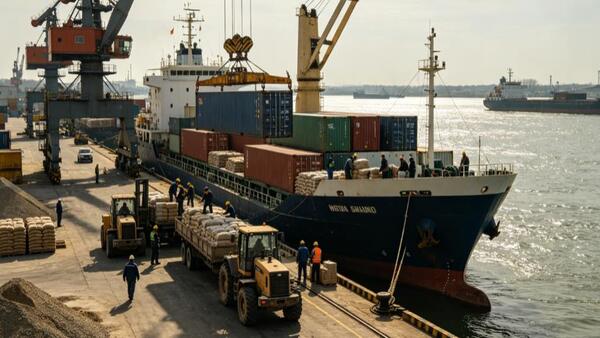
According to information released by the Russian Ministry of Defence, the operation involved several Ukrainian Black Sea ports. Russia said three cargo ships and one tanker were hit at Pivdennyi, while another cargo ship was affected at the nearby Port of Odesa. Russia also said that fuel storage facilities at Chornomorsk were struck.
Pivdennyi, Odesa, and Chornomorsk are all major Ukrainian ports on the Black Sea and have long handled exports of grain, agricultural products, and other cargo. Any damage to port facilities could affect local cargo handling, vessel calls, and onward cargo movements.
Publicly available information has not identified the names, flags, owners, or cargoes of the five vessels. Carriers and logistics companies should monitor the status and resumption of port operations, changes to vessel schedules, and any revisions to security measures.
Russian Claims Regarding Military Cargo Remain Unconfirmed
Russia also claimed that the three cargo ships reportedly hit at Pivdennyi were transporting supplies connected with the Ukrainian military.
This claim has not been independently confirmed. Public information has not disclosed the vessels’ specific cargoes, cargo owners, or final use. It is therefore not currently possible to determine whether the vessels were involved in military transportation.
For commercial vessels operating in a conflict-affected area, risk assessments depend not only on the route, but also on vessel identity, cargo type, security conditions at the destination port, and insurance requirements. Voyages involving high-risk areas may be subject to more stringent security assessments.
Black Sea Risks Affect Shipping and Logistics Supply Chains
Security pressure on commercial shipping in the Black Sea has continued to increase in recent years. Shipowners, freight forwarders, and supply chain companies must now consider not only whether vessels can reach a port, but also whether the port can operate normally, whether cargo-handling facilities remain operational, whether shipments can be completed as planned, and whether insurance and security costs will change.
Some carriers have already adjusted their Ukrainian Black Sea services in response to security conditions. Maersk previously announced the suspension of services through Chornomorsk Fishing Port and redirected some import cargo to the Port of Constanța in Romania. The adjustment applied to services at a specific terminal and did not mean that the entire Port of Chornomorsk had ceased operations.
Hapag-Lloyd subsequently said that its partner feeder operator had suspended calls at Chornomorsk, Odesa, and Pivdennyi because of the security situation. Cargo may need to be discharged at alternative ports or moved through other transport options.
For international logistics companies, this means that Black Sea risks are no longer limited to security at an individual port. They are also affecting route planning, port selection, and supply chain arrangements. Cargo owners and freight forwarders handling shipments involving Ukraine and surrounding markets should monitor carrier notices, port operating conditions, and changes in transportation costs.
Grain Shipping Faces Renewed Uncertainty
Ukraine is a major global grain exporter, and its Black Sea ports have long handled substantial volumes of agricultural exports. Ukraine had previously restored some grain shipments through a new maritime corridor, but renewed concerns over the safety of ports and commercial vessels have created further uncertainty.
The incident occurred while Russia and Ukraine had yet to reach a clear arrangement on the safety of vessels carrying grain in the Black Sea. Ukraine has sought to address the protection of grain vessels as a separate issue, while Russia has sought to link it with attacks on energy infrastructure.
A stable recovery of Black Sea shipping will require further security arrangements. Port operating conditions, route adjustments by shipowners, and changes in transportation costs could all directly affect regional cargo flows and supply chain arrangements.
Cargo owners and logistics companies involved in the Black Sea and Eastern European markets should monitor carrier notices and prepare for longer transit times, route changes, and changes in transportation costs.
Sources and Disclaimer
Sources include Reuters and other publicly available industry information. This article is provided solely for reference by the international logistics, shipping, and supply chain industry. Please refer to the latest announcements from the relevant companies and authorities for current information.
Last
CMA CGM Invests $434 Million in Jeddah Port as Terminal 4 Is Set to Add Up to 2.6 Million TEUs of Capacity
French shipping and logistics group CMA CGM is further expanding its port infrastructure presence in the Red Sea and the Middle Ea
Next
Strait of Hormuz Shipping Costs Surge as VLCC Round-Trip Costs Rise by $20 Million
Transportation costs through the Strait of Hormuz are becoming a major concern for the international energy shipping market. Total

