




The global container shipping market is facing renewed capacity pressure. The latest data show that vessel delays remained significant in June 2026, temporarily tying up approximately 5% of global container shipping capacity, equivalent to around 1.7 million TEUs. Meanwhile, global schedule reliability fell to 62.6%, and the average delay for late vessels exceeded five days.
Key Highlights
• Capacity tied up by delays: Approximately 1.7 million TEUs of container shipping capacity was absorbed by delays.
• Lower schedule reliability: Global schedule reliability fell to 62.6%.
• Average delay: Late vessels arrived an average of 5.31 days behind schedule.
• Containers caught in port congestion: More than 3.7 million TEUs of containers are affected by congestion at ports worldwide.
• Limited effective capacity growth: New vessels continue to be delivered, but delays are restricting the release of effective capacity.
• Port turnaround efficiency: Port efficiency is becoming another factor affecting shipping supply and demand.
Fleet Capacity Is Growing, but Effective Capacity Is Not Keeping Pace
According to Sea-Intelligence, global container liner schedule reliability stood at 62.6% in June 2026, down 1.9 percentage points month on month and 4.7 percentage points year on year. The average delay for late vessels reached 5.31 days.
This means the market is dealing with more than vessels arriving behind schedule. A single delay can affect subsequent voyages. When vessels spend longer waiting at ports, they take more time to begin their next voyages, tying up capacity that would otherwise be available for new cargo.
Sea-Intelligence further estimated that delays absorbed approximately 5% of global container shipping capacity in June 2026, compared with a historical benchmark of around 2.2% between 2011 and 2019. Based on the current size of the global fleet, this is equivalent to approximately 1.7 million TEUs of capacity that is temporarily unavailable to the market.
More Than 3.7 Million TEUs of Containers Are Caught in Port Congestion
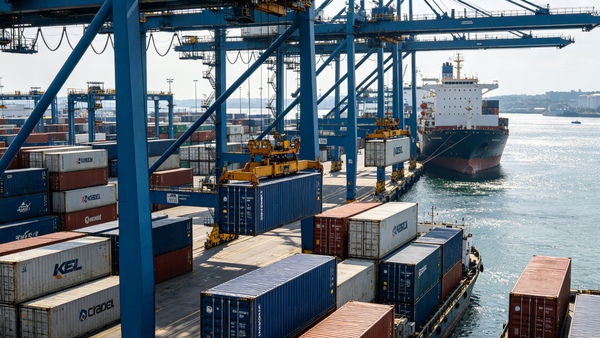
Slower vessel turnaround has also been accompanied by growing container backlogs at ports. Recent data from DHL show that more than 3.7 million TEUs of containers are currently caught in congestion at ports worldwide, with congestion mainly concentrated at ports in Asia and Europe.
When terminal handling capacity cannot keep pace with cargo volumes, the impact extends beyond the port area. Delays can affect the movement of containers from terminals to trucks and rail services, as well as their transfer to warehouses and subsequent stages of transportation.
Strong export demand from Asia has recently added to operational pressure at some major ports. Vessel waiting times and container backlogs are reinforcing each other, making ports an increasingly significant bottleneck in global supply chain operations.
Why Can Capacity Still Be Tight Despite Continued Newbuilding Deliveries?
The global container fleet continues to expand this year, but additional vessels do not necessarily translate into additional effective capacity.
If a vessel spends several extra days waiting because of port congestion, it remains part of the global fleet but cannot complete its next voyage as scheduled. As more new vessels enter the market, delays could partly offset the added capacity if port and landside transportation capabilities do not improve at the same pace.
This helps explain a recent feature of the container shipping market: the global fleet continues to grow, but capacity has not become broadly available across the market.
When Maersk previously raised its full-year 2026 guidance, it also cited strong demand in the Far East and higher freight rates. The company expects global container market volumes to grow by approximately 4% for the full year.
Port Efficiency Is Becoming a Key Capacity Variable
Assessments of container shipping supply and demand have traditionally focused on newbuilding deliveries, fleet size, and vessel recycling. The speed at which ports complete vessel loading and unloading operations and allow vessels to begin their next voyages is now also becoming an important factor affecting effective capacity.
The impact of port congestion on freight forwarders is extending from port waiting times to schedule adjustments. Delays at previous ports, port omissions, and subsequent schedule changes can affect ETDs and ETAs, with knock-on effects on trucking, warehousing, customs clearance, and customer deliveries.
When arranging ocean shipments during the second half of the year, companies should therefore monitor congestion levels at major ports and carriers’ actual schedule reliability, in addition to freight rates and space availability.
With 1.7 million TEUs of vessel capacity tied up by delays and 3.7 million TEUs of containers caught in port congestion, the market is no longer focused solely on the number of vessels available. How quickly vessels can complete their port calls and begin their next voyages is becoming equally important.
Sources
Sea-Intelligence, DHL, and publicly available industry information
Disclaimer
This article has been compiled from publicly available information and is provided solely for industry reference. Please refer to the latest notices issued by carriers and ports for specific information.
Last
CMA CGM Names Shipping Veteran Natasha Griffin North America CEO Following Roles at ZIM and MSC
CMA CGM has announced a leadership change for its North American operations. Natasha Griffin has been appointed CEO of CMA CGM Nor
Next
Series of Incidents at Chattogram Port Involve Five Vessels and Leave Nine Dead as Navigation Risks Rise
Several vessel and ship recycling incidents have recently occurred in and around Chattogram Port, Bangladesh. Between August 14 an

