




The global liner shipping market is undergoing another major reshuffle. Singapore-based carrier SeaLead, once recognized as one of the fastest-growing container shipping companies, has filed for voluntary liquidation following multiple rounds of U.S. sanctions. In just one year, the company saw a sharp decline in both capacity and global ranking, falling from the world’s 13th-largest liner operator to 24th place. The exit of the former high-growth carrier also highlights the growing sanctions compliance risks facing the global shipping industry.
Key Highlights
• Final exit: SeaLead has filed for voluntary liquidation and ceased all shipping operations.
• Sharp capacity decline: From a peak fleet of 52 vessels and around 200,000 TEU of capacity, the company was left with fewer than 10 vessels and less than 10,000 TEU at the liquidation stage.
• Ranking decline: SeaLead fell from 13th place among global liner operators to 24th.
• Key trigger: Three rounds of U.S. OFAC sanctions progressively restricted its operations and disrupted its commercial network.
• Industry warning: Rising geopolitical and compliance risks are increasing the need for freight forwarders and trading companies to strengthen due diligence on carriers and vessel backgrounds.
Escalating Sanctions Force SeaLead Out of the Market
According to Lloyd’s List, The Loadstar, and other industry reports, as well as official announcements from the U.S. Office of Foreign Assets Control (OFAC), SeaLead filed for voluntary liquidation at the end of July 2026 and formally ceased all operations. The company’s exit was not caused by a sudden operating loss, but by the cumulative impact of escalating U.S. sanctions linked to Iran-related shipping activities.
U.S. sanctions against SeaLead were tightened in three stages. In July 2025, the first round targeted 20 related entities and 10 vessels operated by the company, initially restricting its shipping activities. In April 2026, the United States imposed additional sanctions, further limiting its commercial operations. On July 14, 2026, another round of sanctions was announced, further restricting the company’s operational, financial, insurance, and business networks and leaving SeaLead unable to continue normal operations.
Fleet Capacity and Global Ranking Collapse Within a Year
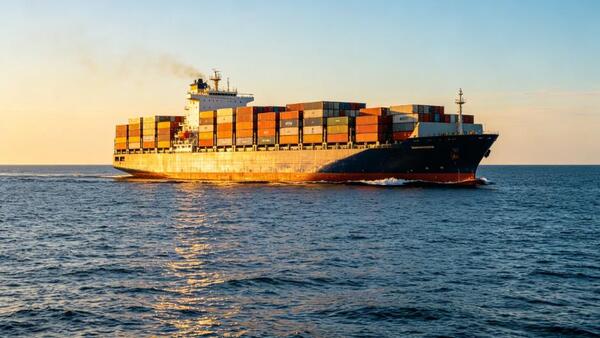
SeaLead had been one of the fastest-growing container carriers in recent years, expanding rapidly through a flexible chartering model and asset-light operating strategy. At its peak, the company operated 52 chartered vessels with total capacity of around 200,000 TEU, serving major trade lanes across Asia, the Middle East, the U.S. West Coast, and the Mediterranean. In 2024, SeaLead was recognized as one of the world’s fastest-growing container carriers, and by 2025 it ranked 13th among global liner operators.
Continued sanctions severely affected the company’s operations. According to industry reports, SeaLead was operating fewer than 10 vessels during the liquidation stage, with total capacity falling below 10,000 TEU. A large number of vessels were withdrawn from service, charter agreements were terminated, and services were sharply reduced, with its U.S. West Coast service among the first major routes to be suspended.
According to The Loadstar, SeaLead itself and parts of its shipping network had links to Iran-related shipping activities and were subject to heightened U.S. sanctions scrutiny. Two vessels reportedly attempted to switch to the Iranian flag but remained affected by the sanctions. The company was unable to reverse the decline in its operations, and its global liner ranking fell to 24th place.
Restrictions Across the Business Chain Turn Compliance Risk Into a Major Threat
SeaLead’s liquidation highlights the vulnerability of shipping companies to geopolitical sanctions. Unlike traditional pressures such as operating losses or excess capacity, the sanctions restricted four critical areas of the company’s business: vessel chartering, U.S. dollar settlement, marine insurance, and access to commercial partners.
Since the United States began intensifying scrutiny of Iran-related shipping networks in 2025, multiple vessels and related entities associated with SeaLead have faced restrictions, repeatedly reducing the company’s global service capacity. Despite its flexible operating model, the company was unable to maintain normal commercial operations under broad sanctions restrictions and ultimately entered liquidation.
Industry Alert: Compliance Risks in Cross-Border Logistics Continue to Rise
The Red Sea crisis, the Russia–Ukraine conflict, and the latest U.S. shipping sanctions indicate that global supply chain risks are extending beyond traditional concerns such as transit times and port security into areas including geopolitical compliance, financial settlement, and commercial relationships. Sanctions compliance has become an increasingly important issue for companies involved in cross-border trade and logistics.
For freight forwarders, trading companies, and shipping companies, the SeaLead case highlights the importance of risk control. As the international trade environment becomes more complex, businesses involving sensitive regions or U.S. dollar settlement should strengthen due diligence on carriers, counterparties, payment channels, and vessel backgrounds to reduce the risk of service suspensions, cargo delays, and settlement disruptions caused by sanctions.
Looking ahead, compliance and risk-control requirements across the global shipping industry are expected to tighten further. Smaller private carriers may face greater operating pressure, while industry resources may continue to shift toward larger carriers with stronger compliance systems. Uncertainty surrounding regional services and smaller niche carriers is also likely to remain.
Sources
Lloyd’s List, The Loadstar, official announcements from the U.S. Office of Foreign Assets Control (OFAC), and publicly available overseas shipping industry information
Timeliness Note
As of August 10, 2026, SeaLead has formally entered voluntary liquidation proceedings and suspended all services.
Disclaimer
The information in this article is sourced from publicly available channels and is provided solely for industry reference. It does not constitute commercial advice, booking guidance, or logistics operating instructions.
Last
Port of La Guaira Fully Resumes Operations as Venezuela Ends Diversions and Carriers Update Discharge Arrangements
Following the disruption caused by the June 24 earthquake, Venezuelan authorities have officially lifted emergency operating restr
Next
Carriers Step Up Expansion in Africa as HMM Launches New GIA India-East Africa Service, Set to Begin in September
Global liner carriers are accelerating their expansion into emerging markets. Following Maersk and Hapag-Lloyd, HMM has announced

