




Shipping risks linked to the Middle East continue to spread. On July 29, fires broke out on two LNG vessels at Damietta Port, a key Mediterranean hub in Egypt. The Egyptian Cabinet later confirmed that the incident was caused by a drone attack. This means that geopolitical conflict has extended from the Red Sea and the Strait of Hormuz to energy ports in the eastern Mediterranean, significantly increasing risks for Mediterranean routes and energy shipping and creating new risk control pressure for freight forwarders handling cross-border logistics in the Middle East.
Key Highlights
• Official Finding: The vessel fires were confirmed to have been caused by a drone attack rather than an accident
• Wider Risk Area: High-risk shipping areas have extended from the Red Sea to Mediterranean energy hubs
• Key Vessels Involved: A US-owned FSRU and an LNG carrier were damaged, placing further pressure on energy shipping routes
• Limited Short-Term Impact: The port remains operational and no casualties were reported, but longer-term risk controls need to be strengthened
Key Information on the Attack at the Port
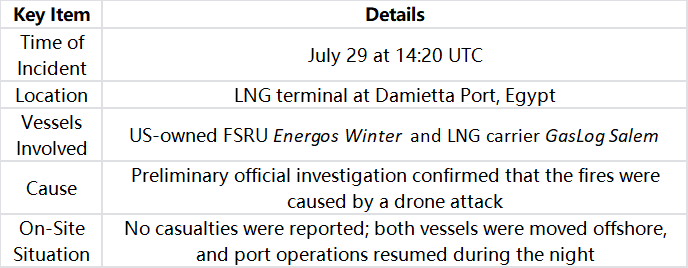
Official Update: Fires Confirmed to Have Been Caused by a Drone Attack
Introduction: The official finding rules out an accidental fire and confirms that energy ports in the Mediterranean have become new targets amid the geopolitical conflict.
In the early stages of the incident, Egypt’s Ministry of Petroleum reported only that vessels in the port area had caught fire and that the situation had been brought under control, without identifying the cause. Maritime security organizations, including UK-based Ambrey, were the first to warn of a possible drone attack. On July 30, the Egyptian Cabinet formally confirmed that the fires had been caused by a drone attack. No organization has claimed responsibility, and the investigation remains ongoing.
At the time of the incident, unloading operations were underway at the LNG terminal. The drone first struck the US-owned floating storage and regasification unit Energos Winter, causing a fire that spread to the nearby LNG carrier GasLog Salem. The vessels sustained impact damage, a minor leak, and localized fires. All personnel were evacuated safely, and both vessels were moved offshore to reduce the risk of a further incident. As conditions on Mediterranean routes remain volatile, freight forwarders may use the Inquiry Board to connect with stable cargo and suitable logistics resources, adjust quotations, and reduce route exposure.
Port Operations Remain Stable, with Limited Short-Term Impact on Routes
Introduction: The incident did not lead to a port shutdown, and the logistics chain remains stable in the short term, although potential risks remain.
Damietta Port is one of Egypt’s key LNG ports and is located close to the northern entrance of the Suez Canal, giving it considerable strategic importance. The attack affected only part of the LNG terminal and did not damage the port’s main facilities or cause a pollution incident. After the fires were extinguished, other berths continued operating normally, and regular port operations resumed that evening. No port closure or navigation restrictions were announced.
Overall, the incident has had little impact on conventional container and bulk shipping routes. It has temporarily increased the perceived navigation risk for energy-related vessels, while Mediterranean logistics operations remain generally stable in the short term.
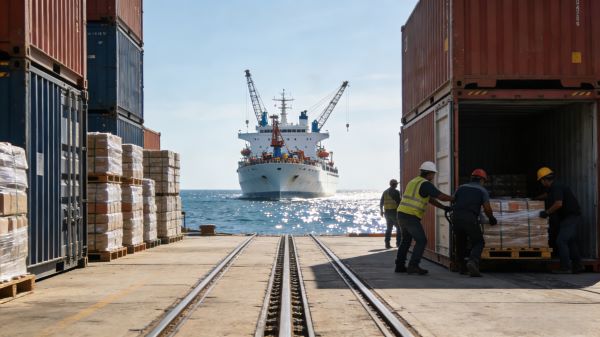
Mediterranean Route Risks Increase as the Shipping Risk Landscape Changes
Introduction: As geopolitical conflict spreads into the Mediterranean, shipping risks are extending from traditional straits to energy ports, requiring freight forwarders to update their risk control approach.
Previously, shipping risks in the Middle East were concentrated mainly in the Red Sea, the Gulf of Aden, and the Strait of Hormuz. Egyptian ports in the eastern Mediterranean had generally been regarded by freight forwarders as safer alternative gateways. This attack has challenged that assumption, as LNG vessels and energy port infrastructure may now also face geopolitical security threats.
Following the incident, international oil prices rose in the short term, while expectations of further escalation in the Middle East increased. Over the medium to long term, war-risk insurance premiums and navigation uncertainty on Mediterranean routes may rise significantly. Transport costs and fulfillment risks for energy cargoes may also continue to increase, changing risk control requirements for routes between the Middle East and the Mediterranean.
Operational Self-Check List for Freight Forwarders
• Have you updated risk control standards for Mediterranean and Egypt routes, with particular attention to LNG and other energy cargo orders?
• Are you monitoring the follow-up investigation and adjusting quotations and shipment contingency plans for the relevant routes?
• Have you reviewed alternative routes in advance to reduce exposure to sudden security risks at eastern Mediterranean ports?
• Have you informed customers of the changing situation and discussed potential additional costs arising from insurance premiums and delays?
Action Summary: Shipping risks have extended to energy ports in the Mediterranean. Freight forwarders should update their risk control standards, closely monitor developments on Egypt and eastern Mediterranean routes, pay particular attention to the transport safety of energy cargoes, and adjust route plans and quotations flexibly to reduce business losses caused by sudden geopolitical risks.
Sources: Egyptian Cabinet, Egypt’s Ministry of Petroleum and Mineral Resources, Ambrey, Xinhua News Agency, and Reuters
Disclaimer: All information is sourced from publicly available channels and is provided for industry reference only. It does not constitute commercial or logistics operational guidance.
Last
Container Shipping Cycle Turns: HMM Pauses Container Ship Expansion and Shifts Investment Toward Energy Shipping
A major strategic change is emerging in the global container shipping market. HMM, the world’s eighth-largest liner operator and S
Next
New Asia-Europe Route: South Korea Launches Its First Commercial Arctic Container Service, with an August Trial Voyage Set to Reshape Europe-Bound Logistics for Freight Forwarders
A new development is taking place in Asia-Europe cross-border logistics. South Korea’s Panstar Line has announced a commercial tri

