




Introduction:
The global container shipping capacity market is entering a period of major change. According to DynaLiners’ latest 2026 Trade Review, containership ordering increased sharply in 2025, while vessel scrapping fell to a record low.
The global containership orderbook has reached 11.93 million TEU, equivalent to 35% of the existing fleet’s total capacity. Red Sea diversions are currently using additional capacity, but the risk of future oversupply remains.
A large number of new vessels will be delivered over the next three years. Freight forwarders should assess the medium- and long-term risks of falling freight rates and excess capacity in advance and adjust their booking, contract and quotation strategies accordingly.
Strong Fleet Expansion in 2025, with the Second-Highest Annual Increase on Record
Following the sharp capacity growth recorded in 2024, expansion of the global containership fleet slowed slightly in 2025 but remained at a historically high level.
By the end of 2025, the global containership fleet had reached 33.688 million TEU across 7,497 vessels.
Net fleet capacity increased by 2.232 million TEU during the year, with a net addition of 306 vessels. This was the second-highest annual increase on record.
The trend toward larger vessels also continued, with average capacity per vessel rising to 4,490 TEU and large vessels accounting for a growing share of the fleet.
New vessel deliveries remained strong. A total of 254 new containerships entered service worldwide in 2025, adding 2.181 million TEU of capacity. The average capacity of newly delivered vessels reached a record 8,600 TEU.
Carriers continued to favor larger containerships. Larger vessels help reduce transportation costs per container through economies of scale. They also support fleet renewal as carriers respond to increasingly strict environmental requirements.
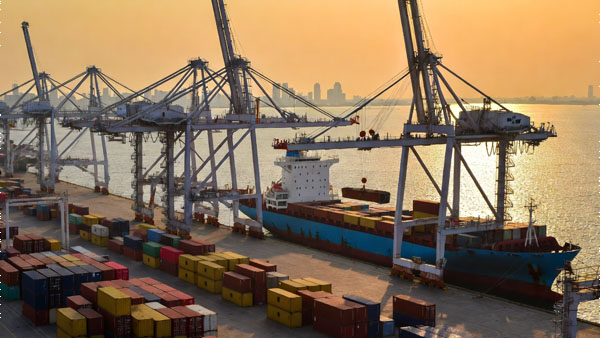
New Vessel Orders Reach Record High as Fleet Renewal Accelerates
Containership ordering was even stronger than vessel deliveries in 2025.
Shipowners worldwide ordered 561 containerships with a combined capacity of 4.772 million TEU, surpassing the previous annual record set in 2021.
By the end of 2025, the global containership orderbook stood at 1,134 vessels with a total capacity of 11.93 million TEU. The orderbook is equivalent to approximately one vessel on order for every three vessels currently in service.
This large volume of ordering is not driven solely by fleet expansion. It also reflects a new cycle of fleet renewal.
Many of the vessels on order are methanol- or LNG-capable dual-fuel ships. Carriers are ordering larger, more fuel-efficient and lower-emission vessels to gradually replace smaller and older ships, upgrade their fleet structures, control costs and meet environmental requirements.
Scrapping Falls to Record Low as Older Capacity Remains in Service
In contrast to the high level of new vessel ordering, containership scrapping fell to a record low in 2025.
Only 14 older containerships were scrapped during the year, the lowest annual total on record.
Under normal market conditions, older vessels with high fuel consumption and operating costs are usually removed from service when shipping capacity becomes abundant.
However, shipping demand remained relatively resilient in 2025. Even older vessels could continue operating commercially, and carriers generally chose to keep them in service rather than send them for demolition.
As a result, older capacity has not been removed from the market, adding to the risk of future oversupply.
Low Idle Capacity as Red Sea Diversions Temporarily Conceal Overcapacity Risks
Despite the large number of new vessel deliveries and continued fleet expansion, global fleet utilization remained high in 2025.
Average idle capacity accounted for only 0.7% of the global fleet, representing 77 vessels and 216,000 TEU. This was one of the lowest idle-capacity levels recorded in recent years.
The main reason was the additional capacity required by Red Sea diversions.
Due to security risks in the Red Sea, many vessels avoided the Suez Canal and rerouted around the Cape of Good Hope. Longer voyages and slower vessel turnover tied up a large amount of capacity.
This temporarily balanced market supply and demand and concealed the underlying risk of overcapacity.
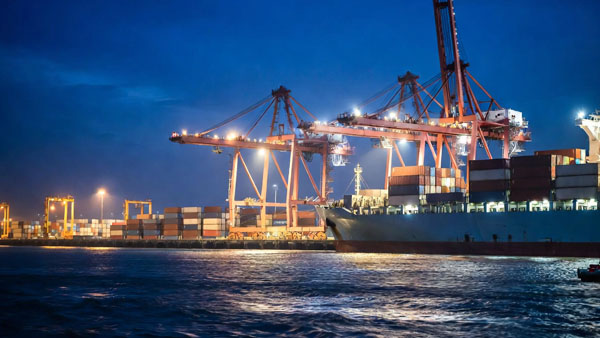
Major Carriers Reach Key Fleet Development Milestones
Several major carriers reached important fleet development milestones during the year.
After taking delivery of the new MSC Salerno, MSC’s operated fleet exceeded 7 million TEU, maintaining its position as the world’s largest container carrier.
CMA CGM took delivery of its first methanol dual-fuel containership, CMA CGM Iron, marking the beginning of a new stage in its operation of green-fuel vessels.
ONE also received ONE Sparkle, its first wholly owned containership, marking an important step in the development of its own fleet.
Capacity Outlook and Recommended Actions for Freight Forwarders
From a freight forwarding perspective, market supply and demand currently appear relatively balanced, and freight rates remain stable. However, freight forwarders should prepare for possible downward pressure on rates between 2027 and 2029.
Overcapacity has been delayed, not eliminated.
The 11.93 million TEU orderbook means that a large volume of new capacity will be delivered over the next three years.
If conditions in the Red Sea improve and vessels return to the shorter Suez Canal route, the capacity currently tied up by diversions will return to the market. Combined with large-scale new vessel deliveries, this could create significant excess capacity and place strong downward pressure on freight rates.
Limited scrapping may intensify future market competition.
Containership scrapping is currently close to a standstill, while older vessels remain in operation.
If market demand weakens as new vessels are delivered in large numbers, both new and older vessels will compete for cargo. This could make the future overcapacity problem more serious than in previous market cycles.
The costs of green vessels may continue to be passed on to the market.
A large share of current orders consists of methanol- and LNG-capable dual-fuel vessels. These vessels generally cost more to build than conventional ships.
Over the long term, vessel construction and environmental compliance costs may be passed on to cargo owners and freight forwarders through ocean freight rates and surcharges. Green shipping costs may therefore become an important part of future freight rate structures.
Overall, geopolitical disruptions are still supporting freight rates in the short term, making a sudden market collapse unlikely. However, medium- and long-term downward pressure is becoming increasingly clear.
When entering into long-term contracts for 2027 and beyond, freight forwarders should consider the expected capacity cycle and carefully manage quotation levels and contract periods.
Industry participants may use the platform’s vessel schedule inquiry function to follow new vessel deliveries and capacity deployment across global trade lanes, assess freight rate trends in advance, and adjust long-term booking and quotation strategies to reduce exposure to market-cycle risks.
Sources
DynaLiners’ 2026 Trade Review and SeasNews
Disclaimer
The information and data contained in this article are sourced from publicly available channels and are provided solely for reference by the global logistics industry. They do not constitute commercial investment advice or logistics operating guidance.
Last
Black Sea Shipping Risks Escalate: Maersk Suspends Services at Ukrainian Fishing Port and Reroutes Cargo to Romania
Introduction:Commercial shipping risks in the Black Sea have continued to rise following a series of attacks in the region. In res
Next
CMA CGM's Emergency Fuel Surcharge to Take Effect August 1,with Headhaul Rates Twice ONE's
Introduction:Global ocean freight surcharges will see a major adjustment in August 2026. Following ONE’s announcement of new Emerg

