




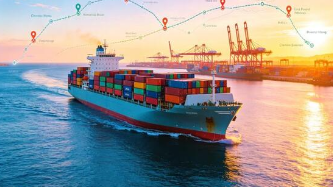
On June 28 local time, Reuters reported that the ultra-large container ship CMA CGM Galapagos, owned by French shipping giant CMA CGM, has successfully navigated the Strait of Hormuz and is currently anchored near Muscat, Oman. The voyage marks an end to nearly four months of suspended shipping operations in the region, drawing renewed market attention to the recovery progress of Middle East shipping lanes.
Public vessel data shows that the CMA CGM Galapagos was built in 2022, with a deadweight of approximately 154,000 tons and a container capacity of 15,254 TEU, classifying it as an ultra-large container vessel (ULCV). Since the escalation of regional conflicts in late February this year, the ship has been stranded in the Persian Gulf and suspended cross-border shipping services. Following its successful exit from the Strait of Hormuz, the vessel will resume its voyage to China and is expected to arrive at domestic Chinese ports in mid-July.
Nevertheless, CMA CGM confirmed that 10 of its vessels remain stranded in the Gulf region. This clearly indicates that while the shipping market at the Strait of Hormuz has shown initial signs of recovery, overall operations have not returned to pre-conflict normalcy, and full market recovery will take considerable time.
Single Vessel Transit Does Not Equal Supply Chain Recovery; Liner Network Still Disrupted
Since the outbreak of the latest Persian Gulf tensions, media coverage of the Strait of Hormuz has largely focused on disruptions to oil tanker traffic. However, the lane restrictions have exerted far-reaching impacts on the container liner shipping ecosystem. Beyond vessel transit disruptions, the crisis has thoroughly disrupted port calls, sailing schedule coordination, equipment turnover, cargo delivery and transshipment arrangements, forcing major carriers to restructure their Middle East shipping networks.
Liner shipping relies on integrated network operations and stable overall operational rhythm, rather than the transit capability of individual vessels. This explains why despite recent movements of vessels leaving the Gulf region initiated by top carriers including Maersk and Hapag-Lloyd, the industry remains cautious about overall capacity recovery.
Route Restoration Lags Behind Lane Reopening
The transit route taken by the CMA CGM Galapagos follows the safest and most operational navigation solutions currently available in the region. This reflects a key industry reality: the reopening of the strait does not trigger an immediate restoration of pre-conflict operational strategies.
Over the past few months, logistics enterprises have widely adjusted their Middle East transportation strategies, adopting alternative port calls, combined sea-land transportation, regional transshipment and optimized inventory distribution. Some temporary contingency measures may evolve into long-term operational arrangements.
CMA CGM’s management previously stated that a full return to pre-conflict conditions in the Strait of Hormuz in the short term is unrealistic. The company has proactively adopted alternative transportation solutions including railway and highway logistics to hedge against regional shipping uncertainties.
Market Liquidity Improves with Persistent Industry Caution
Latest maritime data verifies a gradual rebound in vessel traffic at the Strait of Hormuz. According to maritime intelligence firm Windward, 18 vessels departed from the Gulf on June 27, with one conducting covert operations, while 22 vessels sailed into the region. Vortexa’s data further shows that the region exported 3.9 million barrels of crude oil, with a total crude oil throughput of 4.12 million barrels on the day.
From an operational perspective, the market is currently in a partial recovery phase rather than a full reset. For cargo owners, freight forwarders and shipping carriers, core industry concerns remain focused on four key dimensions: sailing schedule stability, transshipment network restoration, fluctuation of surcharge costs, and sustainability of regional service capacity.
The shipping industry is highly adaptive to market changes, yet every post-crisis recovery is far more complex than the reopening of shipping lanes alone.
Disclaimer: All content is sourced from public channels and serves only as industry reference information.
Last
Philippines Formally Imposes Safeguard Duty on Chinese Cement as Exemption Is Withdrawn, with Guidance for Freight Forwarders and Exporters
Introduction:The Philippines has formally begun enforcing a safeguard duty on cement imported from China. In July 2026, the Philip
Next
South African Importers Alarmed: New PSS Hikes by Maersk and CMA CGM Double Operational Costs
South Africa’s importers and exporters have recently been facing severe operational pressure amid new peak season surcharge adjust

