



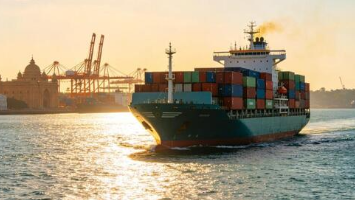
On May 31, the MSC AGAMEMNON VIII made its maiden call at the Port of Koper in Slovenia, marking the official launch of PHOENIX service, the port’s fourth exclusive direct shipping route linking Asia. The route initially operates on a bi-weekly basis and is expected to be upgraded to a weekly service after stable operation.
This new route delivers far more value to Central European freight forwarders than merely adding an extra shipping option. It allows cargo destined for Austria, Hungary, the Czech Republic, Slovakia, southern Poland and the Balkan region to steer clear of perennial congestion at major Northern European hub ports including Hamburg, Rotterdam and Antwerp.
Why Koper Port serves as an ideal congestion-free alternative
As Slovenia’s only maritime gateway, the Port of Koper provides one of the shortest maritime access routes to the inland regions of Central Europe.
Cargo transported via rail from Koper Port takes roughly 24 hours to reach Vienna (Austria), 36 hours to Budapest (Hungary), 48 hours to Prague (the Czech Republic) and 48 hours to Katowice in southern Poland.
By contrast, vessels arriving at Hamburg or Rotterdam often face a 3 to 5-day waiting period for berth availability. Coupled with inland transportation from Northern European ports to Central European destinations, the entire journey usually takes 5 to 8 days longer in total.
Most notably, Northern European ports are frequently disrupted by strikes during contract renewal seasons and severe congestion during peak shipping seasons, making vessel delays a commonplace occurrence. Though smaller in scale than major Northern European ports, Koper Port boasts stable operational efficiency and sound labor relations, free from long-term terminal congestion. It is a more reliable choice for time-sensitive cargo such as auto parts, electronic products, fast-moving consumer goods and pharmaceutical products.
Background of the new PHOENIX shipping service
The PHOENIX service is MSC’s fourth direct Asia route deployed at the Port of Koper. MSC’s existing direct Asia shipping network covering Koper has spanned major Far East export hubs, and the launch of the new PHOENIX service further densifies the frequency of Far East-Central Europe shipping services.
The initial bi-weekly operation shows that MSC is conducting a phased market test. A upgrade to weekly services is highly likely once the cargo volume remains stable. For freight forwarders, this is a golden window to secure shipping spaces in advance and establish long-term cooperative relationships.
At present, MSC’s route network in Koper covers key Far East ports. The launch of the PHOENIX service offers an additional stable and time-predictable entry option for cargo shipped from East China and South China to Central Europe.
Three practical operational tips for freight forwarders
1. Proactively recommend the Koper solution in business quotations
Previously, quotations for Central European shipping routes generally defaulted to ports like Hamburg and Rotterdam. Now you can take the initiative to recommend the new solution to clients: MSC has launched a new direct shipping route to Koper Port, which shortens transit time by at least one week and avoids berth waiting delays. For clients with cargo bound for the Czech Republic, Hungary and Poland, you can check the latest vessel schedules in advance, provide a detailed "Koper direct shipping plus rail transit" solution, and make a comparative chart of timeline and costs with the traditional "Northern European hub port plus trucking" solution for clients’ reference.
2. Arrange trial shipments before large-scale promotion during the route running-in period
The newly launched PHOENIX service is still in the running-in stage. Its on-time performance, the coordination efficiency of local agents and the fluency of rail connection need practical operation to verify. It is recommended to arrange a trial shipment first to observe the stability of vessel schedules and operational coordination, before promoting the service to major clients on a large scale.
3. Adopt congestion avoidance as the core communication selling point
Clients are well aware of the congestion and strike risks at Hamburg and Rotterdam ports, where peak-season congestion often lasts for more than a week. You can inform clients that despite a year-on-year container throughput growth of over 10% at Koper Port this year, its operational efficiency has always remained stable, and suggest clients try the Koper route for their shipments with tangible advantages.
Conclusion
MSC’s decision to launch its fourth direct Asia route at Koper Port reflects the shipping giant’s route diversification strategy, avoiding over-reliance on the congested Northern European port network.
For freight forwarders engaged in Central European shipping business, the industry choice has changed. The core consideration is no longer whether to ship via Hamburg, but to choose between traditional Northern European routes and the emerging efficient Koper Port route.
Last
CMA CGM Steps Up Layout In European Rail Freight To Improve Sea Rail Intermodal Network
According to reports from multiple industry media on June 12, CMA CGM the world’s fourth-largest container shipping line is pushin
Next
COSCO SHIPPING Launches New Poland-Asia Direct Route to Enrich Central European Freight Options
According to multiple shipping media reports, COSCO SHIPPING will launch a brand new Poland Asia direct shipping service coded AEU