




1. What is a Detention Fee?
A detention fee is a charge imposed on the shipper, consignee, or other relevant parties when they retain a shipping container for longer than the free period provided by the carrier or container leasing company. This fee is designed to encourage the efficient return of containers, as they are a valuable asset in the freight logistics chain. The longer a container is detained, the more it disrupts the normal flow of container availability for other shipments.
2. Who Are the Involved Parties?
· Carrier/Container Leasing Company:These entities own the containers and have the right to charge detention fees. Carriers like Maersk and CMA CGM manage large fleets of containers globally. Container leasing companies, on the other hand, lease containers to carriers and may also be directly involved in charging detention fees if the lease terms are violated.
· Shipper/Consignee:The shipper is responsible for the container during the loading process and initial transportation, while the consignee takes over at the destination. If either party holds the container beyond the free period, they can be liable for the detention fee. For example, a small-business shipper may not be aware of the free period and accidentally keep the container longer, resulting in a detention fee.
3. How is the Detention Fee Calculated?
· How is the Free Period Determined?The free period is specified in the shipping contract or container lease agreement. It can vary depending on factors such as the trade route, the type of container, and the carrier's or leasing company's policies. According to industry practices, the free period for a standard dry container on a common trade route may range from 7 to 10 days.
· What is the Rate Structure?Detention fees are calculated based on a daily or hourly rate. The rate depends on the container type, with specialized containers like refrigerated containers (reefers) having higher rates due to their more complex and costly maintenance. For instance, the daily detention rate for a standard 20-foot dry container might be around $30-$50, while for a 40-foot reefer container, it could be $100-$200.
4. How is the Responsibility Divided?
· What are the Contractual Obligations?The shipping contract or lease agreement clearly outlines the responsibilities of each party regarding the use and return of the container within the free period. For example, it may state that the consignee must return the empty container to a designated depot within a specified number of days after unloading.
· What about Notification and Documentation?In some cases, the carrier or leasing company may be required to notify the party holding the container when the free period is approaching expiration. The party in possession of the container should also keep records of the container's usage and any relevant events that may affect the detention period, such as delays due to customs inspections.
5. How is It Applied in the Real-World?
Consider a scenario where a clothing manufacturer in India ships a large order of garments to a retailer in the United States. The shipping contract provides a free period of 7 days for the use of the container. Due to unforeseen delays in the retailer's supply chain, such as a delay in getting the necessary approvals for the import of the clothing, the container is not returned until the 10th day. The carrier, following its standard policy, charges the retailer a detention fee based on the daily rate for the additional 3 days.
Another example could be a consignment of fresh produce being shipped from South America to Europe in a refrigerated container. The consignee, upon receiving the goods, is unable to unload the container immediately due to issues with the receiving facilities. As a result, the container is detained for an extra 5 days beyond the free period. The carrier, in this case, levies a detention fee, which not only compensates for the extended use of the specialized container but also encourages the consignee to resolve such issues promptly in the future.
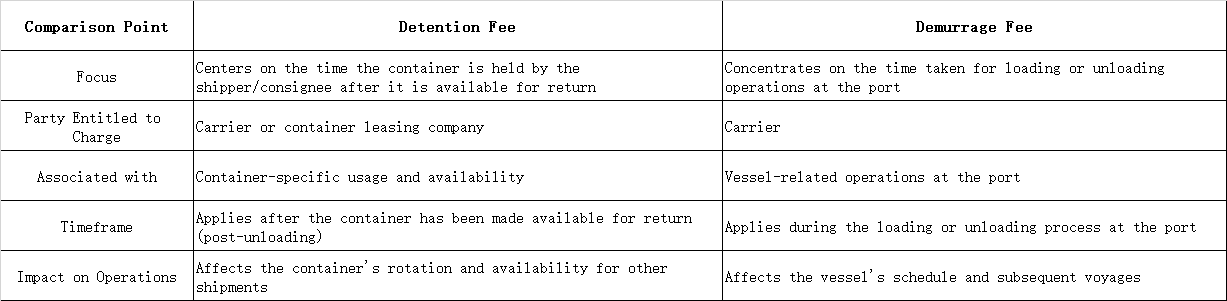
6. What are the Key Differences Compared to Demurrage Fee?
7. What are the Common Misconceptions?
· Is There a Standard Free Period Everywhere?A common misunderstanding is that there is a universal standard free period for all containers and all trade routes. In reality, the free period can vary significantly depending on the carrier, the type of container, and the specific trade lane. For example, a container used for a domestic short-haul shipment may have a different free period compared to an international long-haul shipment.
· Is Only the Consignee Liable?While the consignee is often responsible for returning the container after unloading, the shipper can also be liable for detention fees. For instance, if the shipper fails to load the container within the allotted time or causes delays in the handover process, they may be charged a detention fee.
· Are Detention Fees Negotiable in All Cases?Some may assume that detention fees can always be negotiated. However, while in some cases carriers or leasing companies may be willing to negotiate, especially in situations where the delay was due to unforeseeable circumstances beyond the control of the shipper or consignee, in most standard situations, the fees are strictly applied as per the contract terms.
8. What is the Step-by-Step Process?
· What Should Be Done in Contract Review?
Understand Free Period and Rates:Before entering into a shipping contract or container lease agreement, shippers and consignees should carefully review the terms regarding the free period and detention fees. Freight forwarders can play a crucial role here by explaining the implications of different terms. For example, a shorter free period may come with a lower base freight rate, but it also increases the risk of incurring detention fees.
· What about Monitoring and Planning?
Track Container Usage:Shippers and consignees should closely monitor the container's usage from the moment it is received. They should plan their operations, such as loading, transportation, and unloading, in a way that ensures the container can be returned within the free period. For example, the consignee can schedule the arrival of the container at the destination in such a way that they have sufficient time to unload and return it.
Anticipate Delays:It is advisable to anticipate potential delays and have contingency plans in place. If there are indications that the container may not be returned on time, the party in possession should communicate with the carrier or leasing company as early as possible. For instance, if there are expected customs delays, the consignee can inform the carrier and explore options like extending the free period.
· What Happens in Notification and Resolution?
Receive and Act on Notifications:If the carrier or leasing company sends a notification about the approaching expiration of the free period, the party holding the container should take immediate action. This could involve expediting the return process or negotiating an extension if necessary.
Resolve Disputes:In case of disputes regarding the detention fee calculation or liability, the parties should refer to the contract terms. If the issue cannot be resolved amicably, they may consider alternative dispute resolution methods such as mediation or arbitration.
9. What about Fees and Costs?
· What are the Components of Detention Costs?
Base Rate:The base rate is the fundamental charge per unit of time (day or hour) for detaining the container. It is determined by factors like the container type, its maintenance cost, and the market demand for container services. For example, a high-cube container, which has a larger capacity and may be in higher demand, may have a slightly higher base detention rate compared to a standard dry container.
Incremental Charges:In some cases, there may be incremental charges for detaining the container for an extended period. For instance, after a certain number of days of detention, the daily rate may increase to encourage the prompt return of the container. Some carriers may also charge additional fees if the container is returned in a damaged condition.
· What is the Cost Impact on Different Parties?
For Shippers/Consignees:Detention fees can add a significant cost to the shipping expenses, especially for small-and medium-sized businesses. A study by Armstrong & Associates showed that detention fees can account for up to 10-15% of the total shipping costs for some SMEs. This can impact their profit margins and may force them to re-evaluate their supply chain strategies. In international trade scenarios where profit margins are already tight, such as in the garment or consumer goods sectors, detention fees can be a major burden.
For Carriers/Container Leasing Companies:While detention fees are a source of revenue, carriers and leasing companies also have to manage the administrative costs associated with monitoring container usage, sending notifications, and handling disputes. Moreover, excessive detention can disrupt their container management systems and lead to inefficiencies in the overall supply chain. In cases of high-volume trade routes, the cumulative effect of detention-related disruptions can be substantial, affecting the timely movement of goods across multiple shipments.
10. What are the Expert Tips?
· What Should Freight Forwarders Do?
Educate Clients Thoroughly:Freight forwarders should educate their clients about detention fees in detail. This includes explaining the contract terms, how the fees are calculated, and the potential consequences of exceeding the free period. They can provide real-life examples of detention fee cases to illustrate the importance of adhering to the free period.
Negotiate Favorable Terms:When assisting clients in contract negotiation, freight forwarders should try to negotiate favorable terms regarding the free period and detention fees. They can leverage their knowledge of the market and the client's shipping volume to get better terms. For example, a client with a high-volume of regular shipments may be able to negotiate a longer free period or a lower detention rate.
Provide Monitoring Services:Freight forwarders can offer container-monitoring services to their clients. This can help clients keep track of the container's location, usage, and the remaining free period, allowing them to take proactive measures to avoid detention fees.
· What Should Shippers/Consignees Do?
Plan Efficiently:Shippers and consignees should plan their shipping operations more efficiently. This includes coordinating with suppliers, carriers, and other parties to ensure that the container is used and returned within the free period. For example, they can set up internal processes to ensure that the unloading and container-return procedures are carried out promptly.
Maintain Good Communication:Establishing good communication with the carrier or container leasing company is essential. If there are any issues or potential delays, communicate with them as soon as possible. In some cases, the carrier may be willing to work out a solution, such as waiving the detention fee or extending the free period under certain circumstances.
Inspect Containers Thoroughly:Before accepting or returning a container, shippers and consignees should inspect it thoroughly. This helps to avoid being charged for pre-existing damages and ensures that the container is in good condition for future use.
11. Conclusion and Key Takeaways
Detention fees are a significant aspect of freight logistics, influencing the efficient use and return of shipping containers. By understanding its core elements, real-world applications, differences from demurrage fees, common misconceptions, step-by-step processes, and cost implications, freight forwarders, shippers, and consignees can better manage their shipping operations and avoid unnecessary costs. In the complex and dynamic world of international freight, being well-informed about detention fees is crucial for maintaining a smooth and cost-effective supply chain. Remember, efficient planning, clear communication, and a thorough understanding of contractual obligations are the keys to effectively dealing with detention fees. As the freight industry continues to evolve, staying updated on detention-fee-related best practices will be essential for all parties involved in the container-based shipping process.
Last
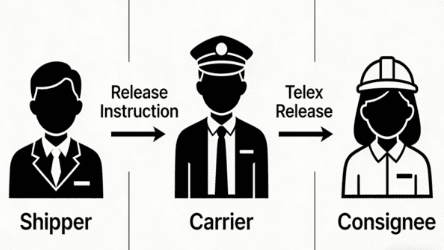
Telex Release Bill of Lading: Simplifying Sea Freight Transactions
1. What is a Telex Release Bill of Lading?A telex release bill of lading is a type of bill of lading where the carrier, upon recei
Next
20ft / 40ft / 40HQ Container Dimensions: A Definitive Guide for Freight Forwarders
1. What are 20ft / 40ft / 40HQ Container Dimensions?The 20ft, 40ft, and 40HQ container dimensions refer to the standardized sizes

