






At the Sea Asia conference in Singapore, CMA CGM's Chief Commercial Officer Vikash Anand presented a paradigm-shifting analysis of current supply chain dynamics. Contrary to popular narratives about manufacturing exodus from China, Anand articulated what he termed "China plus multipolarization" - a fundamental restructuring where China maintains its central role while production networks expand across Southeast Asia.
"While Vietnam and India have captured certain manufacturing segments, China's economic scale continues to expand at 5.2% annually, far outpacing emerging markets," Anand explained. "The essential supply chain equation remains unchanged: global trade requires both China's unparalleled production capacity and Southeast Asia's operational flexibility."
Industry data reveals the concrete manifestations of this trend. Intra-Asian container shipping volumes grew 17% in 2024, with 60% of cargo still requiring routing through Chinese ports for consolidation and redistribution. Modern Post-Panamax vessels, originally designed for trans-Pacific routes, now predominantly service regional networks connecting Chinese industrial hubs with assembly centers in Ho Chi Minh City and Jakarta.
Facing potential trade policy shifts, including possible tariffs on Chinese-built vessels, CMA CGM is implementing a $20 billion contingency plan for U.S. market penetration. This comprehensive strategy includes developing American shipbuilding capabilities, establishing logistics hubs in Boston and Chicago, and leveraging its APL subsidiary's U.S.-flagged fleet. "Our operational flexibility allows complete redeployment of China-U.S. route capacity within 72 hours if required," Anand revealed.
This adaptive approach reflects CMA CGM's broader corporate philosophy of "strategic localization." Through initiatives like its Saudi Arabian joint ventures and Southeast Asian container depots, the shipping giant is constructing a network of semi-autonomous regional operations.
"Future industry leadership will belong to organizations that can most effectively transform their operational models," Anand observed.
The current shipping patterns at Shanghai's Yangshan Port exemplify this new paradigm. Mega-vessels simultaneously transport Vietnamese-assembled electronics, Indian pharmaceutical components, and Chinese-manufactured solar equipment - all destined for coordinated distribution through North American logistics networks. This operational reality underscores how China's supply chain dominance has evolved rather than diminished, maintaining centrality through increasingly sophisticated regional integration.
Last
Maersk Appoints Michelle Grosse as New Canada Region Managing Director/President
March 26– Maersk announced on its official website the appointment ofMichelle Grosseas its newManaging Director/President for Cana
Next
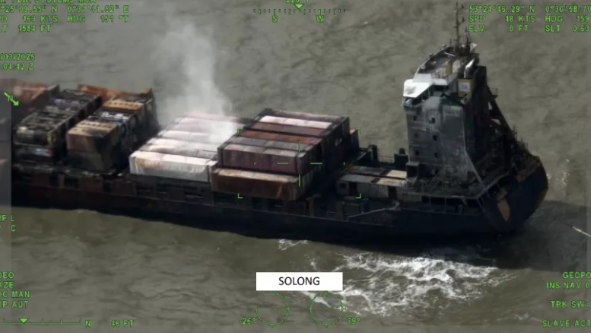
Salvage Operation Underway for Container Ship "Solong" After Collision with Oil Tanker
On March 10, the container shipSolongcollided with the oil tankerStena Immaculate. More than two weeks after the devastating incid

