



The U.S. Trade Representative's Office (USTR) released a statement on September 13 stating that the Biden administration has finalized its decision to raise tariffs on certain Chinese-made products.
Starting September 27, tariffs on Chinese-made electric vehicles will be raised to 100%, solar panels to 50%, and electric vehicle batteries, critical minerals, steel, aluminum, masks, and dockside container cranes to 25%. Tariffs on other products, including semiconductor chips, will also be increased over the next two years.
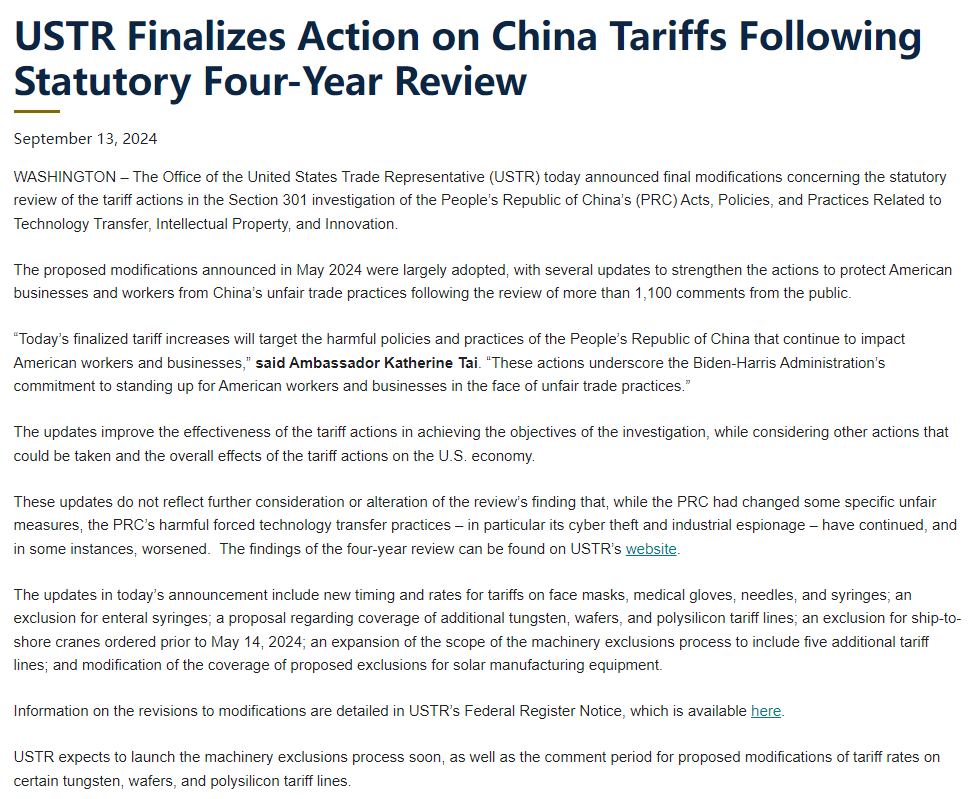
This move has triggered complaints from the industry, claiming that the additional tariffs will disrupt supply chains, especially those involving semiconductor-intensive products, and will not help prevent technology transfer or China's industry dominance. Jason Oxman, president of the Information Technology Industry Council, said in a statement: "Since their implementation, these tariffs have cost U.S. businesses and consumers $221 billion. Today's statement shows that the USTR is again relying on tariffs, a blunt and ineffective tool, without any evidence of their efficacy."
The report also noted that the final tariff decision brought temporary relief to U.S. port operators, who were facing new 25% tariffs on large dockside cranes, a sector dominated by China with no domestic U.S. manufacturers. These tariffs would increase the cost of each crane by millions of dollars. The USTR stated that it would exclude any Chinese port cranes ordered before the May 14 tariff announcement from these tariffs, as long as they are delivered before May 14, 2026.
Despite facing strong opposition from China and widespread international concern, the Biden administration's decision to raise tariffs on certain Chinese-made products highlights its tough stance on foreign trade policy, likely driven by domestic political and economic considerations and concerns over China's economic rise. The specific measures show that the U.S. is imposing varying degrees of tariff increases on products including Chinese-made electric vehicles, solar panels, electric vehicle batteries, critical minerals, steel, aluminum, masks, and dockside container cranes. These products span across high-tech, clean energy, basic industrial raw materials, and pandemic-related supplies, demonstrating the breadth and targeted nature of U.S. tariff policies.
Last
Maersk Announces New Surcharges! Effective October 1
Recently, Maersk's official website released a series of announcements regarding peak season surcharge adjustments, effective from
Next
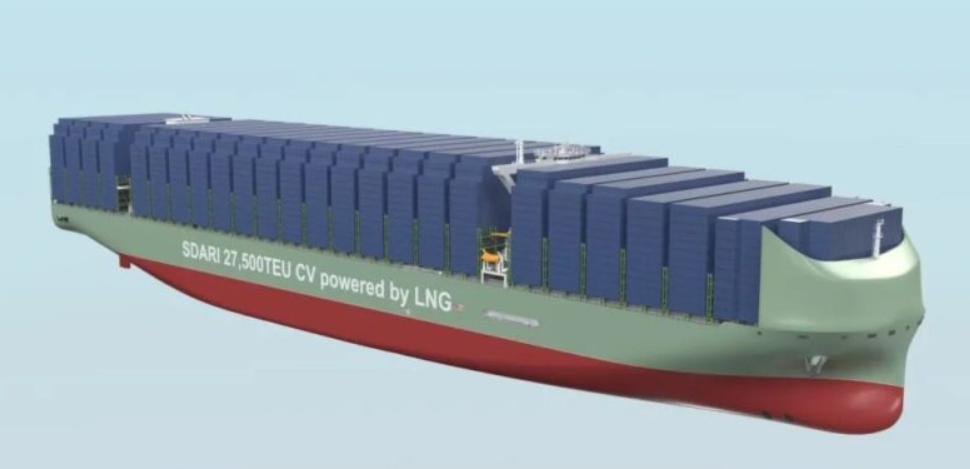
27,500 TEU! China Develops the World' s Largest Container Ship, Setting a New Global Record
A 27,500 TEU container ship, developed by the China State Shipbuilding Corporation’s Shanghai Ship Research and Design Institute,