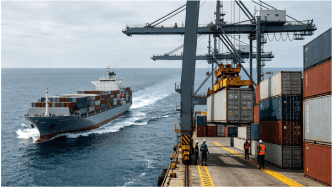
Volatile transpacific freight rates and tightening vessel capacity define the 2025 peak shipping window, prompting global freight forwarders to deploy proactive contracting strategies to mitigate abrupt cost hikes and container rollover risks. Asia-North America transpacific trade lanes consistently face seasonal demand surges, carrier tariff revisions, and policy-induced cargo front-loading throughout mid-to-late annual shipping cycles.
What triggers seasonal volatility in transpacific freight rates
Seasonal fluctuations in transpacific freight rates arise from overlapping peak demand surges, carrier general rate increases, trade policy adjustments, and periodic capacity reallocation across Asia–North America container shipping corridors.
According to the Freightos Baltic Index (FBX) weekly update dated June 10, 2025, transpacific spot rates recorded a sharp upward correction in early June. West Coast FEU rates surged 98% to $5,488, while Asia-US East Coast FEU rates rose 61% month-over-month to $6,410, driven by accelerated pre-peak cargo front-loading activities. These drastic price movements reflect the high sensitivity of transpacific lanes to short-term supply-demand imbalances and scheduled carrier pricing adjustments.
A common mistake is that many forwarders rely solely on historical seasonal trends to assess current market conditions. The 2025 transpacific market deviates significantly from previous years, as temporary U.S. tariff suspension policies have triggered early export cargo front-loading, compressing the traditional August–September peak shipping timeline into mid-year months.
Forwarders should note that staged carrier General Rate Increase implementations further amplify mid-year market volatility. Multiple major liner carriers carried out incremental rate hikes ranging from $1,000 to $3,000 per FEU across June and July 2025, forming sustained upward pressure on baseline transpacific freight rates.
Why 2025 peak season capacity crunches arrive earlier than usual
Policy-driven cargo front-loading and delayed container equipment rebalancing jointly advance peak season congestion and capacity shortages on core transpacific container shipping routes.
According to 2025 Freightos industry analysis, a 90-day conditional suspension of additional U.S. tariffs on Chinese-origin goods triggered large-scale pre-deadline cargo shipment starting in late May. This concentrated cargo wave compressed traditional peak shipment volumes into a shorter time window, resulting in an earlier and more intense capacity crunch across major transpacific trade lanes.
Persistent capacity tightness is exacerbated by lagging fleet and equipment redeployment. Many liner carriers reallocated transpacific vessel tonnage and empty container inventory to alternative trade routes during the slack April–May 2025 period. The gradual pace of fleet re-deployment has failed to keep up with the sudden rebound in export booking volumes.
The recommended approach is to classify mid-2025 as an active peak shipping period instead of adhering to conventional seasonal timelines. Early capacity reservation and rate locking enable forwarders to evade acute space shortages and emergency spot rate surges caused by compressed cargo cycles.
What core risks do forwarders face in the 2025 transpacific peak season
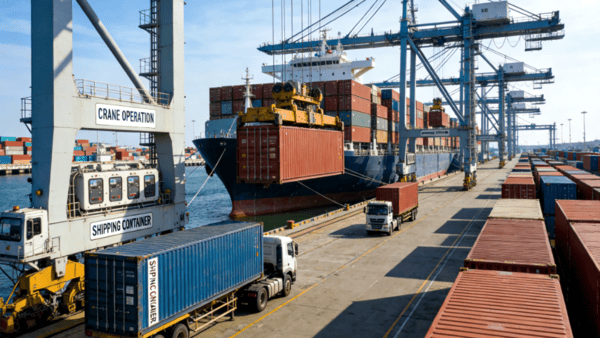
Global forwarding practitioners encounter three major operational risks on 2025 transpacific peak lanes, including unpredictable spot rate fluctuations, heightened container rollover risks, and extended terminal dwell duration.
Uncontrolled spot market rate exposure
Spot market volatility remains prominent throughout the 2025 mid-year peak window. Without fixed contractual pricing protection, ad-hoc spot bookings are fully exposed to carrier general rate increases, peak season surcharges, and market-based premium adjustments. Short-term rate volatility continuously erodes profit margins for long-term client shipment projects.
Elevated container rollover and space rejection risks
Under tight capacity conditions, liner carriers prioritize contracted high-volume cargo during demand spikes. Spot bookings and weakly secured provisional allocations face substantially higher rollover probabilities, disrupting production replenishment schedules and North American retail inventory restocking arrangements.
Exacerbated port congestion and transit delays
Concentrated cargo inflows aggravate terminal congestion at key U.S. West and East Coast hub ports. Accumulated container volumes prolong terminal dwell time, reduce yard turnover efficiency, and generate cascading delays for subsequent vessel berthing and inland drayage distribution processes.
How can forwarders lock in stable transpacific freight rates effectively
Standardized pre-peak contracting mechanisms and flexible booking tactics help forwarders stabilize pricing benchmarks and secure guaranteed capacity amid persistent transpacific market turbulence.
Secure fixed contractual rates in advance: The recommended approach is to sign mid-term contractual pricing agreements one to two months ahead of peak shipping months. Fixed contract rates shield overall shipment costs from sudden spot market surges and scheduled carrier tariff increments.
Adopt hybrid layered booking frameworks: Combine guaranteed contracted space with flexible spot buffer bookings to balance cost control and shipment flexibility. This hybrid operational model is one of the commonly adopted approaches to mitigate peak-time capacity volatility.
Track carrier surcharge timelines dynamically: Monitor official carrier General Rate Increase and Peak Season Surcharge schedules in real time and adjust booking cut-off sequences strategically. Minor timeline adjustments can help shippers avoid substantial per-container cost increments.
Diversify carrier partnership resources: Maintain stable cooperative relationships with multiple mainstream transpacific liner carriers. Diversified carrier resource reserves prevent single-carrier space shortages from disrupting overall shipment arrangements.
What operational adjustments reduce peak season shipment disruptions
Targeted operational optimizations in document preparation, cut-off arrangement, and cargo scheduling effectively mitigate peak season disruptions and improve overall transpacific shipment stability.
Accelerate document submission and customs declaration: Complete shipping manifest filings and commodity certification submissions ahead of standard terminal cut-offs. Proactive document processing reduces terminal hold risks and accelerates vessel loading confirmation during congested peak periods.
Optimize container stuffing and cargo compliance planning: Standardize container loading plans to avoid overweight violations and commodity inspection triggers. Compliant cargo packing and presentation enhance terminal processing efficiency and shorten container dwell time.
Reserve sufficient peak transit buffer time: Incorporate extra lead time into client delivery schedules to accommodate potential port congestion, vessel delays, and temporary blank sailing adjustments.
Monitor real-time lane index data: Refer to updated Freightos Baltic Index and Drewry container index data to identify short-term rate fluctuation trends. Data-driven judgment supports accurate booking timing and client cost forecasting.
What common peak season booking errors affect freight cost stability
Frequent operational errors in peak season booking practices are primary contributors to unnecessary cost increments and capacity losses on transpacific shipping lanes.
Delay fixed contractual rate locking: A common mistake is postponing contractual rate locking in anticipation of market corrections. In the 2025 policy-driven early peak environment, delayed locking exposes shipments to continuous staged tariff hikes.
Over-reliance on spot market procurement: Excessive dependence on spot market bookings fails to provide stable capacity guarantees. Spot cargo typically receives lower priority during periods of capacity saturation.
Neglect cumulative surcharge impacts: Overlooking overlapping costs from general rate increases, peak season surcharges, and congestion fees results in underestimated total logistics expenditure. Single-dimensional rate observation leads to inaccurate client quotation outputs.
Fail to adapt to compressed peak cycles: Adhering to traditional August–September peak preparation schedules cannot match the 2025 advanced cargo surge pattern, leading to rushed bookings and premium spot rate expenditures.
What long-term strategies stabilize annual transpacific lane operations
Systematic long-term operational optimization helps forwarders build resilient transpacific shipping layouts and reduce recurring peak season market volatility.
Establish data-driven rate forecasting systems: Analyze historical Freightos Baltic Index and Drewry index fluctuations, trade policy cycles, and carrier capacity adjustment patterns to formulate quarterly pricing and booking strategies for client contract services.
Implement tiered cargo allocation protocols: Classify client shipments by cargo urgency and shipment volume to prioritize contracted capacity for core long-term projects. Tiered allocation mechanisms improve sustained service stability.
Maintain real-time trade policy surveillance: Track U.S. tariff adjustment announcements and bilateral trade policy updates. Policy shifts remain a core driver of sudden cargo front-loading and transpacific market restructuring.
Optimize dual-port routing diversification: Distribute shipment volumes between U.S. West Coast and East Coast hub ports to disperse congestion pressure. Diversified port selection mitigates regional terminal bottlenecks during peak shipping cycles.
What is the future outlook for transpacific freight market trends
The transpacific freight market will maintain moderate volatility for the remainder of 2025, with rate movements determined by tariff policy extensions, carrier capacity deployment plans, and gradual seasonal demand decay.
According to Drewry mid-year 2025 container market forecasts, transpacific demand may weaken moderately in the second half of 2025, easing the upward rate pressure generated by the mid-year compressed peak surge. Nevertheless, extended tariff adjustment policies will sustain intermittent cargo surges and prevent excessive market cooling.
Major liner carriers continue adjusting vessel deployment and blank sailing arrangements to balance operational profitability and market supply. Tactical general rate increase implementations will sustain orderly market pricing and avoid the severe market downturns observed in oversupplied shipping cycles.
Forwarders should note that volatility will remain a persistent feature of transpacific trade lanes. Proactive rate locking and flexible capacity management will remain essential foundations for stable peak season operational performance.
In summary, accurate pre-peak timing arrangement, standardized booking workflows, data-driven market analysis, and long-term strategic layout effectively stabilize transpacific freight rates, enabling global forwarders to control operational costs, evade peak capacity crunches, and deliver consistent and reliable cross-border logistics services amid seasonal market fluctuations.