






Matson fast boat services provide premium transpacific ocean transportation solutions for time-sensitive US-bound cross-border e-commerce cargoes, delivering stable transit time performance throughout annual holiday shopping peak seasons. This reliable scheduling capability enables global freight forwarders to mitigate peak congestion risks and maintain predictable supply chain lead times.
What are Matson fast boat shipping services for cross-border logistics
Matson fast boat refers to Matson’s premium transpacific liner service tailored for high-priority cross-border e-commerce and commercial shipments between Asian gateway ports and United States west coast terminals.
This accelerated shipping product features fixed weekly vessel rotations, exclusive terminal berthing privileges, and dedicated container handling resources, which differentiates it from conventional transpacific liner services with flexible voyage adjustments. It primarily serves cross-border e-commerce merchants, third-party logistics providers, and freight forwarding firms with stringent delivery timeline requirements.
According to Drewry 2025 transpacific liner performance benchmark data, premium accelerated ocean lanes maintain 18 percent lower schedule volatility than standard container routes during fourth-quarter peak shipping cycles.
A common mistake is overestimating peak-season capacity availability for Matson fast boat services. Many forwarders delay space reservation until the cargo ready date, resulting in rollover risks and extended end-to-end transit lead times.
Why do holiday peaks disrupt transpacific shipping transit stability
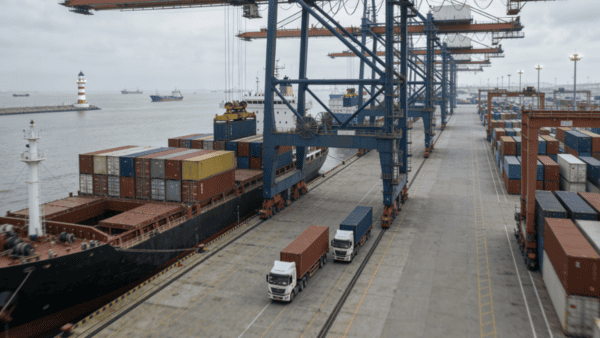
Annual holiday shopping surges generate concentrated cargo volume inflows that exacerbate port congestion, vessel backlogs, and terminal throughput constraints across core transpacific trade corridors.
Major Western shopping festivals including Halloween, Black Friday, Cyber Monday, and Christmas trigger massive pre-stock outbound shipments from Asian manufacturing and warehousing hubs to US consumer markets. Such centralized cargo demand easily surpasses the designed processing capacity of US west coast container terminals, triggering systemic delays for conventional ocean freight services.
According to UNCTAD 2025 global port logistics monitoring report, container dwelling time at major US west coast terminals extends by 16 to 22 percent during the Q4 holiday peak period compared with off-peak monthly averages.
Forwarders should note that conventional liner services lack priority terminal access, making them vulnerable to cascading schedule deviations, while Matson fast boat retains stable transit performance via dedicated terminal operational channels.
How do peak season challenges affect regular ocean freight transit
Terminal congestion, vessel queuing backlogs, and seasonal labor constraints collectively prolong container dwelling duration and undermine schedule reliability for standard transpacific shipping services.
How terminal congestion influences cargo turnover efficiency
Spikes in import and export container volumes during peak seasons overload terminal loading and unloading workflows, restricting overall port throughput and cargo circulation efficiency.
Massive container inflows lead to insufficient yard stacking space, prolonged drayage truck queuing, and delayed container pickup procedures. These terminal bottlenecks cause scheduled vessel departure postponements and directly extend door-to-door logistics lead times for standard ocean freight shipments.
According to Freightos Baltic Index 2025 Q4 peak market analysis, transpacific standard freight rate volatility rises substantially during holiday seasons, accompanied by a notable increase in vessel schedule delay frequency across mainstream liner routes.
How vessel scheduling backlog impacts delivery consistency
Conventional carriers actively adjust voyage frequencies and berthing windows to balance peak cargo supply and demand, reducing overall schedule predictability for spot bookings.
Worsening port congestion creates prolonged vessel berthing queues, generating cumulative voyage delays that cannot be offset through subsequent route acceleration. Such unstable scheduling makes fixed delivery timeline commitments impractical for e-commerce fulfillment arrangements.
A common mistake is applying off-peak shipment scheduling strategies to holiday peak operations. Static planning fails to accommodate dynamic port congestion and capacity fluctuations, easily triggering order fulfillment delays and client disputes.
How seasonal manpower fluctuation restricts terminal operation
Seasonal labor shortages and holiday leave arrangements at US west coast container terminals limit daily container handling throughput and slow down post-arrival cargo circulation.
Intensified customs inspection tasks and concentrated container processing pressure further reduce terminal operational efficiency, extending container dwelling time after vessel arrival. Even with on-schedule ocean transit, delayed inland drayage and warehouse distribution disrupt final delivery timeliness.
Forwarders should note that post-arrival terminal and inland logistics delays account for a large proportion of peak-season lead time extension, requiring comprehensive buffer planning in project scheduling.
What transit time advantages does Matson fast boat show in peak seasons
Matson fast boat stabilizes peak-season transit performance through priority berthing rights, exclusive terminal resources, and fixed voyage scheduling mechanisms on transpacific trade lanes.
Unlike conventional liners that share public terminal resources with massive mixed cargo volumes, Matson fast boat deploys independent terminal operation channels at core loading and discharging ports. This operational privilege effectively isolates congestion interference and maintains consistent port-to-port sailing cycles under high-volume market conditions.
According to 2025 Vizion transpacific liner reliability data, Matson fast boat maintains a 78 percent on-time arrival rate during Q4 peak seasons, outperforming the average 71.2 percent on-time rate of general premium transpacific services.
Forwarders should note that while fast boat services deliver superior stability, overall transit duration still witnesses mild seasonal extension due to industry-wide terminal operational pressure and inspection intensification.
How to compare peak season transit performance of fast boat and standard shipping
Multi-dimensional evaluation of voyage stability, terminal clearance efficiency, and delay resilience helps forwarders select targeted shipping solutions for peak e-commerce cargo replenishment.
Analyze port to port voyage stability: The recommended approach is to review historical voyage deviation records from 2024 to 2025 peak seasons. Matson fast boat exhibits fewer voyage cancellations and shorter average delay durations than conventional transpacific liner services.
Evaluate terminal priority clearance efficiency: Forwarders should note that fast boat containers enjoy priority unloading, yard allocation, and inspection processing, which significantly cuts down container dwelling time in congested US terminals.
Compare end to end fulfillment lead time: A common mistake is evaluating service quality solely based on pure sailing duration. Comprehensive door-to-door lead time indicators reflect the actual peak-season logistics service capacity for e-commerce scenarios.
Verify post-congestion schedule recovery capability: Matson fast boat services restore normal scheduling faster after peak congestion relief, supporting continuous and stable inventory replenishment for cross-border e-commerce warehouses.
What key factors affect Matson fast boat peak transit stability
Vessel capacity deployment, port operational status, and standardized booking execution jointly determine the overall transit stability of Matson fast boat during holiday peak cycles.
Monitor seasonal vessel deployment density: The recommended approach is to track Matson’s official quarterly voyage schedules to identify high-frequency service windows and avoid low-capacity adjustment periods in advance.
Track real-time US port congestion metrics: Forwarders should note that temporary terminal maintenance, policy adjustments, and labor arrangement changes may trigger short-term operational efficiency fluctuations.
Standardize peak-season space locking procedures: A common mistake is delaying booking confirmation and space locking until one week before cargo closing. Peak capacity tension requires advance reservation to secure fixed vessel stowage positions.
Optimize stuffing and customs declaration workflows: Completing pre-declaration, cargo inspection, and standardized container loading in advance eliminates document-related delays and vessel departure postponements.
How forwarders optimize cargo arrangement with Matson fast boat in peak seasons
Data-driven shipment planning and flexible resource scheduling maximize the operational value of Matson fast boat’s stable transit performance for time-sensitive peak e-commerce cargoes.
Classify cargoes by fulfillment urgency: The recommended approach is to allocate pre-holiday promotional inventory and time-critical replenishment cargoes to Matson fast boat services to ensure sufficient stock availability before sales peak windows.
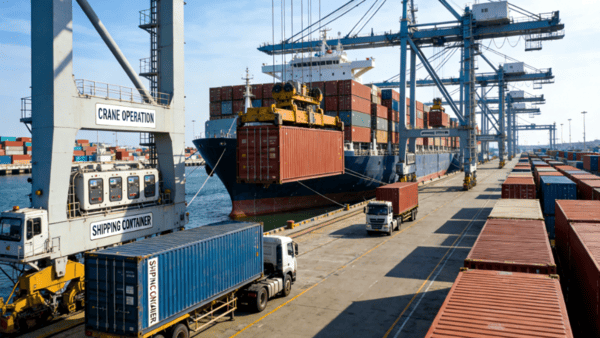
Establish long-term peak booking mechanisms: Forwarders should note that Q4 transpacific premium capacity falls into tight supply three to four weeks ahead of major holidays. Long-term cooperative booking frameworks stabilize capacity acquisition advantages.
Reserve reasonable logistics buffer duration: A common mistake is adopting compact zero-buffer delivery schedules. Reserved buffer days effectively offset minor seasonal transit fluctuations and avoid fulfillment overdue risks.
Sync vessel tracking data with client inventory planning: Real-time vessel positioning, port processing, and customs clearance updates enable clients to dynamically adjust warehouse stocking and sales operation arrangements.
What operational risks remain for fast boat peak season transportation
Matson fast boat maintains robust peak-season performance, yet it still faces controllable risks including capacity tightness and intensified customs inspection uncertainty.
Concentrated pre-holiday cargo demand often exceeds the effective operational capacity of fast boat services, resulting in occasional booking queuing and space allocation adjustments. Meanwhile, US customs authorities strengthen commodity inspection intensity for imported consumer goods in Q4, bringing variable clearance lead time impacts.
According to ITC Trade Map 2025 cross-border consumer goods trade statistics, US import inspection coverage for e-commerce commodities increases by nearly 20 percent during the fourth quarter, generating intermittent clearance delays for transpacific shipments.
Forwarders should note that proactive commodity classification and pre-declaration submission can effectively reduce the probability of prolonged customs detention.
How to avoid common fast boat peak season scheduling errors
Standardized operational protocols help forwarders minimize human-induced errors and stabilize Matson fast boat transit performance during high-intensity peak shipping seasons.
Avoid centralized last-minute booking: A common mistake is intensive short-term booking before vessel closing, which amplifies capacity competition and increases the risk of space rollover.
Eliminate non-standard over-stuffing practices: The recommended approach is to comply with standard container loading and weight distribution specifications to prevent inspection hold-ups caused by irregular stuffing.
Track real-time seasonal voyage adjustments: Forwarders should note that carriers may implement temporary voyage revisions under peak operational pressure, requiring real-time schedule verification before cargo arrangement.
Realize full-link pre-operation coordination: Pre-arrange inland drayage, warehouse loading, and customs declaration procedures to achieve seamless front-end docking for fast boat shipments.
What service value does stable fast boat transit bring to forwarders
Consistent Matson fast boat transit performance during holiday peaks enhances forwarders’ professional competitiveness in the transpacific cross-border e-commerce logistics segment.
Cross-border e-commerce brands prioritize pre-holiday inventory stability and predictable lead time performance. Logistics providers capable of delivering reliable peak-season fast boat solutions can sustain stable long-term B2B cooperative relationships with global sellers.
According to Drewry 2025 global freight service competitiveness assessment, logistics firms with mature premium peak shipping scheduling systems achieve higher client retention rates in transpacific e-commerce logistics businesses.
In summary, mastering the seasonal fluctuation rules of Matson fast boat transit times and adopting standardized peak-season scheduling strategies allow forwarders to mitigate holiday shipping pressures efficiently. Rational deployment of Matson fast boat stable transit resources ensures predictable, low-risk, and high-efficiency inventory replenishment for cross-border e-commerce supply chains throughout intensive shopping peak cycles.
Last
Auto parts logistics setup tips to prevent factory assembly line shutdowns
Auto parts logistics serves as a core subsector of global automotive supply chain management, covering end-to-end transportation,
Next
Hazardous material handling regulations every chemical warehouse team needs to follow
Standardized hazardous material handling is the fundamental operational benchmark for compliant chemical warehousing and cross-bor

