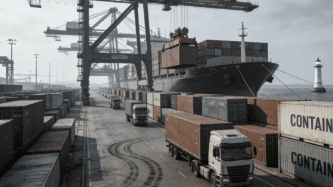
In 2026, the global freight forwarding industry faces unprecedented uncertainty—geopolitical tensions, port congestion, fluctuating freight rates, and evolving consumer demands are reshaping sea freight operations. For forwarders striving to retain clients and stay competitive, a robust International Sea Freight Solution is no longer an option but a strategic imperative to navigate these challenges and ensure reliable, efficient cargo delivery. This article delves into what makes a resilient sea freight solution, why it matters in 2026, and how forwarders can leverage it to thrive in a dynamic global trade landscape.
What Is a Resilient International Sea Freight Solution in 2026?
A resilient International Sea Freight Solution is a comprehensive, customizable suite of services designed to manage the end-to-end sea freight process for freight forwarders. It integrates carrier partnerships, digital tools, and local expertise to adapt to disruptions and optimize efficiency, going beyond basic booking to proactively address challenges like port delays, customs bottlenecks, and route volatility, ensuring consistent service even in uncertain environments.
Why Do Freight Forwarders Need a Resilient International Sea Freight Solution in 2026?
2026’s global trade landscape is defined by volatility, with disruptions becoming more frequent and impactful. A resilient International Sea Freight Solution is critical for forwarders to mitigate risks, meet client expectations, and protect profit margins in an era where inefficiency and delays can lead to lost business and damaged reputations.
What Are the Key Challenges Facing Freight Forwarders in 2026?
Freight forwarders in 2026 grapple with a perfect storm of challenges, each of which can derail sea freight operations and extend transit times. Understanding these challenges is the first step toward building resilience, and a tailored International Sea Freight Solution is the most effective tool to address them.
According to the United Nations Conference on Trade and Development (UNCTAD) 2025 Review of Maritime Transport, global maritime trade continues to face significant disruptions, with tonnage through the Suez Canal dropping by approximately 70% compared to 2023 averages. Security concerns have reshaped shipping routes, increasing the average sailing distance from 4,831 miles in 2018 to 5,245 miles in 2024—adding valuable days to transit times.
What Makes Port Congestion a Persistent Challenge in 2026?
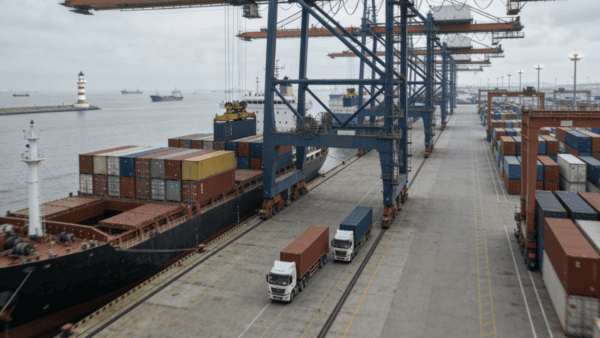
Port congestion remains a persistent issue, evolving from an occasional problem to a long-term challenge. According to data from the Port of Los Angeles (2026 Q1), the port handled 2,388,843 TEU in the first quarter of 2026, with March throughput declining 3% year-on-year to 752,520 TEU due to easing tariff-driven front-loading. While cargo flows remained stable, executive director Gene Seroka highlighted tariff uncertainty, inflation, and higher fuel costs as ongoing pressure points that contribute to port inefficiencies.
Globally, UNCTAD reports that average berthing delays at major ports reached 3.5 days in 2025, up from 3.2 days in 2024, as terminals struggle to handle growing cargo volumes with limited infrastructure. This congestion directly impacts forwarders, as delayed berthing and unloading extend overall transit times and increase the risk of missed client deadlines.
How Does Freight Rate Volatility Impact Forwarders in 2026?
Freight rate volatility further complicates operations. The Freightos Baltic Index (FBX) Q1 2026 update reported a 55% weekly surge in transatlantic freight rates, driven by capacity constraints and peak season surcharges. This forces forwarders to choose between cost-saving but inefficient carriers or premium services that strain client budgets—unless they have an International Sea Freight Solution that balances cost and reliability.
What Role Do E-Commerce Fluctuations Play in Sea Freight Operations?
E-commerce fluctuations add another layer of complexity. According to WeFreight’s February 2026 Market Update, China’s cross-border e-commerce exports fell year-on-year for the first time since January 2022, creating uncertainty in freight demand and rates. For forwarders handling e-commerce cargo, this means adapting to shifting volumes while maintaining fast, reliable transit—a challenge that requires a flexible International Sea Freight Solution.
Freight forwarders need to note that these challenges are not insurmountable. While external factors like geopolitical tensions and weather events are beyond control, a resilient International Sea Freight Solution can help anticipate disruptions, optimize routes, and streamline processes to minimize their impact on transit times and client satisfaction.
How Can Freight Forwarders Build Resilience with International Sea Freight Solutions?
Building resilience in sea freight operations requires a proactive approach, leveraging the right tools, partnerships, and strategies embedded in a comprehensive International Sea Freight Solution. Below are actionable steps forwarders can take to enhance resilience and reduce transit times in 2026.
• Optimize Port Selection to Avoid Congestion Hubs: A robust International Sea Freight Solution provides real-time port data, including berthing delays, throughput, and congestion levels, allowing forwarders to switch to alternative ports when needed. For example, while the Port of Los Angeles reported stable but constrained operations in Q1 2026, nearby Long Beach Port maintained shorter berthing delays (2.3 days on average) during the same period. The recommended practice is to partner with a solution provider with a global network of port partnerships, enabling seamless switching between ports without disrupting overall shipping plans.
• Leverage Optimized LCL Consolidation Services: Less Than Container Load (LCL) shipping often faces longer transit times due to the need to consolidate cargo. A high-performing International Sea Freight Solution offers optimized LCL consolidation, combining small shipments from multiple clients into full containers to reduce waiting times. According to XPO Logistics’ 2025 Global LCL Report, efficient consolidation services can shorten transit times by 7 to 10 days on intra-Asian and transatlantic routes, as forwarders no longer need to wait for enough cargo to fill a container. Freight forwarders need to note that choosing a provider with dedicated consolidation centers at major origin ports is critical to minimizing the time between cargo pickup and container loading.
• Implement Real-Time Visibility and Digital Tracking: Lack of visibility is a major driver of inefficiency, as forwarders cannot anticipate delays or take proactive action until problems arise. A resilient International Sea Freight Solution includes advanced digital tracking tools that provide real-time updates on cargo location, vessel status, and potential disruptions. According to APT Logistics’ 2026 Supply Chain Visibility Report, forwarders using real-time tracking reduce transit time delays by up to 18%, as they can address issues like port congestion or vessel delays before they escalate. The recommended practice is to select a solution with AI-powered predictive analytics that can forecast potential disruptions (e.g., weather events, port strikes) and suggest alternative routes or carriers up to 7 days in advance.
• Simplify Customs Clearance with Local Expertise: Customs delays are one of the most avoidable causes of transit time loss, yet they remain a common pain point for forwarders. An effective International Sea Freight Solution integrates dedicated customs clearance services, staffed by experts with local knowledge of regulations and documentation requirements. According to Oceanside Logistics’ 2026 Customs Compliance Report, 42% of transit time delays stem from incomplete or incorrect documentation—issues that a solution with pre-clearance and document verification services can easily prevent. Freight forwarders need to note that prioritizing solutions with local customs expertise in major destination countries is essential, as regulations vary widely and local knowledge is key to avoiding costly delays.
• Establish Strategic Carrier Partnerships: Carrier reliability directly impacts transit times, so a resilient International Sea Freight Solution should provide access to a network of trusted carriers with consistent on-time performance. According to Wee Logistics’ 2026 Express Shipping Report, express services offered by carriers like Matson and ZIM can cut transit times by 50% compared to standard shipping—for example, Matson’s express service to the U.S. West Coast takes just 12 to 18 days, versus 30 to 50 days for standard shipping. The recommended practice is to partner with a solution provider that has long-term contracts with top carriers (e.g., Maersk, MSC, CMA CGM), ensuring priority booking rights and stable transit times even during peak seasons.
What Are the Main Types of International Sea Freight Solutions, and How Do They Compare in Transit Time?
Not all International Sea Freight Solutions are the same, and choosing the right type for each client’s needs is critical to shortening transit times and maintaining profitability. Below is a detailed comparison of the most common solutions in 2026, based on the latest industry data and carrier performance metrics.
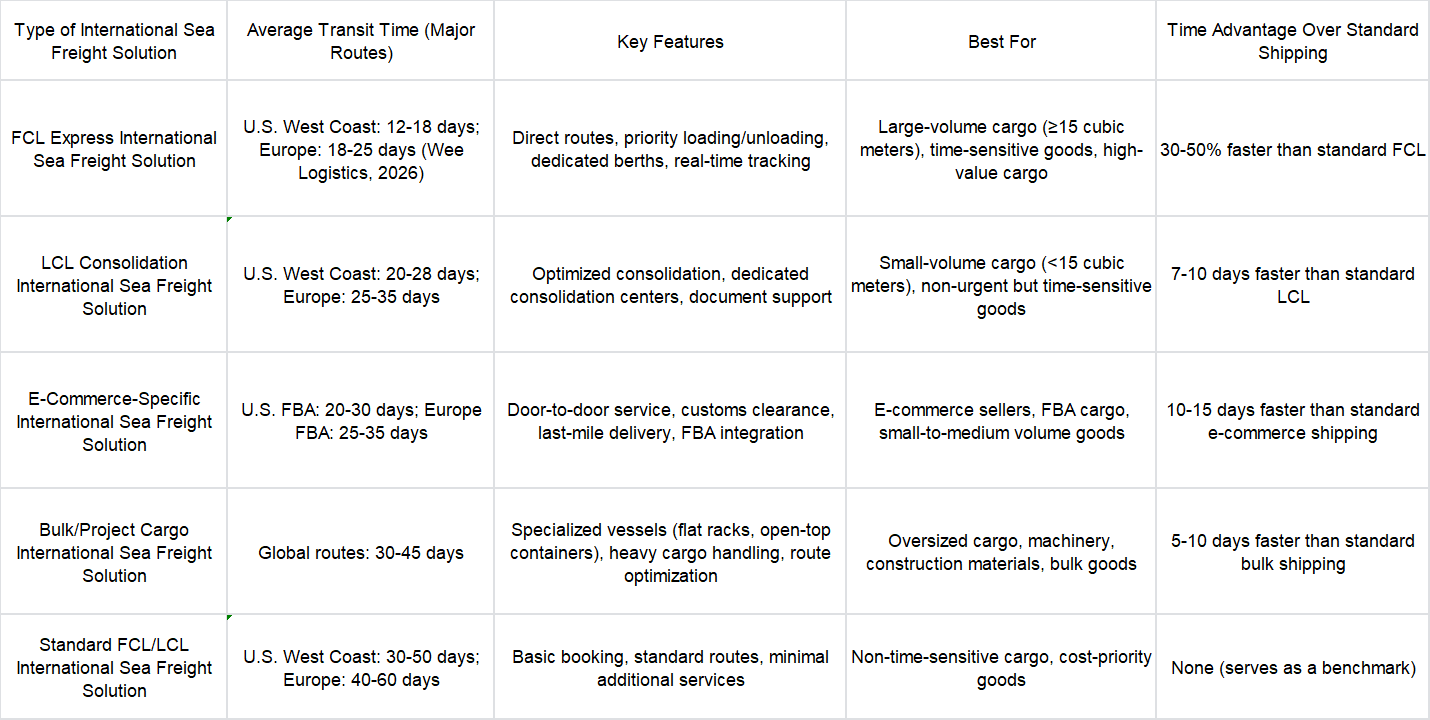
Freight forwarders need to note that the choice of International Sea Freight Solution should align with their clients’ specific needs—prioritizing speed for time-sensitive goods (e.g., seasonal products) and cost for non-urgent cargo. A flexible solution should allow forwarders to switch between types based on each client’s requirements, ensuring optimal transit times without sacrificing profitability.
What Are Common Mistakes Forwarders Make When Choosing an International Sea Freight Solution?
Even with access to advanced International Sea Freight Solutions, many forwarders make avoidable mistakes that extend transit times and damage their business. These errors often stem from insufficient research, over-reliance on cost factors, or failure to align the solution with client needs. Below are the most common pitfalls and how to avoid them.
• Focusing Only on Cost, Ignoring Transit Time Reliability: A common misconception is that the cheapest International Sea Freight Solution is the best option, but this often overlooks carrier reliability and transit time guarantees. According to Freightos’ Q1 2026 Report, carriers offering the lowest rates have on-time performance rates 20-30% lower than premium carriers, leading to longer transit times and higher hidden costs (e.g., demurrage fees). The recommended practice is to evaluate solutions based on a balance of cost and on-time performance, using data from FBX or Drewry to compare carrier reliability.
• Neglecting Documentation and Customs Compliance: Many forwarders treat documentation as an afterthought, but incomplete or incorrect paperwork is the leading cause of customs delays. Oceanside Logistics’ 2026 Customs Compliance Report notes that 42% of transit time delays result from documentation errors—issues that a well-designed International Sea Freight Solution can easily prevent. Freight forwarders need to note that selecting a solution with dedicated document support and pre-clearance services is critical to ensuring compliance with local regulations and avoiding delays.
• Overlooking Route Optimization and Alternative Ports: Forwarders often stick to familiar routes and ports, even when they face severe congestion. According to UNCTAD’s 2025 Review of Maritime Transport, ships rerouting around the Cape of Good Hope instead of the Suez Canal add 2-3 weeks to transit times, yet many forwarders fail to explore alternative routes until it’s too late. The recommended practice is to use a solution with real-time route optimization tools that suggest alternative ports and routes based on congestion levels and transit time estimates.
• Failing to Leverage Digital Tools for Visibility: Many forwarders still rely on manual tracking and communication, leading to delays in identifying and resolving issues. APT Logistics’ 2026 Supply Chain Visibility Report found that forwarders using real-time tracking tools reduce transit time delays by 18% compared to those using manual methods. Freight forwarders need to note that prioritizing solutions with end-to-end visibility, predictive analytics, and automatic alerts for potential disruptions is essential for proactive problem-solving.
• Not Partnering with Solution Providers with Local Expertise: Customs regulations, port processes, and carrier networks vary by region, and a lack of local expertise can lead to significant delays. For example, forwarders shipping to Asia often face cargo detention for weeks due to complex customs processes in China or Japan when they lack local support. The recommended practice is to choose an International Sea Freight Solution provider with local offices or partners in major origin and destination countries to ensure smooth operations and faster customs clearance.
What Key Factors Should Forwarders Consider When Selecting an International Sea Freight Solution?
Selecting the right International Sea Freight Solution is a critical decision that impacts every aspect of a forwarder’s business, from transit times to client satisfaction. To make an informed choice, forwarders should evaluate solutions based on the following key factors, which directly influence their ability to shorten transit times and optimize operations.
• Global Carrier Network and Capacity: A strong International Sea Freight Solution should partner with top carriers (e.g., Maersk, MSC, CMA CGM) and secure priority capacity during peak seasons. According to Freightos’ Q1 2026 Update, carriers that provide dedicated capacity to solution providers offer transit times 15-20% faster than other carriers. Freight forwarders need to note that asking potential providers about their carrier partnerships, contract terms, and capacity guarantees is essential to ensuring access to berths even during high-demand periods.
• Digital Capabilities and Visibility: The solution should include advanced digital tools, such as real-time tracking, predictive analytics, and automated document processing. These tools not only reduce manual work but also allow forwarders to anticipate delays and take proactive action. APT Logistics recommends choosing a solution with AI-powered predictive tools that can forecast port congestion and weather-related delays up to 7 days in advance.
• Customs Expertise: Look for a solution with dedicated customs experts who have local knowledge of major markets. According to Oceanside Logistics’ 2026 Customs Compliance Report, solutions with local customs support reduce clearance times by 30-40% compared to those without. The recommended practice is to verify a provider’s expertise in the destination countries of your clients’ cargo, including their understanding of local regulations, tariffs, and documentation requirements.
• Flexibility and Scalability: The International Sea Freight Solution should be flexible enough to adapt to changing client needs, whether switching between FCL and LCL, adjusting routes, or handling special cargo (e.g., refrigerated goods, dangerous goods). According to the World Trade Organization (WTO) Q1 2026 Update, global merchandise trade is expected to grow by 1.1% in 2026, so forwarders need a solution that can scale with their business. Freight forwarders need to note that selecting a provider that offers customized solutions allows them to tailor services to each client’s unique needs.
• Customer Support and Response Speed: In the event of disruptions (e.g., vessel delays, port strikes), forwarders need a solution provider with 24/7 customer support to quickly find solutions. The recommended practice is to test a provider’s support response time before partnering, ensuring they have dedicated account managers who understand your business and can provide personalized assistance.
How Can Forwarders Measure the Impact of an International Sea Freight Solution on Transit Time?
To ensure an International Sea Freight Solution is effectively shortening transit times, forwarders need to track key metrics and measure performance over time. This not only helps identify areas for improvement but also demonstrates value to clients. Below are the key metrics to monitor, along with industry benchmarks for comparison.
• On-Time Delivery Rate: This is the percentage of cargo delivered within the agreed transit time. According to industry benchmarks (Drewry, 2026), top forwarders using optimized International Sea Freight Solutions achieve on-time delivery rates of 85-90%, compared to the industry average of 65-70%. The recommended practice is to track this metric monthly and work with your solution provider to address gaps—for example, exploring alternative carriers or ports if on-time performance is low on a specific route.
• Average Transit Time per Route: Monitor average transit times for major routes (e.g., Asia-U.S. West Coast, Europe-North America) and compare them to pre-solution averages. According to Wee Logistics’ 2026 Express Shipping Report, forwarders using express International Sea Freight Solutions reduce average transit times on major routes by 30-50%. Freight forwarders need to note that using the solution’s tracking tools to identify routes with longer-than-average transit times and working with the provider to optimize them is key to continuous improvement.
• Customs Clearance Time: Track average clearance times at major destination ports. The industry benchmark for efficient clearance (Oceanside Logistics, 2026) is 1-2 days for compliant cargo; times exceeding this indicate a need for improvement. The recommended practice is to work with your solution provider to streamline documentation processes and leverage pre-clearance services to shorten clearance times.
• Disruption Rate: This is the percentage of cargo affected by delays (e.g., port congestion, vessel breakdowns). According to UNCTAD’s 2025 Review of Maritime Transport, forwarders using proactive International Sea Freight Solutions with predictive analytics have disruption rates 25% lower than those using traditional methods. Freight forwarders need to note that analyzing the root causes of disruptions and working with the provider to implement preventive measures—such as using alternative routes during peak congestion—can further reduce delays.
Conclusion: A Resilient International Sea Freight Solution Is Your Key to Navigating 2026
In 2026’s volatile global trade environment, freight forwarders can no longer rely on outdated, inefficient sea freight processes. Transit time delays damage client relationships, erode profit margins, and weaken competitive advantage—making a resilient International Sea Freight Solution a strategic investment. By understanding the root causes of delays, leveraging advanced digital tools, building strategic carrier partnerships, and avoiding common pitfalls, forwarders can significantly shorten transit times, improve operational efficiency, and thrive in a dynamic market.
According to the WTO’s Q1 2026 Update, global merchandise trade is expected to grow by 1.1%, and UNCTAD notes that maritime routes are becoming longer and more complex—heightening the need for optimized sea freight solutions. For forwarders, partnering with a provider that offers a comprehensive, flexible International Sea Freight Solution—integrating route optimization, digital visibility, customs expertise, and a reliable carrier network—is the key to overcoming 2026’s challenges and delivering faster, more reliable service to clients.
By prioritizing a resilient International Sea Freight Solution to optimize transit times, forwarders not only meet client expectations but also drive long-term business growth in an increasingly dynamic global trade landscape. Now is the time to invest in a customized solution—before competitors do—and position your business as a trusted partner for efficient, reliable sea freight operations in 2026 and beyond.