




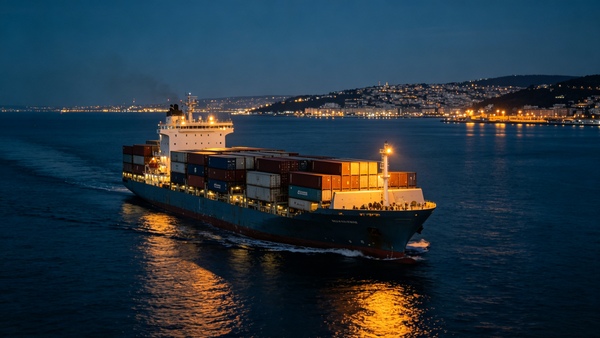
Korea to Europe ocean freight constitutes a vital logistics channel for cross-border transportation of high-value electric vehicle (EV) components, requiring standardized carrier service vetting to secure stable contractual shipping cooperation. South Korea serves as a major global supplier of EV batteries, motor assemblies, and automotive semiconductor components, with European automobile manufacturers relying heavily on consistent ocean freight supply chains to sustain regional production and market distribution operations. Unlike general containerized cargo, EV components feature high unit value, precise structural design, and stringent environmental and vibration resistance requirements, making systematic carrier service string verification a fundamental prerequisite for steady contract-based shipping collaboration.
What unique logistics risks affect EV component shipments on Korea-Europe ocean lanes?
Ocean transportation of EV components between Korea and Europe involves distinct operational risks that do not apply to conventional container cargo shipments. These precision-engineered automotive parts are susceptible to moisture erosion, mechanical vibration, ambient temperature fluctuations, and irregular cargo handling, all of which may lead to functional damage and substantial financial losses for shippers and forwarding enterprises. Fluctuating global shipping conditions in recent years have further elevated operational risks for high-value EV component cargo on mainstream Asia-Europe trade routes.
Route disruption and transit cycle extension risks
According to UNCTAD 2024 industry monitoring data, persistent geopolitical uncertainties and Red Sea navigational disruptions have triggered large-scale route rerouting for Asia-Europe container vessels. Such adjustments have increased average voyage distances for Korea-Europe sailings and prolonged overall transit durations by 7 to 14 calendar days for most conventional routes. Extended ocean transit cycles raise the probability of performance degradation for temperature-sensitive EV battery units and delicate electronic assembly components, which demand stable storage conditions throughout shipping.
Freight rate fluctuation and cost instability risks
Drewry 2024 freight market analysis indicates that spot rate volatility on Far East-to-Europe container lanes has risen notably year-on-year, creating unpredictable cost variations for long-term contractual freight arrangements. For forwarding enterprises focusing on Korea-Europe EV component shipping, unregulated rate fluctuations can disrupt pre-set client quotation frameworks and compress controllable profit margins if no fixed contractual rate clauses are in place.
A common mistake is that numerous medium and small-sized freight forwarders adopt general container shipping operational standards for EV component transportation, failing to accommodate the customized service requirements of specialized high-value cargo. This operational oversight frequently results in unplanned shipment delays, minor component structural damage, and non-compliance with European automotive import inspection protocols, further causing customs clearance hold-ups and additional regulatory penalty charges. Forwarders should note that European Union automotive logistics regulations mandate traceable temperature records and vibration-stable transportation documentation for all imported core EV components, which need validated carrier service capabilities as contractual supporting proof.
Why does structured carrier service vetting benefit contractual EV component shipping?
Structured carrier service string vetting is a systematic evaluation mechanism covering multi-dimensional operational capacities of ocean carriers, designed to mitigate supply chain risks for contractual Korea-Europe EV component freight shipments. The evaluation framework encompasses route operational stability, specialized cargo handling proficiency, professional equipment allocation, and comprehensive after-sales service mechanisms, all of which exert direct influence on shipment safety and delivery punctuality.
Supply chain stability support for automotive just-in-time production
The global automotive industry widely adopts just-in-time production models, which leave minimal tolerance for logistics disruptions and shipment delays. Stable carrier service performance has become a core competitive advantage for freight forwarders serving Korean EV component exporters and European automotive manufacturing clients. According to WTO 2024 official trade statistics, Korea’s annual export volume of EV components to European markets exceeds $18 billion, accounting for over 22% of the country’s total automotive accessory export volume to Europe. Such large-scale and high-value cross-border trade necessitates standardized, auditable carrier vetting procedures to sustain long-term contractual shipping stability.
Contractual risk control and dispute reduction value
Forwarders should note that ambiguous service clauses in traditional ocean freight contracts represent a key trigger for freight disputes and cargo loss incidents in EV component logistics. Most conventional shipping contracts only define basic container transportation obligations, without detailed provisions for specialized cargo protection measures, delay liability compensation, and abnormal scenario handling protocols. Thorough vetting of carrier service strings enables forwarders to refine contractual terms, clarify service scope boundaries, and transfer operational risks in a standardized manner. The recommended approach is to integrate carrier service qualification verification into pre-contract due diligence procedures, rather than conducting remedial inspections after freight disputes occur.
Which core service strings require verification for Korea-Europe EV component freight?
Targeted vetting for EV component ocean freight services covers six interrelated service dimensions, including equipment configuration, on-site operation, route scheduling, customs compliance, cost risk control, and after-sales support. Each dimension plays a vital role in safeguarding the safety, timeliness, and regulatory compliance of cross-border EV component shipments from Korea to Europe.
Tailored container equipment configuration: Forwarders need to verify that cooperating carriers deploy dedicated dry van containers equipped with moisture-proof liners, shock-absorbing padding, and real-time temperature monitoring systems. EV battery modules and precision motor assemblies are not suitable for loading in aging ordinary containers, as uneven internal structures and insufficient sealing performance may trigger cargo damage during long-haul ocean voyages.
Consistent fixed route scheduling capacity: Practitioners are advised to check carriers’ weekly fixed sailing frequency from major Korean export ports such as Busan and Incheon to core European hub ports including Rotterdam, Hamburg, and Le Havre. Per UNCTAD 2024 port operational data, container shipments via fixed scheduled routes maintain relatively higher on-time delivery ratios compared with flexible temporary routes, supporting steady European automotive production cycles.
Specialized cargo handling qualifications: Forwarders should confirm carriers hold valid international certification for handling electronic and automotive precision cargo. Terminal teams with professional operational qualifications can avoid rough loading and unloading behaviors, while standardized cargo stowage protocols reduce component extrusion and vibration damage during vessel navigation.
EU customs compliance service capability: It is essential to verify carriers can provide complete cargo documentation support and professional EU import compliance guidance. EV component imports into the European Union require rigorous CE certification verification and environmental declaration filings, and qualified carrier teams can assist forwarders in streamlining customs clearance processes and avoiding regulatory penalties.
Controllable freight cost adjustment mechanism: Evaluate the rationality of carriers’ contractual fixed-rate clauses and market fluctuation adjustment rules. In light of persistent freight rate volatility on Asia-Europe lanes recorded in Freightos Baltic Index 2024–2025 datasets, long-term fixed-rate contractual frameworks help forwarders stabilize cost budgets and maintain consistent client quotation systems.
Standardized cargo insurance and compensation clauses: Review the coverage scope of carrier-provided cargo insurance, focusing on compensation standards for cargo physical damage, shipment delay losses, and financial losses caused by abnormal route rerouting. Explicit insurance terms help reduce economic losses arising from unforeseen shipping disruptions.

How to execute standardized vetting workflows for carrier service strings?
A standardized multi-step vetting workflow allows freight forwarders to screen qualified ocean carriers efficiently and optimize contractual service agreements for EV component ocean freight. The complete workflow combines documentary verification, data benchmark analysis, and historical shipment performance assessment.
Complete preliminary qualification document auditing: Collect and verify carriers’ valid route operation licenses, specialized cargo handling credentials, port terminal cooperation certifications, and formal insurance underwriting documents. Screen out carriers with incomplete qualification materials or expired certifications at the initial cooperation stage.
Analyze historical shipment performance metrics: Compare carriers’ 2024–2025 operational data on Korea-Europe lanes, including on-time delivery ratios, cargo damage frequencies, and exception handling response efficiency. Many forwarders prioritize carriers with cargo damage ratios below 0.3% and on-time delivery rates above 92% for stable long-term contractual cooperation.
Conduct on-site operational capacity verification: Inspect carriers’ terminal operational procedures, daily container equipment maintenance conditions, and staff professional proficiency at key Korean departure ports. On-site field verification helps identify discrepancies between carrier service commitments and actual on-site execution quality.
Optimize contractual service string provisions: Supplement and revise detailed service terms in formal freight contracts based on vetting results. Clarify unified service execution standards, liability division principles, delay compensation rules, and abnormal scenario handling mechanisms to standardize carrier service behaviors.
A common mistake is that many forwarders prioritize low freight rates during carrier selection while neglecting the matching degree between carrier service strings and specialized EV component cargo requirements. Low-cost yet non-specialized shipping services may generate hidden operational costs, including component replacement fees, customs regulatory fines, and client order compensation losses, which often offset the savings from reduced freight expenses. Forwarders should note that sustained service reliability and guaranteed cargo safety serve as core foundations for long-term Korea-Europe EV component freight cooperation.
Amid ongoing global shipping uncertainties and increasingly stringent European automotive logistics regulatory standards, refined and standardized vetting of ocean carrier service strings remains a critical operational step for high-value EV component cross-border transportation. Data-driven carrier screening, standardized contractual term formulation, and systematic service optimization continuously enhance the operational stability and sustainable profitability of Korea to Europe ocean freight businesses for global forwarding enterprises, supporting steady and orderly operation of cross-border automotive supply chains.
Last
Scheduling temperature controlled pharmaceutical shipments smoothly on premium flights running from europe to middle east air hubs
Europe to Middle East air corridors form a vital logistical backbone for temperature-controlled pharmaceutical air freight, connec
Next
Balancing transit speed variations across alternative transshipment route strings to lower your average china to brazil logistics freight cost
Many global freight forwarding enterprises fail to adjust route strategies based on transit speed differences, which gradually rai

