




Latin America Gateways cover major container entry ports and customs clearance hubs that regulate cross-border tariff implementation and tax settlement for inbound international shipments. These regional entry points operate under diversified national fiscal frameworks, resulting in inconsistent calculation criteria that affect freight cost budgeting, customs clearance cycles, and end-to-end supply chain planning for global forwarders. Continuous regional trade policy revisions have adjusted tariff brackets and customs valuation standards across mainstream Latin American container entry hubs in recent years.
What core tax and tariff components apply to Latin American container imports
Latin American container import fiscal frameworks consist of multi-tiered charge items that jointly determine the total landed cost of inbound containerized cargo. Standard components include statutory import duties, value-added taxes, and conditional administrative charges that vary by jurisdiction and port gateway.
Import duty is a baseline fiscal levy imposed on the customs declared value of cross-border imports at regional container gateways. Most regional authorities adopt ad valorem calculation methods, with applicable rates determined by HS code classification and prevailing bilateral or multilateral trade agreements. According to WTO 2024 tariff profile data, Latin American economies maintain differentiated MFN duty schedules, with tariff brackets for manufactured goods generally lower than those for agricultural commodities across regional entry points.
Value-added tax represents a recurring secondary fiscal charge after import duty assessment. Most Latin American jurisdictions compute VAT based on the aggregated value of CIF shipment cost and verified import duty amounts, instead of relying on pure commodity transaction value. This compound calculation mode raises overall landed cost and requires meticulous data verification during forwarder quotation and budgeting procedures.
Multiple conditional administrative charges supplement core tariff items at local gateways. Authorized customs authorities impose processing fees, statistical levies, and port infrastructure maintenance charges for container clearance procedures. These variable incidental charges are frequently omitted from conventional costing models, causing measurable margin fluctuations for cross-border freight service contracts.
A common mistake is that many forwarding practitioners calculate only basic import duty while neglecting compound VAT assessment and auxiliary administrative levies. Incomplete fiscal item coverage leads to inaccurate client quotations and unplanned cost overruns during formal customs clearance.

How do tariff calculation rules differ across major national gateways
Individual Latin American countries implement independent customs valuation rules and tariff calculation mechanisms for containerized imports, forming differentiated operational standards at respective maritime entry gateways. Policy divergence mainly appears in valuation benchmarks, duty exemption thresholds, and special trade regime clauses.
What calculation standards apply at Mexican container gateways
Mexican container entry hubs enforce rigorous tax identification validation and updated tiered fiscal regimes for inbound commercial shipments. Per 2025 Mexican Customs Service regulatory updates, simplified regime shipments with declared values below USD 2,500 adopt a 33.5% composite fiscal rate, replacing the former 19% composite rate for low-value containerized cargo.
Valid RFC tax registration credentials influence the total fiscal liability for commercial import shipments. Cargo processed without compliant RFC documentation incurs combined withholding taxes and standard VAT charges, generating approximately 36% additional fiscal costs based on declared cargo value. This regulatory provision applies to container clearance operations at the Port of Manzanillo and other Mexican Pacific and Atlantic container gateways.
What calculation standards apply at Brazilian container gateways
Brazilian container gateways operate with adjustable duty brackets and dynamic de minimis exemption policies for inbound container shipments. Based on 2026 preliminary federal fiscal amendments from the Brazilian Ministry of Finance, commodities valued under USD 50 qualify for federal duty exemptions, while higher-value goods follow graded tariff schedules aligned with official HS code categorization.
Brazil’s import fiscal system integrates multi-level statutory charges, including federal import duty and state-level ICMS circulation tax. Superimposed federal and state taxation mechanisms increase the complexity of landed cost accounting for container cargo cleared via the Port of Santos and other Brazilian regional entry hubs.
What calculation standards apply at Ecuadorian and Central American gateways
Ecuador maintains stable MFN tariff schedules with clear classification distinctions between industrial and agricultural commodities. According to 2025 trade data published by the U.S. International Trade Administration, the average tariff rate for industrial goods stands at 10.2%, while agricultural commodity tariffs average 17.4%, supporting structured HS-based tariff computation at local container gateways.
Central American jurisdictions implement transparent fiscal structures with fixed VAT ratios and standardized exemption thresholds. Nicaragua levies 15% VAT on the aggregated value of CIF pricing and applicable import duties, with a USD 200 de minimis threshold that exempts low-value shipments from full fiscal assessment.
Forwarders should note that universal tariff calculation templates fail to accommodate the diversified regulatory landscape across Latin American trade jurisdictions. Each regional container gateway requires customized calculation logic aligned with the latest local fiscal provisions.
Why do tariff calculation errors trigger operational risks for forwarders
Imprecise tariff and tax computation for Latin American container imports generates systematic operational and financial risks for international forwarding enterprises. Such risks derive from outdated policy awareness, misunderstood valuation criteria, and incomplete regulatory cognition.
How outdated policy data affects cost estimation
Regional Latin American authorities regularly adjust tariff brackets, exemption thresholds, and compound fiscal rules. Failure to synchronize 2024–2025 regulatory revisions results in under-calculated clearance costs or non-compliant declaration submissions, creating financial and administrative liabilities for forwarders.
How valuation misjudgment causes declaration discrepancies
Several regional gateways adopt terminal transaction value benchmarks instead of standard CIF pricing for fiscal calculation purposes. Misalignment with local valuation standards triggers customs audits, temporary cargo detention, and overdue penalty charges that disrupt shipment delivery schedules.
How incorrect HS coding leads to tariff deviations
Minor inaccuracies in HS code classification can shift applicable duty rates by 10% to 30% within Latin American fiscal systems. Such deviations create measurable profit margin volatility and commercial disputes between forwarders and client enterprises.
What standardized workflows improve Latin American tariff calculation accuracy
Forwarders can adopt region-tailored standardized workflows to enhance the accuracy and stability of tariff computation at Latin American container entry gateways. Structured operational protocols reduce calculation discrepancies and mitigate routine compliance risks.
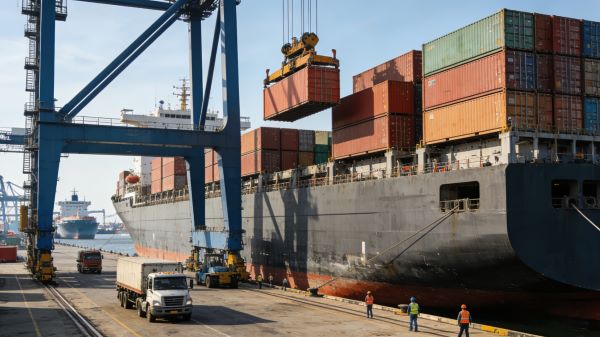
Update regional tariff databases quarterly to synchronize incremental policy adjustments. Track rate revisions, exemption threshold modifications, and special trade regime updates covering Mexican, Brazilian, and Ecuadorian container gateways.
Validate HS code classification through official platforms prior to declaration submission. Confirm commodity-specific tariff applicability against local customs interpretation standards to reduce cross-jurisdiction classification discrepancies.
Adopt compound fiscal calculation logic for comprehensive landed cost budgeting. The recommended approach is to aggregate import duty, VAT, and administrative levies uniformly instead of relying on single-duty estimation for client quotation.
Verify tax qualification credentials in advance to leverage preferential fiscal policies. Confirm valid RFC registration in Mexico and trade agreement eligibility to secure lawful duty reduction benefits.
Allocate reasonable fiscal cost buffers to accommodate policy volatility. Reserve controllable margin ranges for shipments routed through frequently updated Latin American fiscal hubs to offset incremental regulatory charges.
How are regional tax policies reshaping import operational standards
Recent fiscal policy adjustments across Latin America demonstrate a clear trend of refined commodity-based tax classification and stricter documentary compliance supervision for container imports. Regional governments optimize tariff frameworks to balance cross-border trade openness and domestic industrial protection mechanisms.
Differentiated tariff scheduling is gradually replacing generalized uniform taxation practices. Multiple regional economies refine duty rates based on commodity categories and trade modes, forming segmented calculation standards for general trade, cross-border e-commerce, and bulk container cargo movements.
Digitalized customs declaration systems enhance fiscal calculation transparency and institutional audit efficiency. Intelligent computational modules deployed at major gateways minimize manual calculation errors while raising standardization requirements for forwarder declaration data submissions.
Forwarders should note that sustained operational competitiveness in Latin American freight markets depends on continuous policy iteration tracking and precise fiscal cost control capabilities. Stable internal tariff management frameworks assist forwarding firms in maintaining consistent profit margins amid regional regulatory fluctuations.
As cross-border container trade activities expand steadily across South and Central America, precise fiscal governance and compliant tariff computation serve as essential operational foundations for logistics providers servicing Latin America Gateways. By implementing standardized calculation workflows, synchronizing real-time regulatory updates, and optimizing pre-declaration verification procedures, global forwarders can mitigate fiscal compliance risks and deliver transparent, cost-efficient logistics solutions for cross-border import clients.
Last
Smart routing alternatives for project cargo forwarding networks utilization of North African mediterranean container shipping hubs
Global project cargo forwarding encounters frequent route volatility caused by shifting maritime security situations and regional
Next
Overcoming port congestion bottlenecks and chassis shortages at key latin america maritime gateways like santos and manzanillo
Latin America Gateways including the Port of Santos in Brazil and the Port of Manzanillo in Mexico serve as critical maritime trad

