



Shipping from Ningbo to Busan depends on precise and timely documentary processing workflows to facilitate seamless export customs clearance, scheduled vessel loading and hassle-free cross-border cargo handover for all FCL and LCL shipment types throughout 2025 and 2026. Professional global freight forwarders must deploy standardized document expediting protocols, as minor documentary discrepancies frequently result in terminal detention, customs inspection holds and unplanned ancillary handling charges on this high-frequency intra-Asia short-sea trade corridor.
What is documentary expediting in Ningbo to Busan short-sea freight operations?
Documentary expediting refers to the standardized preparation, dual data validation and punctual submission of all shipping and customs compliant documents to meet carrier regulatory and cross-border clearance compliance requirements.
This core operational procedure covers official document drafting, multi-party data cross-verification, carrier manifest lodgement and customs declaration filing before official cargo closing and vessel departure cutoffs. Unlike long-haul deep-sea trades with extended buffer windows, the Ningbo-Busan short-sea route features condensed transit lead times, leaving no operational allowance for post-sailing documentary amendments or retrospective data corrections.
According to UNCTAD 2025 Northeast Asia short-sea shipping performance data, documentary inconsistencies account for over 38% of all cargo clearance delay incidents across major regional port pairs. Forwarders should note that documentation accuracy and submission punctuality directly determine whether shipments proceed smoothly without unnecessary container detention and demurrage fee accumulation.
Why is precise documentation handling indispensable for this short-sea lane?
Error-free and time-efficient documentary processing effectively prevents cargo rollovers, customs clearance suspensions and additional port-side expenses triggered by the tight cyclic scheduling of regular Ningbo to Busan liner services.
How does short voyage duration impact documentary preparation timelines?
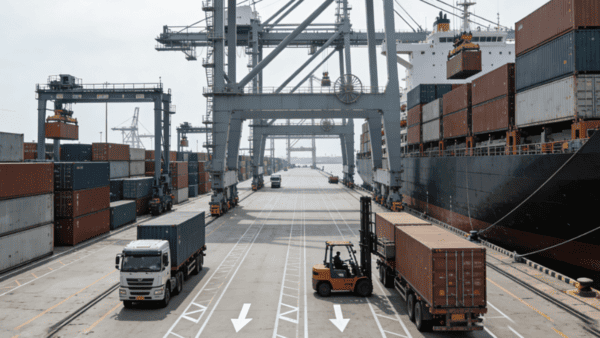
The condensed port-to-port sailing time between Ningbo and Busan results in fast destination port arrival, requiring all import clearance documentation to be fully finalized in advance to avoid terminal container piling and prolonged storage occupancy fees. Most manufacturing and cross-border retail clients on this route operate under strict just-in-time inventory replenishment models, making consistent cargo arrival reliability critical for continuous production and retail distribution planning.
What operational risks arise from incomplete documentation submissions?
According to Drewry 2026 Q1 intra-Asia short-sea freight operational benchmark data, shipments submitted with incomplete or inaccurate documentation face average clearance delays ranging from two to five working days, disrupting scheduled cargo pickup and warehouse inventory allocation cycles. The recommended approach is for forwarders to complete full documentary validation at least 48 hours prior to the carrier’s official cargo cutoff deadline.
What mandatory core documentation is required for Ningbo to Busan sea shipments?
All standard FCL and LCL consignments moving on this trade lane require a fixed suite of standardized shipping and customs documents to comply with China export regulations and South Korea import clearance compliance rules.
Full set Bill of Lading with verified shipper and consignee particulars: The Bill of Lading acts as the primary cargo title document for carrier cargo receipt and destination cargo pickup, requiring 100% data consistency for shipper details, consignee information, commodity descriptions and container particulars. A common mistake is using vague generalised cargo nomenclature on B/L paperwork, which frequently triggers customs targeted inspections and mandatory document correction procedures at Busan Port terminals.
Commercial invoice with legally verified cargo declared customs value: This official document provides the fundamental valuation basis for customs duty assessment and cross-border trade tax verification for both Chinese export declaration and South Korean import clearance procedures. Forwarders should note that invoice declared values must align with actual transaction values to prevent customs audit intervention and official valuation adjustment penalties.
Itemized packing list for cargo weight and volume reconciliation: The packing list records exact package quantities, gross weights, cubic volumes and packaging specifications for container stowage reconciliation and customs physical inspection verification. The recommended approach is to maintain full data uniformity between packing lists, commercial invoices and issued Bills of Lading.
Official export customs declaration documentation for outbound regulatory clearance: This statutory document completes China’s mandatory export regulatory filing procedures and must be formally submitted to Ningbo customs prior to container stuffing and vessel berthing. Any declaration data modifications after official cutoff will inevitably cause shipment delays and compulsory documentary amendment surcharges.
Qualified certificate of origin for preferential tariff duty reduction: Eligible commodity shipments require official preferential origin certification to apply for reduced import duty rates in South Korea and optimize overall cross-border logistics expenditure. Forwarders should confirm accurate HS code classification in advance to ensure correct certificate issuance and tariff benefit eligibility.
What frequent documentary mistakes trigger shipment delays on this route?
Recurring basic documentary preparation errors represent the primary cause of customs clearance holds and involuntary cargo rollovers for regular Ningbo to Busan sea freight consignments.
Data inconsistency across interconnected shipping documents: Mismatched commodity descriptions, weight figures or HS code classifications between invoices, packing lists and Bills of Lading result in customs data reconciliation failures. A common mistake is amending data on a single document without updating all associated paperwork, leading to systematic cross-document data discrepancies.
Delayed document submission beyond carrier cutoff timelines: Late manifest lodgement and document handover failure to meet carrier and customs system filing deadlines force cargo rollover to the next available weekly sailing slot. Forwarders should note that short-sea liner routes enforce stricter cutoff compliance requirements compared with conventional deep-sea ocean trades.
Inaccurate HS code commodity classification for manufactured goods: Incorrect HS code coding leads to commodity classification disputes and prolonged customs inspection processing at Busan import customs terminals. The recommended approach is to validate the latest 2026 official HS code version before initiating documentation for all industrial and consumer commodity shipments.
Unavailable special certification for restricted and regulated cargo: Regulated cargo types including electronic equipment, chemical auxiliary materials and mechanical components require additional safety inspection certificates; missing certification directly results in full cargo clearance suspension.
How can forwarders optimize standardized documentary expediting SOPs?
Unified standardized documentary management standard operating procedures reduce manual processing errors, shorten document preparation lead times and guarantee on-time submission for all batch shipment consignments.
Deploy standardized reusable document templates for recurring shipments: Adopt unified editable document templates for regular repeat client shipments to minimize repetitive manual data entry and lower overall operational error risks. A common mistake is creating new document files manually for every individual shipment, increasing administrative workload and data input inaccuracies.
Enforce dual cross-check validation prior to document final issuance: Assign two dedicated operational specialists to cross-verify all critical documentary data before official submission to carriers and customs authorities. Forwarders should note that dual validation protocols effectively mitigate the majority of documentary discrepancy risks.
Set internal pre-cutoff deadlines ahead of official carrier timelines: Establish internal earlier document submission deadlines to reserve sufficient buffer time for data revisions and last-minute adjustments. The recommended approach is to finalize all documentary processing one working day before the carrier’s published official cutoff time.
Maintain continuous real-time data confirmation communication with shippers: Sustain regular communication with cargo shippers to confirm updated cargo specifications and avoid last-minute data alterations that compromise documentary stability and compliance.
How does efficient documentary management lower overall short-sea logistics expenditure?
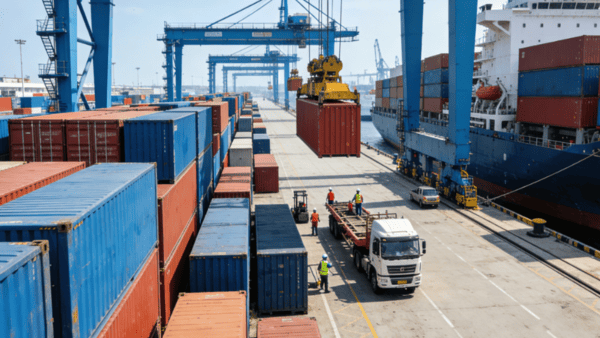
Professional documentary management protocols help forwarders avoid unnecessary amendment fees, container detention charges and demurrage costs caused by documentary-related shipment delays on the Ningbo to Busan shipping route.
What extra costs stem from poor documentary compliance?
Documentary errors and subsequent clearance delays generate additional terminal storage fees, container detention levies and urgent document rearrangement charges, significantly increasing total logistics expenditure for cargo owners. Consistent and accurate documentary processing eliminates these unplanned extra expenses and stabilizes long-term client logistics budget planning.
What cost impact data supports strict documentary control?
According to Freightos Baltic Index (FBX) 2026 Q1 regional logistics cost monitoring data, documentary non-compliance issues can raise overall short-sea container shipment operational costs noticeably due to cumulative detention and administrative correction fees.
What long-term operational benefits does professional documentary expediting deliver?
Robust documentary expediting capabilities improve forwarder professional service credibility, lower overall operational risk ratios and consolidate stable long-term cooperative relationships with Chinese and Korean cross-border trading enterprises.
Forwarders equipped with mature standardized documentary management systems are able to deliver consistent, reliable one-stop logistics solutions, enhancing client satisfaction and market competitiveness within the intra-Asia freight forwarding sector. A common mistake is neglecting documentary workflow optimization and focusing only on booking and transportation execution, resulting in frequent client dissatisfaction due to documentary-related shipment hold-ups.
Through standardized document compilation, rigorous data verification protocols and timely compliance submission mechanisms, forwarders can ensure every consignment achieves fast customs clearance and scheduled delivery performance. Shipping from Ningbo to Busan will continue providing reliable, efficient short-sea logistics support backed by professional and compliant documentary operational management.

Last
Cost-Benefit Analysis of the Ningbo to Busan Maritime Route
Shipping from Ningbo to Busan is a core intra-Asia short-sea trunk line that enables global freight forwarders to balance operatio

Next
Why Ningbo to Busan Sea Freight is Critical for Global Carriers
Shipping from Ningbo to Busan serves as a core intra-Asia short-sea shipping trunk line for global liner carriers. It helps shippi