




Sea shipping from China to Germany is a core logistics channel for China-EU trade. Among them, special containers (FR Flat Rack and OT Open Top) have become an important direction for freight forwarders to expand their businesses due to their adaptability to oversized, overweight, and ultra-high cargo (such as heavy machinery and large equipment). However, the operation process of special containers is complex, and various surcharges occur frequently, which not only compress profit margins but also may cause customer complaints. Therefore, mastering operational practices and avoiding surcharges is the key for freight forwarders to enhance their core competitiveness.
What Are FR/OT Special Containers for Sea Shipping from China to Germany? What Are the Core Differences?
FR Flat Rack and OT Open Top containers in sea shipping from China to Germany are container types specially designed for cargo with special dimensions and weights. Both belong to the category of special containers but have different application scenarios. FR containers have no roof or side panels and are suitable for overweight and ultra-wide cargo; OT containers have no roof and are suitable for ultra-high cargo, which needs to be covered and protected with tarpaulins.
According to the 2026 UNCTAD Global Maritime Container Report, the volume of special container shipping from China to Germany increased by 9.1% year-on-year, of which FR containers accounted for 65% and OT containers accounted for 35%, mainly concentrated in the transportation of machinery and equipment, engineering building materials and other categories. Freight forwarders need to note that the operational differences between the two directly affect the probability of surcharges, and it is necessary to clarify the cargo attributes in advance to match the corresponding container type.
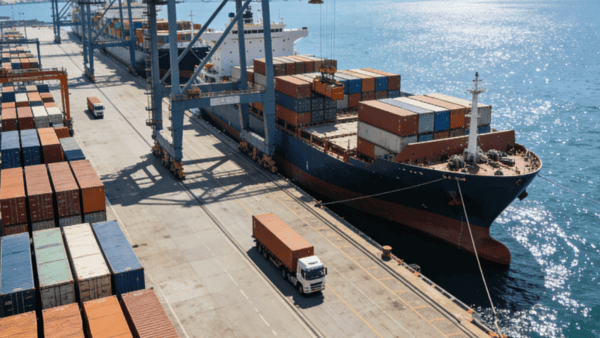
What Are the Common Surcharges for Special Containers in Sea Shipping from China to Germany? Why Do They Occur Frequently?
There are more surcharges for special containers in sea shipping from China to Germany than for ordinary containers, and most of them are related to operational processes, cargo attributes, and port policies. The core reason is that the operation of special containers is difficult, resources are scarce, and shipping companies and ports need to invest additional costs.
I. Types of Core Surcharges and Their Causes
Heavy Lift Additional (HLA): If the weight of a single piece of cargo exceeds the standard specified by the shipping company (usually 2 tons per piece), special crane operations are required, and the shipping company will charge by weight grade. This is the most common surcharge for special containers. A common mistake is that freight forwarders fail to calculate the weight of a single piece of cargo in advance, resulting in temporary additional charges after the cargo arrives at the port.
Long Length/Over Height Additional (LLA): If the cargo in FR containers is ultra-wide (exceeding 2.4 meters) or the cargo in OT containers is ultra-high (exceeding 2.6 meters), it needs to occupy more cabin space or require special stowage, and the shipping company will charge additional fees. The greater the size exceeds the standard, the higher the fee increase.
Port Congestion Surcharge (PCS): Core ports in Germany such as Hamburg and Bremen are prone to congestion during the peak season (April to November). According to the latest 2026 data from the Hamburg Port Marketing Association, the average waiting time at the port during the peak season reaches 3.8 days, and shipping companies will charge PCS fees, with an increase of about 12%-18% of the basic freight.
Reinforcement Surcharge: Special container cargo requires professional reinforcement (such as wooden square fixation and steel wire rope lashing). If the freight forwarder fails to provide a reinforcement plan in advance or the reinforcement does not meet the requirements, the shipping company will arrange secondary reinforcement and charge fees. According to the 2026 Q1 Special Container Operation Report of Qingdao Port, 62% of reinforcement surcharges are caused by repeated revisions of reinforcement plans.
Other Surcharges: Including Bunker Adjustment Factor (BAF), Currency Adjustment Factor (CAF), and Emergency Bunker Surcharge (EBS), which are affected by fluctuations in international oil prices and exchange rates. Among them, BAF accounts for about 32% of the total surcharges. According to the June 2026 data from the Freightos Baltic Index (FBX), the BAF for sea shipping from China to Germany increased by 3.2% month-on-month.
II. Core Pain Points of Frequent Surcharges (From the Perspective of Freight Forwarders)
When freight forwarders operate special containers for sea shipping from China to Germany, the core pain points of frequent surcharges are concentrated in three aspects: first, they are not familiar with the surcharge rules of shipping companies and fail to predict fees in advance; second, the verification of cargo information is inaccurate, resulting in incorrect reports of weight and size; third, the operation process is not standardized, such as delayed reinforcement plans and incomplete customs declaration documents, leading to additional charges. The recommended approach is that freight forwarders should establish a surcharge prediction mechanism and sort out the possible fees in each link in advance to avoid passive payment.
How Can Freight Forwarders Accurately Avoid Various Surcharges in the Operation of Special Containers for Sea Shipping from China to Germany?
The core of avoiding surcharges is "advance prediction, precise operation, and active control". Combined with the route characteristics, port policies, and shipping company rules of sea shipping from China to Germany, freight forwarders can start from the following 5 links to minimize the expenditure of surcharges.
Link 1: Before Booking - Precisely Verify Cargo Information and Lock in Fee Details
Precisely Calculate Cargo Parameters: Confirm the actual weight, single piece size, and total number of pieces of the cargo with the customer in advance, focus on marking the overweight, overlong, and ultra-high parts, and avoid overweight and overlong surcharges caused by incorrect parameter reports. Freight forwarders need to note that a 5% error margin should be reserved for the cargo weight to prevent the actual weight from exceeding the declared weight.
Choose a Suitable Shipping Company: Different shipping companies have significant differences in their special container surcharge rules. For example, Maersk's starting point for HLA on FR containers is 3 tons per piece, while Hapag-Lloyd's is 2 tons per piece. The recommended approach is to compare the surcharge standards of 3-5 shipping companies and select the most cost-effective one based on the route time (the time limit for ordinary special containers for sea shipping from China to Germany is 26-33 days, and fast ships can shorten it to 18-20 days).
Clarify Fee Terms and Lock in All-in Rate: Sign a clear fee agreement with the shipping company when booking, and prioritize the all-in rate that includes common surcharges such as BAF, CAF, and PCS to avoid temporary price increases later. At the same time, agree on the upper limit of surcharge fluctuations in the agreement, such as "the BAF increase shall not exceed 15% of the previous year", to reduce the risk caused by market fluctuations.
Link 2: Cargo Reinforcement - Plan in Advance to Avoid Secondary Reinforcement Fees
Cargo reinforcement for special containers is a key link to avoid surcharges. Most reinforcement surcharges are caused by unreasonable plans or temporary adjustments. Freight forwarders need to focus on the following 3 points:
Formulate a Professional Reinforcement Plan in Advance: Formulate a plan together with a professional reinforcement team according to the weight, size, and characteristics of the cargo, clarify details such as the specification of wooden squares, the number of lashing points, and the strength of steel wire ropes, and submit it to the shipping company for review in advance to avoid secondary reinforcement due to inconsistent plans. A common mistake is formulating a reinforcement plan based solely on experience, ignoring the distribution of the cargo's center of gravity, which leads to unqualified reinforcement.
Choose Compliant Reinforcement Materials: Use reinforcement materials that meet the requirements of the shipping company (such as anti-corrosion wooden squares and high-strength steel wire ropes) to avoid being required by the shipping company to replace them due to unqualified materials, which would result in additional fees. Freight forwarders need to note that German ports have clear requirements on the environmental protection of reinforcement materials, and it is necessary to confirm in advance whether the materials meet the EU EN 12195-1 standard.
On-site Supervision of the Reinforcement Process: Arrange special personnel to supervise the cargo reinforcement process to ensure that the reinforcement operation meets the requirements of the plan, focusing on checking the firmness of lashing and the balance of the center of gravity, so as to avoid additional handling fees caused by cargo displacement during transportation due to inadequate reinforcement.
Link 3: Customs Declaration and Inspection - Standardize Documents to Avoid Delayed Declaration and Container Demurrage Fees
The customs declaration and inspection process for special containers in sea shipping from China to Germany is complex. Non-standard documents are likely to cause customs declaration delays, which in turn lead to surcharges such as delayed declaration fees and container demurrage fees. Freight forwarders need to do the following:
Prepare Complete Customs Declaration Documents in Advance: Sort out the cargo invoice, packing list, customs declaration form, certificate of origin, cargo manual (especially for machinery and equipment), and other documents to ensure consistent information, and avoid customs declaration delays caused by missing or incorrect documents. Freight forwarders need to note that the inspection rate of special container cargo by German customs is relatively high (about 14%), so it is necessary to check the details of the documents in advance.
Declare the ENS Manifest in Advance: The EU stipulates that all cargo destined for Germany must declare the Entry Summary Declaration (ENS) in advance. Freight forwarders need to complete the declaration before the cut-off time to avoid delayed declaration fees caused by untimely declaration. The delayed declaration fee is usually charged per day, about 0.05% of the cargo value per day.
Cooperate with Customs Inspection and Prepare Explanatory Materials in Advance: If the cargo is inspected by customs, it is necessary to cooperate in a timely manner and prepare relevant explanatory materials such as the purpose, size, and weight of the cargo in advance to shorten the inspection time and avoid container demurrage fees caused by inspection delays (the container demurrage fee for special containers is about 55-110 US dollars per day).
Link 4: Port Operation - Avoid Port Surcharges and Optimize Connection Processes
The operation specifications of core ports in Germany such as Hamburg and Bremen directly affect the generation of surcharges. Freight forwarders need to understand port rules in advance and optimize operation connections:
Avoid Port Peak Congestion Periods: According to the latest 2026 data from Hamburg Port, April to November is the port peak season, and the Port Congestion Surcharge (PCS) increases significantly. Freight forwarders can reasonably adjust the shipping time to avoid the peak season as much as possible, or choose ports with a lower probability of congestion (such as Wilhelmshaven Port and Rostock Port in Germany) as the destination port.
Confirm Port Operation Requirements in Advance: German ports have special requirements for the unloading and stacking of special containers. For example, Hamburg Port requires ship-side direct pickup for overweight special containers. Freight forwarders need to communicate with the destination port agent in advance to confirm the operation process and fees, so as to avoid additional fees due to non-compliance with requirements.
Optimize Cargo Pickup and Delivery Connection: Notify the consignee to prepare for container pickup in advance, and pick up the cargo in a timely manner after it arrives at the port to avoid long-term storage of the cargo at the port, which would result in storage fees. The recommended approach is to agree on the container pickup time with the destination port agent in advance to ensure that the cargo is picked up within 24 hours after arriving at the port.
Link 5: Follow-up Tracking - Handle Abnormalities in a Timely Manner to Reduce Additional Expenditures
After the cargo is shipped, freight forwarders need to continuously track the cargo status and handle abnormal situations in a timely manner to avoid surcharges caused by abnormalities:
Real-time Tracking of Shipping Schedule and Cargo Status: Through the shipping company's official website or logistics tracking platform, pay real-time attention to the cargo transportation status. If abnormalities such as shipping schedule delays and port congestion occur, communicate with the shipping company and the destination port agent in a timely manner to negotiate solutions and avoid additional fees caused by prolonged delays.
Timely Handling of Fee Disputes: If the shipping company charges unreasonable surcharges, the freight forwarder needs to collect relevant evidence (such as booking agreements, cargo parameter certificates, and reinforcement plan review records) and negotiate with the shipping company for reduction or exemption to avoid blind payment of fees.
Summary and Review to Optimize the Operation Process: After the completion of each order, summarize the causes of surcharges, sort out the problems in the operation, and optimize the process (such as improving the cargo parameter verification mechanism and establishing a database of shipping company surcharges) to reduce the incidence of surcharges in subsequent orders.
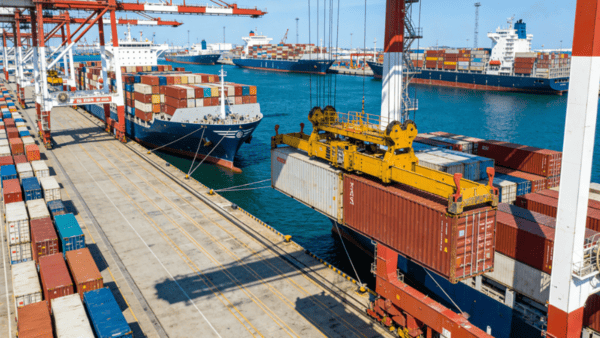
Summary of Common Mistakes in Freight Forwarder Operations and Reminders to Avoid Pitfalls
Combined with actual operation cases, most freight forwarders are prone to the following 4 mistakes when handling special containers for sea shipping from China to Germany, which need to be focused on avoiding:
Mistake 1: Ignoring Cargo Parameter Verification and Blind Booking: Some freight forwarders book containers based solely on the customer's verbal description without verifying the actual weight and size of the cargo, resulting in overweight and overlong cargo after arriving at the port and generating high surcharges. The recommended approach is to require the customer to provide a detailed list of cargo parameters and, if necessary, inspect the cargo on-site.
Mistake 2: Choosing Low-Price Shipping Companies and Ignoring Surcharge Rules: Some freight forwarders choose shipping companies with extremely low quotes to reduce costs but ignore their harsh surcharge rules, resulting in higher total costs in the end. Freight forwarders need to note that when choosing a shipping company, they need to comprehensively consider the quote, surcharge rules, route time, and service quality.
Mistake 3: Delayed Reinforcement Plan Leading to Increased Fees Due to Temporary Adjustments: Some freight forwarders only formulate the reinforcement plan before loading the cargo, resulting in the plan failing the review and requiring temporary adjustments, which generates secondary reinforcement fees. The correct approach is to start formulating the reinforcement plan immediately after booking and submit it to the shipping company for review in advance.
Mistake 4: Ignoring Destination Port Operation Rules Leading to Additional Charges: Some freight forwarders only focus on the operation at the port of origin and ignore the special requirements of the German destination port (such as ship-side direct pickup and environmentally friendly reinforcement materials), resulting in the cargo being unable to be unloaded and picked up normally after arriving at the port, which generates container demurrage fees and storage fees.
The core competitiveness of special container operations for sea shipping from China to Germany lies in "detail control" and "risk prediction". Freight forwarders need to be familiar with the operation process of special containers, accurately grasp the causes and avoidance methods of surcharges, optimize the operation plan based on authoritative data, and strengthen communication and connection with shipping companies, destination port agents, and customers, so as to effectively avoid surcharges and improve profit margins and customer satisfaction. In the future, with the continuous warming of China-EU trade, the demand for special container shipping from China to Germany will continue to grow. Only by continuously optimizing operational practices can freight forwarders gain an advantage in the fierce market competition.
Last
China-to-Germany Sea Shipping Dangerous Goods (DG) Operation Process: Professional Compliance Advice from Shanghai Port
With the continuous deepening of trade relations between China and Germany, China-to-Germany sea shipping has become one of the co
Next
High-Value Over-Sized Cargo Operation Handbook: How a Piece of Chinese-Manufactured Large-Scale Equipment Safely Arrives at a UK Construction Site via Sea Freight
In the wave of Chinese manufacturing going global, the export demand for large-scale engineering equipment continues to rise. Chin

