




China and Germany hold significant positions in the global economic landscape. Their robust trade relationship is strongly supported by sea freight, which serves as a vital means of transporting a vast amount of goods between the two countries. The shipping routes from China to Germany act as an economic bond, closely connecting their markets.
What is the Trade Landscape between China and Germany?
China is the world's second-largest economy, and Germany is the fourth-largest. Their bilateral trade volume has been growing steadily. According to data from UN Comtrade, in recent years, the trade volume between China and Germany has been on the rise, and Germany is one of China's important trading partners in Europe.
China exports a diverse range of goods to Germany, mainly including electronic devices, textiles, furniture, and toys. Chinese consumer electronics, such as smartphones and tablets, are well-received in the German market for their cost-effectiveness. Textiles also occupy a certain market share with their rich styles and good quality. In return, Germany exports machinery and equipment, automotive parts, and chemical products to China. German high-end machinery and equipment play a crucial role in China's manufacturing industry due to their precision and reliability, and German car brands also have a high profile and market share in China.
This complementary trade structure has led to a stable and large-scale demand for shipping from China to Germany.
Which Chinese Ports Are the Main Departure Ports for Shipping to Germany?
Shanghai Port: As one of the world-class major ports, Shanghai Port boasts comprehensive and advanced infrastructure, enabling it to handle a large volume of goods efficiently. It has a dense network of shipping routes, with numerous direct routes to German ports and those via transit at other hub ports. Thanks to its location at the mouth of the Yangtze River, Shanghai Port can easily gather goods from all over China's inland areas, providing efficient consolidation and shipping services for goods destined for Germany. Additionally, the high-level informatization of Shanghai Port, with its complete cargo tracking and management system, allows freight forwarders and cargo owners to monitor the cargo status in real-time.
Ningbo-Zhoushan Port: This port ranks among the top in terms of cargo throughput in China. It is renowned for its excellent loading and unloading efficiency and relatively low operating costs. Ningbo-Zhoushan Port has close cooperation with many international shipping companies, offering a wide variety of shipping schedules. Whether it's full-container or less-than-container load (LCL) cargo, it can be smoothly transported to Germany. The well-developed logistics service system around the port, including convenient warehousing and customs clearance services, facilitates the quick customs clearance and loading of goods.
Shenzhen Port: Comprising multiple specialized port areas, Yantian Port in particular, with its modern container-handling facilities and efficient operation management, has become an important gateway for goods from South China to Germany. Shenzhen Port is close to the Pearl River Delta region, which has a well-developed manufacturing industry with abundant resources of various goods such as electronics and toys. The extensive route coverage of Shenzhen Port can provide precise transportation services to different German ports.
Qingdao Port: Located in northern China, Qingdao Port serves as an important maritime hub connecting North China and Germany. Equipped with advanced terminal facilities and a professional logistics team, Qingdao Port can handle the transportation of special goods such as large-scale machinery and equipment. It also has complete facilities and management experience in refrigerated cargo transportation. The stable direct shipping routes from Qingdao Port to Germany offer a relatively short transit time, providing an efficient logistics channel for the export of goods from the northern region to Germany.
Guangzhou Port: As a large-scale and long-established port in South China, Guangzhou Port has a mature shipping service system. It has the capacity to handle various types of cargo, including containers, bulk cargo, and roll-on/roll-off (Ro-Ro) cargo. In the trade transportation with Germany, Guangzhou Port, relying on the rich industrial resources of the Pearl River Delta region, provides a convenient sea-going route for various products. The port is constantly optimizing its operation processes and improving service quality to meet the growing demand for sea freight between China and Germany.
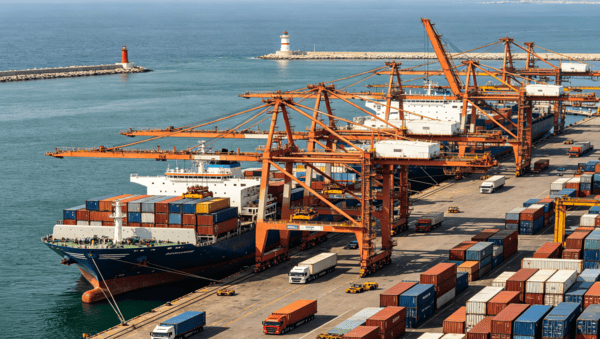
What Are the Destination Ports in Germany and How Is the Clearance Process?
Port of Hamburg: As the largest port in Germany, the Port of Hamburg is one of the important logistics hubs in Europe. The port has advanced facilities and multiple specialized terminals, capable of handling various types of cargo, including containers, bulk cargo, and Ro-Ro cargo. The operation of the Port of Hamburg is characterized by high efficiency and standardization. It is equipped with a complete set of automated loading and unloading equipment, which can significantly improve the loading and unloading speed of goods. However, due to its heavy business volume, there may be some congestion during the peak shipping season. The customs clearance process at the Port of Hamburg is relatively strict. Detailed and accurate commercial invoices, bills of lading, packing lists, etc., are required. At the same time, goods must comply with relevant EU quality, safety, and environmental protection standards.
Port of Bremen: The Port of Bremen is the second-largest port in Germany and an important port for the import and export of automobiles and agricultural products in Germany. The port has modern terminal facilities and professional logistics services, capable of providing efficient cargo handling and transshipment services. The Port of Bremen has unique advantages in handling the transportation of large-scale equipment and automobiles, with a professional and meticulous operation process. The congestion situation at this port is relatively less. In terms of customs clearance, in addition to following the general EU customs clearance requirements, there are corresponding special inspection and quarantine regulations for specific agricultural products and automotive products. Freight forwarders and cargo owners need to understand and prepare relevant documents in advance.
Port of Wilhelmshaven: The Port of Wilhelmshaven is the port with the deepest natural draft in Germany and the largest oil transshipment port in the country. In recent years, its container business has also been continuously developing. The port enjoys a favorable geographical location and serves as an important gateway for goods from Northern Europe and the Baltic Sea region to enter Germany and the European hinterland. The Port of Wilhelmshaven has rich experience in handling liquid and large-scale bulk cargo, while continuously improving the facilities and services of its container terminals. The congestion situation at the port is relatively less, and the average berthing time of ships is relatively short. During customs clearance, in addition to regular documents, for special goods such as oil, detailed cargo information and safety certificates must be provided in strict accordance with relevant regulations.
How Long Does It Take to Ship from China to Germany?
Direct Voyages: A direct voyage from Shanghai Port to the Port of Hamburg offers a relatively stable transit time, reducing the risks associated with cargo transshipment. This makes it suitable for time-sensitive and high-value goods, such as high-end electronics and fashionable clothing.
Transit Voyages: If a transit route is chosen, the transit time is longer compared to direct voyages. Transit routes usually involve transshipment at hub ports such as Singapore and Rotterdam. Although the transit time is longer, the freight is relatively lower, making it suitable for some bulk commodities with lower value-to-weight ratios and less urgent time requirements, such as textiles and toys. When choosing a transit route, freight forwarders need to comprehensively consider factors such as the nature of the goods, customer requirements, and the operation efficiency of the transit port.
What Are the Shipping Costs and What Factors Influence Them?
The shipping prices from China to Germany are affected by various factors and can fluctuate significantly. The cost components mainly include ocean freight, terminal handling charges (THC), bunker adjustment factor (BAF), currency adjustment factor (CAF), and possibly peak season surcharge (PSS).
Many factors influence the freight rate. Market supply and demand is one of the key factors. During the European procurement peak season, such as before Christmas, and China's production peak season, the demand for shipping space increases significantly, often leading to an increase in freight rates. Fluctuations in fuel prices also directly affect ocean freight. An increase in oil prices will lead to an increase in the bunker adjustment factor, thus driving up the overall freight rate. In addition, the weight, volume, and special transportation requirements of the goods (such as refrigeration, dangerous goods transportation) will also affect the freight. Different combinations of departure and destination ports will result in different freight rates due to differences in route distances and port operation costs.
What Key Points Should Freight Forwarders Pay Attention To?
Peak Season Reminder: The peak season for shipping from China to Germany is usually from September to December. During this period, the German market has a strong demand for various commodities to welcome festivals such as Christmas and New Year. Freight forwarders should book shipping space well in advance to avoid cargo delays caused by tight shipping space. At the same time, they should closely monitor changes in shipping schedules and communicate with customers in a timely manner, preparing for adjustments to the transportation plan.
Documentation Precautions: Ensuring the accuracy and completeness of customs clearance documents is of utmost importance. The information on the commercial invoice, such as the description, value, and origin of the goods, must be consistent with the actual goods. The content of the bill of lading should also be filled out in a standardized manner. In addition, for products with special EU regulations, such as electronic products that need to comply with the RoHS Directive (Directive on the restriction of the use of certain hazardous substances in electrical and electronic equipment), freight forwarders should remind cargo owners to provide corresponding certification documents to avoid customs clearance obstacles due to document issues.
Common Issues: European ports may be affected by severe weather in winter, such as storms and fog, which can cause shipping schedule delays. Freight forwarders should keep an eye on weather dynamics, take pre-emptive measures in advance, and notify customers in a timely manner. In addition, EU trade policies and regulations are subject to frequent adjustments. Freight forwarders need to be sensitive to policy changes to ensure that cargo transportation always complies with relevant regulations.
Conclusion
Shipping from China to Germany plays an indispensable role in the trade between China and Germany, and is of great significance for promoting economic exchanges and cooperation between the two sides. Understanding the characteristics of major departure ports, destination ports, transit times, cost components, and key considerations is the key for freight forwarders to handle sea freight between China and Germany. Through professional operations and reasonable planning, freight forwarders can ensure the safe and efficient transportation of goods between China and Germany. Shipping from China to Germany is an important channel connecting the economies of China and Germany and occupies a crucial position in global trade.
Last
Shipping from China to South Korea: The Vital Maritime Link in Northeast Asian Trade
China and South Korea, being important economies in Northeast Asia, enjoy a close-knit trade relationship. Sea freight acts as a c
Next
India Customs Clearance: A Definitive Guide for Freight Forwarders
In the dynamic landscape of international freight, having a comprehensive understanding of the India Customs Clearance process is

