




A structured Dangerous Goods Transportation Policy establishes consistent regulatory benchmarks to compute verifiable hazmat shipping surcharges amid iterative updates to cross-border maritime handling protocols. In recent years, ocean carriers and terminal operators adjust hazardous cargo fee frameworks to offset growing expenditures on safety hardware, compliance inspections and environmental risk management. According to UNCTAD 2025 maritime transport review data, cost outlays linked to hazardous cargo logistics record steady upward movement across global trade lanes, with policy-driven surcharge revisions forming a material variable shaping forwarder cost planning and client quotation accuracy. Logistics service providers operating across international territories need reliable calculation frameworks aligned with current regulatory standards to reduce miscalculations, margin compression and commercial disputes on hazmat shipping contracts.
What constitutes modern hazmat shipping surcharges within revised transportation compliance frameworks
Modern hazmat shipping surcharges represent regulated supplementary fees collected by vessel operators and port terminals to recover incremental labor, equipment and governance costs generated during Dangerous Goods handling and carriage. All fee schedules align with amended SOLAS conventions and carrier-specific Dangerous Goods Transportation Policy frameworks, with tiered pricing structures mapped to distinct hazard categories outlined in the IMDG Code.
Surcharge pricing for hazardous shipments carries flexible characteristics tied to periodic regulatory adjustments, separate from fixed base ocean freight rates. Major container lines harmonize core charging logic against latest IMDG Code amendments, while retaining adjustable floating ranges tailored to regional port oversight intensity and trade route rules. According to Drewry 2025 container cost monitoring data, hazmat surcharge adjustments affect profit planning for a notable share of cross-border chemical logistics contracts, which reinforces the value of precise cost calculation workflows for forwarding teams.
Forwarders should note that contemporary global hazmat charging structures abandon uniform flat-rate models for all dangerous commodity types. Updated cross-border transportation policies sort hazardous materials into multiple fee brackets based on hazard severity, handling complexity and potential incident liabilities, raising requirements for cargo classification validation and multi-layered cost accounting within forwarding departments.
How do recurring policy revisions alter standard hazmat surcharge calculation criteria
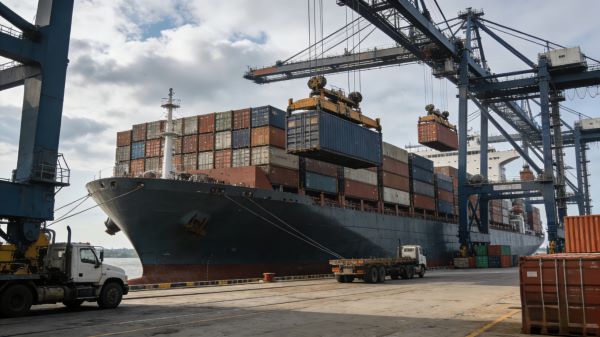
Periodic updates to international shipping policies reshape hazmat surcharge calculation standards to match elevated safety administration spending and unified risk control benchmarks for cross-border Dangerous Goods carriage. Revisions to maritime safety treaties and local terminal supervision codes directly shift operational expenditure levels for cargo receiving, stowage and emergency standby arrangements.
How environmental and carbon rules expand hazmat operational cost burdens
Regulatory frameworks such as EU ETS emissions pricing and updated port waste disposal protocols introduce additional recurring expenses for vessels carrying classified hazardous materials. These incremental overheads translate into standardized line-item surcharges documented within revised Dangerous Goods Transportation Policy documents, creating transparent cost transfer mechanisms between carriers, forwarders and cargo owners. According to statistical analysis published in UNCTAD 2025 industry compliance reports, aggregate safety and compliance spending on global hazmat transport operations registers an upward shift relative to baseline figures recorded in 2023.
What risks stem from reliance on outdated surcharge tariff documents
A common mistake is the practice of referencing obsolete fee tables without cross-verifying route-specific policy amendments released by carriers and port authorities. Cost calculations built on outdated pricing standards tend to understate actual terminal and vessel surcharge liabilities, which creates compressed profit margins or quotation figures that fail to match competing service offers when negotiating cross-border shipping contracts.
Which measurable variables shape consistent hazmat surcharge computation aligned with global policy rules
Accurate hazmat surcharge accounting draws on four policy-aligned variable sets covering cargo hazard attributes, regional terminal oversight rules, declaration and packaging compliance, plus vessel stowage constraints. Each calculation dimension receives explicit definition within globally circulated Dangerous Goods safe handling transportation policy documentation.
Hazard classification matching with official UN identification records: International shipping policies enforce tiered surcharge brackets mapped to IMO hazard classes outlined in the IMDG Code. According to May 2025 tariff circulars issued by Hapag-Lloyd, distinct fixed surcharge base rates apply to flammable gases, toxic vapors and combustible liquids, while higher multiplier coefficients attach to reactive corrosive materials and explosive precursors. Forwarding teams must cross-check UN commodity codes and hazard class ratings before compiling full cost breakdowns to maintain alignment with prevailing compliance policies.
Regional terminal supervision surcharge variances: Independent port authorities formulate localized hazardous cargo management protocols with adjustable surcharge floating ranges for import and export consignments. Chittagong Port implemented a standardized per-container hazardous cargo inspection fee in 2025, a charge line absent from tariff schedules applied to terminals serving European and North American trade lanes.
Distinctions between fully regulated consignments and excepted quantity shipments: Revised transportation policies separate surcharge tiers for fully declared dangerous goods and low-volume excepted quantity materials. Complete regulatory declaration and certified compliant packaging eliminate punitive supplementary charges, while incomplete documentation or non-compliant containment triggers additional administrative penalties recorded within carrier compliance databases. This classification split creates meaningful variance in final shipment cost totals.
Specialized stowage and transit environment requirements: Segregated storage bays, temperature-controlled container equipment and long-distance inter-ocean transit generate supplementary safety management overheads. Vessel operators adjust surcharge multipliers according to physical stowage limitations and transit duration, variables that forwarders must integrate into complete pre-shipment cost budgeting worksheets.

What structured workflows support consistent surcharge calculation under amended global transportation policies
Forwarding teams can reduce discrepancies in hazmat surcharge estimates by building iterative standardized workflows integrating real-time regulatory document tracking, pre-booking cargo validation and multi-dimensional cost aggregation. Systemized accounting procedures accommodate frequent revisions to cross-border Dangerous Goods transportation policy frameworks released by IMO and individual container carriers.
Maintain regularly synchronized internal tariff and policy databases: The recommended approach is to assign dedicated administrative staff to compile centralized internal databases updating alongside new IMDG Code revisions, carrier surcharge circulars and local port regulatory bulletins. Staff segment tariff records by trade corridor and shipping line to reduce computational errors arising from delayed policy data refresh cycles.
Conduct dual verification of cargo hazard attributes prior to quotation drafting: Teams complete secondary validation of client-submitted MSDS documentation and UN hazard classification paperwork before computing surcharge line items. Staff cross-reference hazard divisions, packaging specifications and declaration formats against bracket pricing outlined in the most current Dangerous Goods Transportation Policy to strengthen quotation reliability.
Separate routine safety surcharges from non-compliance penalty levies during cost aggregation: Accounting worksheets maintain distinct line entries for standard handling surcharges and administrative penalties triggered by incomplete compliance. Consignments meeting all declaration and packaging criteria incur only baseline operational surcharges, while labeling errors or uncertified containment trigger supplementary penalty fees that require clear disclosure to cargo owners before booking confirmation.
Build flexible budget buffers for regional port policy variances: Quotation templates include adjustable cost coefficients to account for location-specific terminal surcharge structures. Teams incorporate supplementary terminal inspection and waste disposal fees mandated by local port policies to limit financial shortfalls caused by incomplete regulatory research during pre-booking cost estimation.
Which recurring computational oversights affect hazmat surcharge accuracy for global forwarding firms
Most numerical deviations in hazmat cost accounting derive from partial policy comprehension and incomplete evaluation of all cost-bearing variables. Identifying and mitigating consistent calculation oversights supports stable profit retention and sustained cooperative relationships with long-term cargo owner clients purchasing cross-border chemical logistics services.
Miscalculations arising from misclassification of excepted quantity cargo
A common mistake involves uniform application of elevated surcharge brackets to low-risk excepted quantity hazardous materials, which produces inflated quotation figures that reduce competitiveness against rival logistics providers. Reverse misclassification carries comparable financial risk; applying low-tier surcharge rates to high-hazard consignments creates unplanned post-booking cost overruns that reduce order-level profit retention.
Cost gaps created by delayed policy update synchronization
Multiple container carriers and port authorities release revised hazmat surcharge tariff schedules across separate calendar quarters in recent years, and unsynchronized internal reference data creates measurable numerical deviation in final cost totals. Forwarders should note that temporary regulatory adjustments introduced during peak shipping demand cycles also shift baseline surcharge levels, requiring dynamic modification of quotation template pricing logic.
Omitted terminal and emergency standby supplementary charges
Many forwarding teams calculate only vessel carrier hazmat surcharges while overlooking terminal handling levies, emergency response standby fees and pollution disposal surcharges mandated within local port policy documentation. Excluding these auxiliary cost categories generates incomplete shipment cost summaries that lower overall transaction profitability.
What operational gains follow policy-aligned consistent hazmat surcharge computation
Hazmat surcharge calculations built around updated cross-border transportation policy frameworks deliver measurable operational and market positioning benefits for international forwarding organizations. Standardized cost accounting procedures support controlled operational spending and uniform service delivery protocols for cross-border hazardous commodity shipments.
Controlled financial exposure through precise cost forecasting
Policy-aligned standardized computation eliminates unplanned financial losses linked to inaccurate pricing estimates. Structured multi-variable cost accounting preserves consistent profit margins across hazmat shipping orders and limits operational risks such as cancelled bookings or carrier-imposed supplementary penalty deductions.
Strengthened client retention through transparent cost disclosure
Quotation documents with fully itemized, policy-verified surcharge breakdowns build trust with cargo owners sourcing cross-border chemical logistics support. Forwarding firms with consistent transparent pricing frameworks tend to secure sustained collaborative arrangements with importers and exporters handling industrial hazardous materials.
Adaptability to evolving international maritime supervision standards
Continuous regulatory monitoring and precise surcharge computation capacity enable organizations to adjust operational workflows alongside shifting global hazardous cargo oversight rules. This specialized internal capability generates differentiated service attributes that support gradual expansion of cross-border Dangerous Goods carriage service volumes across multiple international trade corridors.
Against a backdrop of continuous revision to global maritime hazardous cargo supervision frameworks and fluctuating baseline ocean freight levels, consistent adherence to structured, periodically updated Dangerous Goods Transportation Policy remains a foundational operational requirement for forwarding teams aiming to deliver verifiable hazmat shipping surcharge calculations, maintain predictable order-level profit margins, and sustain compliant long-term cross-border logistics operations.
Last
Resolving booking cancellations for lithium battery shippers facing strict Dangerous Goods aviation transportation Policy
A standardized and properly implemented Dangerous Goods Transportation Policy enables global freight forwarders to mitigate freque

Next
Passing strict maritime safety audits by enforcing rigorous Dangerous Goods chemical packaging and transportation Policy
A robust and compliant Dangerous Goods Transportation Policy serves as the foundational framework for global freight forwarders to

